



Authority isn’t just what you know. It’s what people remember, repeat, and act on after you leave the stage, the screen, or the scroll. The difference often comes down to story, positioning, and a clear next step that doesn’t feel like a hard sell.
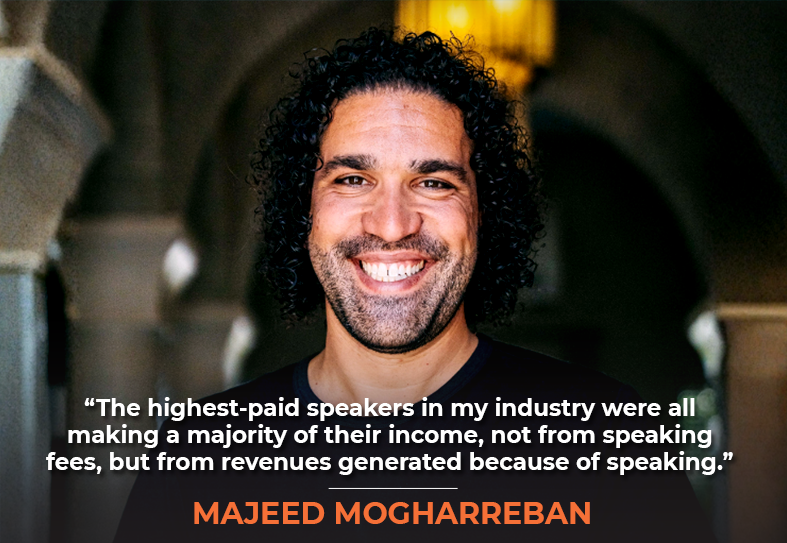
My guest on today’s show is Majeed Mogharreban, a world-renowned speaking coach and the creator of Expert Speaker. He helps entrepreneurs and experts turn speaking into a smart business strategy, not a once-in-a-while keynote fee. His work blends performance, persuasion, and a sharp understanding of how attention actually works.
In this conversation, we break down how to become really memorable on stage, including Majeed’s “feel, know, do” framework and his “Pain Island to Pleasure Island” model for building a talk that moves people. We also explore how to weave proof into your stories without bragging and why “speech to conversation to offer” can outperform the old-school pitch. Plus, we get into a surprisingly useful topic: how to turn haters and controversy into momentum without losing your composure.
This episode will sharpen your message, strengthen your presence, and help your next talk create real demand. So without any further ado, on with the show.
In This Episode
- [02:23] – Majeed Mogharreban shares that his journey started with the goal of becoming a motivational speaker, going on speaking tours, and getting hired, even though early on he could barely earn $100 from high schools.
- [07:31] – Stephan tells his story, including two spiritual awakenings, is mostly separate from his SEO career, though he’s working on his memoir and speeches and hopes to make it more relevant.
- [11:29] – Majeed says unforgettable speaking blends a memorable intro, immersive storytelling, and humor, guided by what the audience should feel, know, and do.
- [15:53] – Majeed shares how he learned to sell from the stage through early failures and embarrassment, using humor, vulnerability, storytelling, and repeated practice to turn disastrous pitches into highly successful, transformative speaking experiences.
- [22:48] – Stephan shares how early embarrassment and inexperience at conferences taught him the power of putting himself out there, using repetition to improve, and leveraging vulnerability to build trust and opportunities.
- [27:47] – Majeed explains that early stage embarrassment taught him that making an offer is ethical, and now he sells seamlessly through storytelling, letting audiences emotionally decide before ever pitching.
- [33:39] – Majeed discusses how he uses AI to transform coaching calls into emotionally powerful speeches, envisioning a future where AI could fully replicate his guidance for clients.
- [40:54] – Majeed reflects on how AI is transforming marketing and creative work, enabling mass testing and optimization of ads while valuing taste and conviction over technical skill.
- [44:38] – Majeed shares that his most viral TikTok video reached 8.5 million views, quickly grew his following by 100,000, and demonstrates the unpredictable but powerful reach of TikTok.
- [47:23] – Majeed shares a lesson from Jesse Elder’s “Hater Aid” course: respond to online hate with respect, humor, and boundaries to demonstrate professionalism to your wider audience rather than arguing or deleting comments.
- [50:34] – Majeed explains how he created viral Instagram content by shifting from narrowly targeted messaging to broader, practical formulas like “blank for blank, who blank” to clearly position expertise.
Majeed, it’s so great to have you on the show.
Good to be here, Stephan.
All right, let’s start by sharing your origin story. How did you end up being a well-respected, world-renowned public speaker who teaches people how to speak on stages? How did that come about?
I cracked the code to making money as a speaker, and I’ve been helping speakers and business owners ever since then.
Well, I cracked the code to making money as a speaker, and I’ve been helping speakers and business owners ever since then. It took me years to crack the code by starting and saying I want to be a motivational speaker. I want to go on speaking tours. I want to get hired to speak, and I could barely get a high school to give me $100 to speak because, at the time, I was so young, I figured, well, maybe I’m more relevant to students.
So I literally walked into high school and said, “Where’s the principal’s office?” And I stuck my hand out and said, “I’d like to give a motivational speech to your students.” And they say,” We have $100.” And I would say,” I’ll take it.” And so I went from the speaking-fee business model, where you get $500 there, $1,000 there, maybe $2,000 there. That’s a tough business model because every speech delivered, you have to negotiate and have a proposal and a contract, and deposit, and collect the remaining profit and all that to get maybe a hundred or a thousand dollars if you’re lucky, multiple thousands.
But what I found was that the highest-paid speakers in my industry were all making a majority of their income, not from speaking fees, but from revenues generated because of speaking, whether that means selling from the stage or opportunities that would come to them as a result of their being positioned as a leader in their industry. So I studied and learned how to become a highly paid speaker, not because of a keynote fee, but because of a smart business strategy that can bring in revenue.
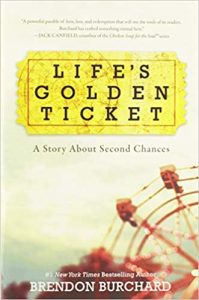
Yeah, that makes sense. It reminds me of a strategy that Brendon Burchard shared, and he’s very savvy at business. He fills stadiums, essentially, with people. But this particular strategy was super clever, and it was related to selling his first book, Life’s Golden Ticket. He found these nonprofits that were willing and interested in sharing his book with their donors, but they wouldn’t, of course, pay for it. Somebody had to pay for it, and it wasn’t going to be Brendon.
So he brought in a corporate sponsor for each of the nonprofits. So the corporate sponsor would bankroll the bulk purchase of his books and the shipping. And they would get a mention in the cover letter and maybe an insert in the book. And then the nonprofit, of course, would get to reactivate donors who had stopped donating. Like, “Hey, this is a little thank you for your past donations. No strings attached. We just really want you to know that we’re grateful.” And of course, then the money would roll in again.
So it was a win-win-win for everybody. And he sold many, many tens of thousands of books, just rinse and repeat, find another nonprofit, another corporate sponsor to go with it. And even if he didn’t get paid much of a speaking fee, he would be able to monetize by having a book on every single chair. It doesn’t even mean that the conference organizer would have to pay for it. He could just bring in a corporate sponsor to pay for it. And so then the insert would mention the corporate sponsor, and everybody’s happy.
Brilliant. I never knew that story. I knew he had a book called Life’s Golden Ticket, but I never knew about that sponsor and nonprofit. That shows the power of thinking big. And Brendon Burchard was one of my early inspirations. He had this video that I probably watched a hundred times. And it was like how to make a million dollars as an expert because he had a product called Experts Academy.
Yep, I attended that several times.
Yeah. So you probably saw this video where he’s like, “if you just sell 10 eBooks a day at $27 each, this is how much money you’re making in a year. And if you have a $300 product, you only need to sell one a day. And if you have a $3,000 coaching program, you only need to sell, you know, two a week or whatever.” And yeah, it’s great to break down the math and see how it works. And he’s a big inspiration for people.
Yeah. And what I also love about him is that his story is really compelling. The story of him in the car crash and how he was at death’s door, and it gave him a new lease on life. And he shares that with such, I don’t know, a vulnerability and realism. It just makes you want to get on the bus with him and go where he’s going.
And I’m curious: have you cultivated your story? As the SEO, AEO guy, you might think your story isn’t as important as the SEO and AEO strategies and tactics you do. But now that I know that you’ve taken Brendon’s training, do you tell your story much?
I do a lot. Yes. But my story doesn’t have much to do with SEO so much as it’s about, you know, a spiritual awakening. Two of them, in fact. And, yeah, I’ve definitely been working on the memoir and signature speeches and all that sort of stuff. But, yeah, it’s pretty disconnected from my SEO career and business. I love to figure out a way to make it more relevant because it’s, yeah, it’s hard to connect those two.
Hmm. Well, I have a suggestion, man.
Yeah, absolutely.
Storytelling is what separates good speakers from great ones. The great storytellers aren't just telling you about what happened—they're bringing you into the scene. Share on XWhen SEO and AEO are working, business becomes easier. Money flows more easily. You actually get to live the life that you dreamed of as an entrepreneur, which is freedom and abundance. And you can live out your life’s purpose, your soul’s purpose, and give yourself the space to have all the spiritual time, all the adventures, and all the contributions you want. And so in this 3D reality, if I can use spiritual speech.
If you don’t have the money, you can’t make your highest contribution, you can’t express yourself fully, and you can’t fully realize yourself spiritually. So it’s like the key. It’s like unlocking the ability to live the life you’ve always dreamed of. That’s what money can do. And SEO and AEO are like the key to opening the floodgates of money.
Yeah. Very true. So it’s like, to thrive, you also need to survive. Like you have to have the base of the pyramid handled, before you can get to the self-actualization, you’ve got to have food in your tummy. So if you can be, what Dan Sullivan refers to as, self-multiplying in terms of the business, you know, self-managing is kind of like table stakes. That means it doesn’t require you to get in there and do the work. That’s really self-employment. But self-multiplying is the next level up, where it grows on its own without you having to get your hands dirty every day.
Yeah, that’s a neat trick.
I always ask myself three questions before a speech: What do I want them to feel? What do I want them to know? And what do I want them to do?
Yeah. Speaking of tricks, how do you incorporate magic into your signature speech, your whole schtick and so forth? Because everybody’s got their schtick, their kind of angle, what makes them remarkable, worthy of remark, to use Seth Godin‘s definition of remarkable. And we were talking about Brendon Burchard and his whole story about climbing out of that car wreck. He’s basically bleeding to death, and he’s seeing through the reflection in the blood pooling on the roof of the car, the moon. And he’s having this existential crisis, like he didn’t live his life to the fullest. He really missed the boat. And, you know, we’re there with him, really feeling that pain. And so I’m curious, like what sort of shtick or remarkable elements do you incorporate into your presence on stage?
Yeah, well, when I come onto a live stage, I’m usually wearing something remarkable. Meaning like it’s not just a nice-looking suit, it’s, I hesitate to use the word loud, but it’s the kind of item that you, that someone, when they are talking to you, they can’t comment on it, and they’ll never forget it.
Yeah, you know, there’s a term in the pickup community for this. Peacocking. Exactly.
Yes, correct. So I’m walking on, and I’m a peacock, and I’m walking on stage, and I’m standing, and I plant my feet, and I’m in the spotlight. I give a little bit of a dramatic pause, and I’ll often start with, ladies and gentlemen, my name is Majeed Like Magic.
Long pause. And immediately everybody is like,” Whoa, you know, this is different.” You know, I’m trying to wake people up, right? And then I’ll often say, “I always say my name like that to help you remember it because Majeed, it’s an ethnic name. It’s a funny name. You may have never heard about it before, but you heard the word magic. So it’s Majeed like magic”. And I always give it that rhythm too, because when you say it with a beat, it makes it easy to repeat.
And at this point, they couldn’t forget me if they tried. So, being unforgettable comes early in the speech. And storytelling is what separates good speakers from great ones. And the great storytellers, they’re not just telling you about what happened, they’re bringing you into the scene. So you’re right there with Brendon on the roof, seeing the blood with the reflection of the moon and feeling the raindrops on the side of the road of the car crash, and you’re feeling it.
If you want the money, you gotta be funny. Especially when your topic is heavy, you’ve got to pull us out of the heaviness with some humor.
You’re seeing it, you’re feeling it, you’re tasting it. And you know, Brendon’s so good at that. And the speakers really transported themselves there. That’s why sometimes they get a little emotional because they get themselves there. And from what I know of the brain, your brain probably thinks it is there, too. And when people are engaged, their bodies feel like they’re there. That’s why their palms are clamming up, their heart is pounding, and their breath is changing. And the state change that is facilitated through the storytelling is the same state change that we pay money to go watch a movie that’s supposed to scare us like a horror film, because it’s going to change our state a little bit.
And so that’s the magic I bring, I’ll start with what the lesson I want people to know. I always ask myself three questions before a speech. What do I want them to feel? What do I want them to know? And what do I want them to do? So feel is the emotion I’m going to create. Knowing is like the one big idea that I want them to get, and doing it is like the call to action. What I want them to do is stand up and do, whether it’s by my program or scan my QR code or never forget on Monday morning to say hello to the person at the front desk, whatever it is, the thing I want them to do.
And then once I know those three data points, those strategic outcomes feel no doubt, then I’ll say, “What is the story that teaches this lesson?” And the final cherry on top is, how do I make it funny? There’s a saying in the speaking business: if you want the money, you gotta be funny.
Good.
And I say, especially when your topic is heavy, you’ve got to pull us out of the heaviness with some humor. So that’s a masterful stroke to say, “Okay, where can we find the moments that are funny here?”
So what would be an example of a topic that’s really heavy or maybe even dark that you can make funny in a surprising way?
Well. A lot of topics are dark and heavy because most people who develop their expertise started with pain and a wound, right? And there’s a saying in the speaking business, don’t show your wounds, don’t show your open wounds, but you can show your scars. The difference is that the open wound hasn’t healed yet.
Right
And when you show your scars, we want to be able to do it in a way that gets your audience to feel like, I want to be able to talk about my past like that. You know, know, someone’s really healed when they have found what they’re grateful for out of the experience. And one of the great speakers on topics like this is Brené Brown. Brené Brown is known for shame.
That was one of her big topics, and she’s now spoken on a couple of different other topics that are not related to shame. But if you watch her Netflix special, you’re laughing half the time, and it’s about shame. So that’s kind of interesting. So.
Can I ask if you have something that’s an uncomfortable story or something, but it’s not an open wound, it’s now a scar, and you make it funny?
Yeah, yeah. Well, my origin story, which proves that I’m the guy who learned how to sell from the stage, starts with the time I bombed from the stage. So I was in New Orleans, the French Quarter, Hotel Monteleone, speaking to the Geneva Group International. It was 2013.
My newborn baby’s in the back of the room, being held in her mom’s arms. And I’m on stage giving this talk. And I stayed up the night before making these PowerPoint animations. And you’ll appreciate this because you know internet marketing. This was the time of Brendon Burchard’s Expert Academy and Jeff Walker‘s Sideways Sales Letter Product Launch Formula.
A speech that sells is talking to people on Pain Island who want to get to Pleasure Island. The boat is your program, your service. Share on XAnd I learned somewhere on the internet, possibly from Frank Kern, that if you make the number red, and cross it off and make the real number green, people are gonna just love it. And I learned that if it’s $5,000, people aren’t gonna buy it. But if it’s $4,997, people are gonna say, “Oh my God, it’s a seven. I have to buy it. It ends with a seven.” And that’s not 5,000. That’s less than 5,000. That’s 4997.
So I stayed up until like 2 a.m. working on this animation. Because I wanted the red number to blow up and the green number to swoop in. And I wanted to add up all these bonuses. Like, I’m so crazy. I’m giving away these crazy bonuses, and they’re all worth so many dollars, and they’re worth like hundreds of thousands of dollars. And I’m going to give you all this crazy stuff for only $4,997. So I’m on stage with not enough sleep and too much coffee.
I’m giving my speech, and I start the pitch with the bonuses. And I’m in front of about 200 accountants and lawyers from Europe and North America who are watching me give a talk. I can’t even remember what the talk was on, something about leadership or something. And I was thinking I needed to sell these folks a $5,000 training program for their staff, because at the time, I was doing leadership training for them.
But I had never sold from the stage like this. So I’m clicking, I’m clicking, and there’s the big red number, and there’s the X animation and the explosion, and it’s all working, and there’s the 4997, and it’s green. And then I didn’t know what to do. And the room was dead silent. You could hear a pin drop. And there’s a person in the front of the room, front row, who starts laughing. And the laughter spreads across the room. And I immediately feel so hot and so red. And I’m already Persian. So I’m sweating a lot. And I’m sweating even more.

And then I look over in the front row, and it’s the guy who hired me to give the talk, and I can see his hands in his face like this. And when I’m telling this story, I actually had a flip phone, you remember those flip phones before. I had a flip phone recording the whole thing and you could see the guy, he wasn’t like this, but he was like this in the angle of the speech. I’m like, that’s the guy.
And so I can make it even more dramatic by saying, not a single person bought from me at that conference. I wanted to hide from everybody. I didn’t even want to show my face. And then I made up a whole story that they’ve blackballed me from the industry, that there’s some private chat room that conference organizers around the world are looking for speakers that suck at selling from the stage and this might my conference organizer who hired me he’s in there writing this guy Majeed was so bad we all started laughing at him when he made his pitch and I was so scared to follow up with this guy I was so scared to reach out to another conference again and for over a year I never put myself in that position again because I’ve never been more embarrassed.
I’m telling this story, and I’m embellishing little moments like the exploding red number and the green, and how ridiculous it is to think that you can make all these bonuses and give a number seven, and that people are gonna buy. I’m vulnerably sharing my personal pain and embarrassment, but I’m making jokes about being a sweaty Persian. I’m already Persian, so I’m sweating, I’m even sweating more.
If people have imagined working with me, and they don't even want to imagine a future without working with me, then the price doesn't even matter. Share on XAnd then when I’m done with this story, which is so captivating, people can’t look away. And now they know that I have lived the terrible, horrible pain that they probably haven’t experienced. My audience probably hasn’t made a pitch from the stage and got no responses, worse than no responses, laughter and being blackballed from the industry. That was just my imagination. But now they’re imagining themselves having such a horrible, terrible failure.
Then I juxtaposed this with a story three years later, where I made $250,000 from the stage. And I pay off all my debts. I pay off my student loans. I have so much money left over. I can take my family on a three-month vacation. And I just had more money than I knew what to do with because the year before that, I made $40,000 the whole year. So life-changing.
And then I kind of break down. Here’s the difference. So I’m storytelling, and I call this framework Pain Island and Pleasure Island. Pain Island is where you’re suffering. Pleasure Island is where your dreams come true. And a speech that sells is talking to people on Pain Island who want to get on Pleasure Island. It teaches them the steps to go from.
Pain Island and Pleasure Island, and it offers them a boat. The boat is your program, it’s your service. It says you’re here, you wanna get there. I’ve been, I’ve made this journey before, that’s why I made the boat. So those were little humor points. You can see where, when I’m typing, I go, like this, like I’m just imagining my conference organizer typing like this. And so I can get physical.
Have you ever used props?
Good question. I live in Canada, so I often speak to Canadian crowds. There’s a Canadian football team called the Saskatchewan Roughriders, and it’s kind of a joke: Saskatchewan people are really into their football with the Rough Riders. So I got this number one foam hand, you ever see, like the foam hand that you kind of go, like, number one.
And so I would always put it on and say, like, the number one most important thing. Don’t forget the number one thing: that’s one prop I use. I use visual aids a lot, like PowerPoints and pictures. Usually, I like full-screen pictures with no words, and then I’ll just tell a story about the pictures. I can’t think of many props I use. How about you use props?
Not usually, but I have used them on TV appearances, and they’ve been very successful. So, bringing gadgets and costumes and things like that onto the set. So, for example, when talking about geeky topics, I might bring some geeky gadgets for the host to try on, like an Iron Man helmet and other things, and they actually put them on. They’re open to some of them doing that and kind of being silly. So that’s how I’ve incorporated it. But you shared your story of vulnerability, and you know, feeling embarrassed and everything.
I’ve got a similar story, but I think even worse, because I was actually told not to come back by the conference organizer. Yeah, this was very early on. This was before I even had any speaking experience. And I actually talked my way in. This is in 1994. And I had just finished my master’s degree, was starting my business, and didn’t have any speaking skills or anything, but I knew how to do some web stuff. I was all self-taught.
Be willing to share your embarrassment because if somebody can grow through that, they get to know you as a human—and that builds trust.
This was even before SEO was a thing. In 1994, people were using the Mosaic browser. So I’m at this conference IQPC put on about how to market online. And people were paying like 2000 to $4,000 to be there. And I, of course, had no money. So I talked my way in as a volunteer. And so they gave me the job as a mic runner.
So I was going around and like there’s some big people on stage like this GM O’Connell guy who founded Modem Media and I out did them because I had the mic and I thought well I’ll help them answer the questions that they’re kind of bumbling on and so I just kind of chimed in here and there and of course I’m sure I got multiple speakers saying “hey get rid of this guy.”
So by the end of the day, you know, I was de-invited from days two and three. Still, by the end of that day, I also had a stack of business cards. I got two huge clients who were like the equivalent of angel investors, because their lifetime value was at least half a million dollars each, just from that one day and putting myself out there. Still, it was pretty cheeky, and for many years, I didn’t speak about this because I was really embarrassed by it.
But the irony is, you think that they’re all in chat rooms or on conference calls, blackballing you. No, they don’t speak to each other. So, a different conference organizer from the same organization as IQPC, just a few months later. I don’t know how he found out about me. Still, he invited me to be a speaker at the program called “How to Market Educational Programs on the Internet,” and not only did I end up in a general session, but I also became the chairperson for that event and a post-conference workshop teacher. I was terrible, I was absolutely atrocious at all of it, especially the conference-like chairperson thing.
I did not know how to be bubbly and keep people on time. And no, that was a hot, hot mess. But, you know, it’s like, repetition is the mother of skill. So you just get out there, you do the reps. So, because I had gotten all that kind of top billing at that conference and all the other organizations, IRR, and so forth, they were all on each other’s mailing list. I just started getting calls like, “Hey, I see you’re speaking. And we’d love to have you speak for our organization.’ So I just said,” Yes”, yes, to everybody. And I was pretty bad. I was pretty atrocious, actually. And then I got mediocre. And then eventually I got good. But I had to put in the reps. I’ve probably done many, many hundreds of speaking engagements. Maybe a thousand, maybe 2000, I don’t know, but lots, lots and lots.
Yeah, yeah. That’s a great origin story.

I guess the bottom line of this is to be willing to share your embarrassment because if somebody can grow through that and then look, know, like, and trust you through you, you share your vulnerability and being more human, especially in this AI era where you don’t know what’s real. Like that video you see on TikTok or whatever, might not be real. Probably isn’t. So yeah. They want to know you as a human.
Yeah, I love to talk to you about AI and before we go into those, I’ll just share kind of my takeaway, looking back on that experience for me, I regret that it took me off the circuit, off the stage for a long time because I really made up a whole story about what it meant to be laughed at on stage, I could have just, I could have just taken a round of applause and stepped off stage and felt like I did a good job. and I decided like, I was being greedy because I got paid to, I got paid, I got flown out, I got paid. So I was like, well, I’m being greedy if I’m trying to get more money here, and you shouldn’t do that. It’s wrong. As I made it, I reached many unhelpful conclusions.
So if I could go back to that guy, who is now 12 years old, I would say one, making an offer is not a bad thing. In fact, it’s the answer to the prayers of people looking for a solution you can offer. And so even if 99 % of the room doesn’t buy or laugh at you or whatever, the one person who does, you’re probably helping them out a lot. And so I’ve kind of reprogrammed my belief system to believe that it’s unethical not to make an offer. If there are people in the audience you can help and have the capacity to help them, you need to make an offer to them.
The way I sell now, there is no pitch. It’s actually throughout the whole speech; the stories are engineered to get the audience to imagine working with me and liking how that feels.
I would say, yeah, there is no chat room they’re blackballing you from. They’re just moving on to their busy lives the next day, you know. And what I am grateful for is that it turned me into an obsessive learner about selling from the stage. And I really never wanted to make another sales pitch. And the way I sell now, there is no pitch. It’s actually throughout the whole speech; the stories are engineered to get the audience to imagine working with me and liking how that feels.
And then imagine not working with me and not liking how that feels. And so they’ll just kind of come to this emotional conclusion of like, I want whatever he’s offering, and I don’t even need to make an offer. People will come to me and say, how do we work together? I don’t need to put the numbers up with the bonuses and drop the price; the last thing is the price. When people have imagined working with me, and they don’t even want to imagine a future without working with me, then the price doesn’t even matter. And I’ve moved away from a buy-now kind of pitch and moved towards a let’s talk kind of sales model. So it’s a speech-to-conversation to offer.
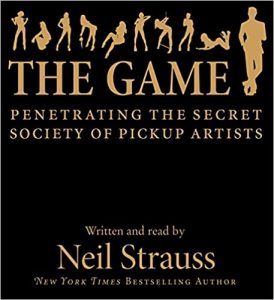
Right. That makes sense, that makes sense. You know, this dates back to, I don’t know, well over a decade and a half, but I read in like 2010 or 2009, The Game by Neil Strauss, and it’s all about pickup artists and that whole world. And one thing he explains is: you don’t brag; you seed into the story the fact that you have all the social proof. So that’s what pickup artists do. So instead of saying that, yeah, I’ve dated the supermodel, I have a Ferrari or whatever, you tell a story, and you weave that seamlessly into the story.
It’s like, yeah, this crazy thing happened. I was with my girlfriend’s supermodel. I don’t know if you’ve heard of her, blah, blah, blah. Then, in this thing, I was driving the Ferrari, and what happened was, and it’s just seamless, but you’re dropping all the social proof into the storytelling. So they’re like, “wow, this guy’s a big deal.”
And I wonder if maybe any of that’s relevant to what you’re describing when you’re doing this whole story through the whole speech, where they’re getting the sense that they should be talking to you as a next step.
Yeah. Well, if you think about the model of a conversation to offer, then the speech is actually selling the conversation.
Right.
That’s the call to action. That’s the desired action. I want my ideal client to do it. And so if I can give a speech where I showcase conversations that were turning points for my clients, you know, like, let me give you an example.
Neil Strauss
One day, I got a call, and the guy said to me, “I’m having the same problem they’re experiencing right now.” So they kind of lean in and go, okay, what happens? And I say something to the effect of, ” Don’t worry. I know exactly what to do. Let’s get together. Let’s come up with a plan. We came up with a plan. We executed the plan. 90 days later, he’s calling me from the beach. He’s on a second honeymoon with his wife. You know, he’s spending more time with his kids. He’s got more money in the bank account.
And he says, “Gosh, that plan worked so well.” And I say, “yeah, you know, that one phone call made all the difference.”
Right. And if they know a particular person who has been a client, you can drop that into the conversation too, like, “I know that Sachin Patel was a client because I saw his testimonial on your website.” He was a past guest on this podcast. So you could say, well, when Sachin Patel had this issue with health and wellness professionals, and the audience is like, oh, I know who Sachin is.
Okay, let’s talk about AI. Are you excited?
Yes, let’s talk about AI, the elephant in the room that’s going to change the whole world in the next year. Maybe two.
Woo, I’m excited.
Good, I think positivity and positive expectancy are the name of the game here. Being a doomsayer and a doomscroller is not going to help your or anyone else’s mental health.
Well, as Elon Musk recently said in his talk at The World Economic Forum, “I would rather be an optimist and be wrong than be a pessimist and be right.” And so, yeah, if I were a guessing man, I would say, “yeah, the robots and the AIs are probably going to take over the world in a terrible, horrible, scary way.” But for now, they’re helping me make speeches.And I’ve developed this workflow that is quite remarkable and consistently brings my clients to tears. Would you like me to share it with you?
Yeah, of course. Yes, please.
When you help people tell their story, it can be very empowering and very healing because their story often comes from struggle.
So I get on a call with someone, and they say I’ve got a big talk coming up. Help. And I don’t actually really love writing speeches. I like the frameworks, and I have this checklist in my head. Like, if we can hit all these buttons, then it’s going to work. So I go like this: I say, “So, who’s your ideal client?” Tell me about your ideal client. What’s their problem? How does your solution solve their problem? How did you learn how to do what you do? What’s your story? What was the turning point for you when, like before, you were really good at this? What changed, and how did you figure this out?”
And I just asked them a bunch of questions. Okay. Then I say, “All right, watch this.” And I’m really excited. So I click stop on my Fathom note-taking a recording thing. Which now instantly has a transcript of our whole conversation.
I grab the whole transcript. I go to ChatGPT. And I say my client, Karen, is giving a 10-minute talk at the Women in Business Summit in Dallas. Her talk is about how to follow your intuition to make better business decisions. Here’s a recording of a coaching call. I just got off with her. Right or a 10-minute speech. And then boom, it’s got a 10-minute speech, and I read it out loud to her to kind of show her how I would suggest the intonation.
And within two minutes, she’s crying. And I’m telling you, I’ve had tears multiple times, three, four, five of these sessions I’ve had in the last few weeks. They’re just like, wow. I don’t know if they’re crying because the AI is too good, or if they’re crying because they’re seeing their story come to life. But that was shocking. And I’m about two steps away from building an agent or a GPT that takes me out of that process.
Gotcha, okay. So if you were to imagine three to six months into the future, what does this look like in terms of, because we’re on an exponential curve. If that’s possible now, then what’s possible in six months? Like the fact that you can have an AI avatar that looks like you and has the same kind of hand gestures and so forth, maybe there’s some kind of uncanny valley moments where it’s like, wait a second, that’s not quite real. It’s gonna be hyper-real in six months. So what’s the equivalent of what you just described of working with somebody who wants to give a keynote speech in six months? What kind of tech is gonna be possible? What do you think?
Real power isn’t just delivering the words—it’s feeling them. You can recite a speech perfectly, but if you don’t embody it, that’s the difference between good and truly great.
Well, we can replicate that process. In fact, I could probably just grab the six or seven different Fathom recordings and train an AI to come up with a 10-question process that gets people to the same level of clarity about what their talk needs to be. And one of the things I do in my process when I work with clients is I say, “Record your speech on Loom, which is screen recording software, and send me the Loom video.” And then I made a video of myself watching the speech, paused it, and said, “Instead of doing it like that, do it like this.” And the Loom videos are automatically recorded. I think they’ll get great feedback if they put it right into an AI. They got me right out of that process.
The thing that is really powerful about this work that I don’t know how an AI is gonna do it just yet is that when we help people tell their story, it can be very empowering and very healing because their story often comes from struggle. And when people can talk about the lessons learned and the gratitudes of the struggle, it’s a healing experience. And two, when people step into the version of themselves, maybe like a near future version, like imagine yourself one year from today, you’ve already done all the speeches, you’ve already got all the clients, you’re crushing it, deliver the speech as that person. That’s what I call embodying the message.
That’s real power: I can give you the exact speech to deliver, word for word, but if the audience doesn’t feel it because you’re not feeling it, that’s the difference between good and great on the delivery side. Those pieces have a lot of value, and I think I’ll still have some work to do to help people find a way to tell their story that’s, in a way, very empowering and healing, and to help them step into embodying their message. But as far as creating a lifelike avatar like me.
I’ve got enough content online between my podcast interviews, my TikTok videos, and my YouTube videos that if we feed that into a basic AI, it’s going to look and sound just like me. It will probably answer questions better than I do in many cases.
Yeah, so here’s to piggybacking on that. Here’s my prediction for, let’s say, three or six months from now. Let’s say you use heygen.com to create an AI avatar, and you only need a few minutes of recording to get a very realistic-looking, sounding version of yourself. And then you have that AI avatar deliver your signature speech, which maybe a different AI, a base model version of it, writes for you. And then it does all these multivariate tests of the speech. And each one is assessed by another AI, like an audience. And so before you feed it, like not only your story of struggle, your hero’s journey, all that.
You also fed it like best practices, according to you, Brian Tracy, Michael Port, and all the other expert speakers who have written books on the topic. You feed it all of the intel, and here’s how to captivate an audience. Here’s how to use the pregnant pause, et cetera. And then, you have all these variants created of that speech, maybe 100,000 versions of that 10-minute talk. And you have another AI analyze the audience of 1,000 attendees, each of those 100,000 variants, and pick the winners. And then, with all the intonations, all the silly, seemingly embarrassing moments, or whatever, that are engineered into the talk, all of that is slipped in and optimized. So here’s the variant that is the winner. That’s my prediction.
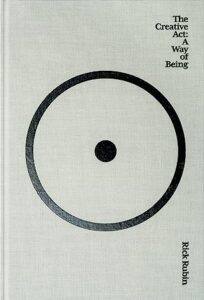
I think you’re right. That’s what they’re doing with ads. And in a way, in a way, a speech that’s designed for sales and marketing is an ad. and yeah, I mean, you have this, there’s the book called, The Creative Act, by this guy with the long flowy, white hair.
And he says, that’s become a meme, which is like, “I have no technical ability. I can’t play any instruments.” And the interviewer says, “So what do they pay you for?” And he says, “for my taste and my conviction that I know what’s good.” And this meme has been applied to what the near future of AI prompting is gonna be like, “well, nobody’s got any technical ability anymore, but we’re gonna value taste.” And so he says, “I create art not for the audience or the consumer, I create it for myself. And that is great for personal fulfillment.”
But if you want market success, it stands to reason that producing 100,000 versions, testing them all, and optimizing for market uptake is a logical process. And it’s my understanding that savvy marketing agencies are doing that now. I heard about this Pantene Pro-V shampoo bottle maybe six months ago, which is like 10 years in AI. You know, and they’ve created the first ever end-to-end cinematically produced commercial without a single camera and a single product.
Every image is AI-generated. And because they can do that, they can produce thousands of versions of them and test all of them and very, very quickly see which ones convert. And I love the idea Mark Zuckerberg proposed with Facebook and Meta ads: you will no longer have to create the creative. You just tell them what kind of customer you want.
And they’ll produce thousands of versions of an ad until it produces the customer. And now you just pay for sales. You can kind of cut out the whole creative advertising process and just say, these are the customers we want.
Yeah.
That’s a cool future.
Yep, and so everybody’s unemployed. It’s a crazy time. I mean, I’m excited for what’s to come because I really do believe that we’re entering an era of mass spiritual awakening. But if I didn’t have that certainty and faith around that, I’d be scared to leave my house.
Well, luckily, we still have governments and bureaucracy that never cease to amaze at how inefficient they can be. And I can’t imagine a government becoming efficient in my lifetime.
They’ll be replaced. So let’s talk about how to leverage the haters. You know, there’s this concept I love. It’s actually the name of a book by Jay Baer, and it’s Hug Your Haters. And before we were recording, we talked about how you had some TikToks that went viral for an interesting reason: you got a lot of hate, a lot of cranks talking smack in the comments. Do you want to talk? First of all, what were these videos about?
Sure, yeah.
And then how was this actually a gift?
So my most popular, most viral, most viewed video of all time is at 8.5 million views. And it’s, thank you, that’s TikTok for you. You put up a video, and it can go viral. And I’m not exactly sure what the formula is for pushing it out to more people, but in this case, it was a highly engaged post. That’s impressive, good job.
And it’s one of those things, like I woke up in the morning and I had a bunch of text messages. Someone said,” Oh my gosh, you got 300,000 views on a video.” And then I look at it, it’s not 300,000, it’s a million. And the next day it’s 2 million. So the good news is that, from this video, I added 100,000 followers to my TikTok account, which is now at 330,000.
That’s a big jump up. Good job.
It’s a lot. It’s a lot. It’s huge. Yeah, I mean, it took me 10 years to get 2,000 email subscribers, so getting 100,000 followers in 24 hours is pretty cool. And there were many positive comments. I gave a one-hour talk, and a video editing team took this 15-second clip out of context because the context was: if you’re a speaker. You want to price yourself? What I recommend is: don’t advertise a price, and when people ask your price, enter into this kind of conversation.
But the actual clip starts like this. When someone asks you your price, never give them a number. And already people are in the comments, and they’re angry.
Yeah.
A speech designed for sales and marketing is, in a way, just like an ad—and AI can optimize it faster than any human.
You know, this guy’s in the comments, he’s like, “this is what I hate about salespeople, they just, just give me a damn number,” and so I recommended a conversation afterwards. said, “You know, instead of saying, I’d be happy to work within your budget. Why don’t we determine if I’m actually the right fit for this job first? And if I am, then I can work within your budget. Is that fair enough?” And that kind of phrase handles people’s objections about, is it going to be my budget? And then explain later. I don’t think it’s even in the clip. That’s like, what do you do if they say I have no budget or if my budget’s $100? And then I explain how to kind of manage that conversation. But people are in the comments saying, “what if I say I have a $0 budget?” What are you going to do then? I think that’s why it became so, it’s controversial, right?
Yeah. I don’t remember who said this, but I love this take and things. Don’t be afraid to polarize. Because if you try to make everybody happy, you make nobody happy, you actually shrink, and you’re not really sharing your light, your wisdom, your experience, your realness with anybody.
Yeah, this wasn’t my first viral TikTok video to get a lot of hate comments. And so I was used to it, but I’ll share with you a really profound lesson I learned from Jesse Elder, who made a course called Hater Aid, a play on the word Gatorade. And in the first five minutes of his course, I was like, this is a great idea.
It goes like this. When you put stuff on the Internet, people will hate it. They will have comments, especially if it’s polarizing content, and the course he delivers goes on to explain that there are like six different types of haters, like the one who tries to correct you and says, “That’s not quite accurate.” This is more accurate than the other people who just like to attack you for how you look.
And if you ever run ads, you’re getting like. hundreds of thousands of impressions or millions of impressions. You’re gonna offend somebody with something somehow, and they’re gonna come and say something, right? So here’s the idea that I thought was really powerful. He says, “option number one when you have a hate comment is you can delete it, but there’s an opportunity missed there. Option number two is you can get into an argument, but that doesn’t help anybody, and it sure doesn’t look good. Option number three is you can respond, but you’re not responding to that person for that person; you’re responding to that person for your potential buyers.” That was the idea that I was like, “What a great idea.”
Broad audience content can go viral because, up until TikTok, I was always speaking to people in a very narrow niche and had alienated 99.99% of people on the Internet.
So you’re responding, but you’re responding because you have an audience waiting to see how he’s gonna respond. And when you respond with respect and kindness, that might be a good look that you’re going for. When you respond with assertive boundaries and protection, like saying, “Hey, you’re bringing this anger onto my posts”. When you respond with some humor and humanity, he goes on to show different ways you can respond to hate posts. Still, he made a whole course on how to respond to haters: don’t get into an argument, don’t delete it, but use it as a way to showcase how you handle yourself.
Yeah, you can Aikido the person. Right, you use the other person’s energy and deflect it, and you don’t have to go off balance at all.
Another one of my viral TikTok videos went viral around Christmas time because I have a daughter, and we painted my nails gold and red. And so I had these like red and gold nails, and I wasn’t intentionally showcasing them, but as I was kind of gesturing, you could see that I had painted nails, and the comments were like, “I would never take advice from a man with painted nails,” and so many comments about the nails. You know, and part of me is like, well, “gosh, you know, did you listen to the video?”
But it went viral, reaching millions of views, at least in part. So I actually tried to replicate that in some of my future videos, with kind of like really wild clothing or something like that really.
Yeah, the peacocking thing.
Yeah, just because, you know, the audience is scrolling and you’ve got half a second. And unless you have something that’s going to visually capture.
Yeah, you had another viral video on how to position yourself as the best in the world. You want to talk about that for a second?
https://www.tiktok.com/@expertspeaker/video/7064305845428915461?is_from_webapp=1&sender_device=pc
Correct. Yeah. This one, I just think it’s so valuable and useful. I think that there was nothing controversial or angry about this one. And it went viral on Instagram, which I’ve never really had happen with a video other than this one. But it says, I think it starts with, “here’s how you position yourself as the best in the world.”
And I think that phrase doesn’t really speak to a broad audience, either. What I learned about TikTok is that broad audience content can go viral because, up until TikTok, I was always speaking to people, saying, “Are you a functional medicine doctor with a high ticket wellness program? Would you like to close more of your strategy calls?” And I’ve just alienated 99.99% of people on the Internet. They’re like, “What’s a functional medicine doctor? What’s the strategy call? What’s a high-ticket program? But
I was following a model like this: my ideal clients are functional medicine doctors with high-ticket wellness programs who do strategy calls. You know, so they’re like, this is for me. So I started doing broad content, like using this phrase and this language. So this one’s still kind of niche because it’s for entrepreneurs, but it says,” here’s how you position yourself as the best in the world.”
And the formula I give is called the blank for blank who blank. Then I give an example. Say, if you’re a realtor, don’t just be a realtor because God knows there are a lot of them. Be the realtor. And as soon as you use the word “the,” you’re claiming only what is due, and then you’re the realtor for first-time home buyers. Now you’re calling out your ideal client, and the last is who blank, and First-time home buyers who want to buy a downtown home.
And so then I’ll give another example: the SEO expert for eight-figure businesses who want to show up number one on Google, or now want to show up number one on ChatGPT. So that’s the formula. And I just think it’s very useful, elegant, and functional.
That’s awesome. All right, so we clearly have a lot to learn from you. I know we’re at a time here. You shared such great wisdom here. Clearly, there will be people listening. I’ve got to hire this guy. I got to figure out how to sell from the stage, or sell twice as much from the stage, or get my signature speech done in a way that really rocks the stage, and the audiences give me a standing ovation or whatever. How do they work with you? Where do they go?
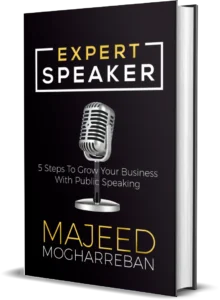
Well, I put my entire speaking system into a book that I give away for free. The book is called Expert Speaker: Five Steps to Grow Your Business with Public Speaking. And you can get the book for free at expertspeaker.com/book. And you can find me, @majeedmogharreban, on Instagram. You can send me a message there, or go to my website, expertspeaker.com.
Perfect, awesome. And we can also find you apparently on TikTok and Instagram. All right, so we’ll, yeah, this was great. It was a delight to talk with you. And so now listener, please take something from this and apply it in your life, in your business, in your career. Don’t just passively listen to it. Do something with it. teach it to a friend or loved one and make the world a better place. We’ll catch you in that next episode. I’m your host, Stephan Spencer, signing off.
Important Links
Connect with Majeed Mogharreban
Apps/Tools
Books
Businesses/Organizations
People
Previous Marketing Speak Episodes
Previous Get Yourself Optimized Episodes
YouTube Videos
Your Checklist of Actions to Take
- Tell your origin story with both vulnerability and humor. Share the embarrassing moment that shaped your expertise—like bombing a pitch from stage—then juxtapose it with your breakthrough. Audiences connect with your scars, not your wounds, and contrast builds credibility.
- Use the Pain Island / Pleasure Island framework in your signature speech. Identify where your audience is suffering (Pain Island) and where they want to be (Pleasure Island), then position your program or service as the boat that takes them from one to the other.
- Ask yourself three questions before every speech: What do I want them to feel? What do I want them to know? What do I want them to do? Let these strategic outcomes shape every story, example, and call to action in your presentation.
- Engineer your speech to sell the conversation, not the close. Rather than making a traditional pitch with prices and bonuses, tell stories that help your audience vividly imagine working with you—and dislike imagining a future without you. Make your call to action a ‘let’s talk’ instead of a ‘buy now.’
- Add humor to heavy topics deliberately. After identifying a powerful but difficult story, ask yourself: where are the moments I can make this funny? Humor releases tension and makes your message more memorable without diminishing its impact.
- Make yourself unforgettable in the first 60 seconds. Use a distinctive introduction, a rhythmic version of your name, a dramatic pause, or a bold visual (like standout clothing) to interrupt the scroll or the room and signal that this presentation is different.
- Use the ‘blank for blank who blank’ positioning formula to define your niche. For example: ‘the speaking coach for business owners who want to sell from the stage.’ This formula works for realtors, consultants, SEO experts, and anyone who wants to stand out in a crowded market.
- Leverage hate comments and controversy as a selling opportunity. When a negative comment appears on your content, respond with respect, humor, or assertive boundaries—not for the hater, but for the potential buyers watching how you handle yourself.
- Use AI tools to accelerate speech creation for your clients. Record a coaching call, extract the transcript with a tool like Fathom, then feed it into ChatGPT with your client’s context and desired outcome to generate a complete speech draft in minutes—often moving clients to tears.
- Create broad, polarizing content for social media to reach beyond your niche. Avoid ultra-specific language that alienates 99% of viewers. Get Majeed’s free book and connect with him to take your speaking to the next level. Download his complete speaking system — Expert Speaker: Five Steps to Grow Your Business with Public Speaking — for free at expertspeaker.com/book. Visit expertspeaker.com to learn more about working with Majeed, or send him a direct message on Instagram at @majeedmogharreban.

About the Host
STEPHAN SPENCER
Since coming into his own power and having a life-changing spiritual awakening, Stephan is on a mission. He is devoted to curiosity, reason, wonder, and most importantly, a connection with God and the unseen world. He has one agenda: revealing light in everything he does. A self-proclaimed geek who went on to pioneer the world of SEO and make a name for himself in the top echelons of marketing circles, Stephan’s journey has taken him from one of career ambition to soul searching and spiritual awakening.
Stephan has created and sold businesses, gone on spiritual quests, and explored the world with Tony Robbins as a part of Tony’s “Platinum Partnership.” He went through a radical personal transformation – from an introverted outlier to a leader in business and personal development.
About the Guest
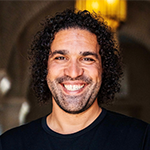
Majeed Mogharreban
World-traveling father and professional speaker, Majeed Mogharreban is the founder of The Expert Speaker Institute, the premier resource for experts to grow their business with public speaking.Majeed, Like Magic, will help you go from the best kept secret to the go-to person in your field with a signature speech that attracts your ideal client.






Leave a Reply