



In the past, making a professional recording meant booking a studio by the hour and convincing someone to fund it. That barrier is gone. Anyone can now generate a finished song in seconds, and close to a million new tracks reach streaming platforms every week. When production becomes nearly free, being good stops being an advantage. What gets rewarded is being genuinely outstanding.
My guest on today’s show is Benjamin Groff, a music publisher whose career spans more than 30 years. He became Kobalt‘s first U.S. employee and rose to EVP of Creative before launching his own company, Brill Building. His signings were nearly all unknowns when he found them, but names like Ryan Tedder, The Lumineers, and Kid Cudi have since generated over half a billion dollars in royalties.
In our conversation, we discuss why the flood of cheap content has turned attention into the only currency that matters. Benjamin explains how he spots talent years before the algorithms and data scrapers catch on. He also draws a hard line between work that is merely good and work that is truly outstanding, and why only the second kind earns anything at all. We then turn to what this shift means for any brand trying to be heard now that everyone can publish.
This episode will change how you think about standing out, and show you what it really takes to rise above the noise when being good is no longer rare. So, without any further ado, on with the show!
In This Episode
- [03:50] – Stephan asks Benjamin about his journey into music and how he became a leading music publisher.
- [08:42] – Benjamin shares how he built the Brill Building and signed major artists including Ryan Tedder, Tiësto, Kid Cudi, and The Lumineers.
- [11:07] – Stephan asks how Benjamin discovers talented artists before they become widely known.
- [14:33] – Stephan asks Benjamin to predict how AI will transform the music industry over the next three to five years.
- [15:28] – Benjamin explains how AI music tools like Suno are changing songwriting while comparing them to earlier technologies such as drum machines.
- [26:50] – Stephan asks whether making a living from music will remain viable as the volume of new releases continues to explode.
- [27:06] – Benjamin explains that outstanding work, quality control, and the ability to capture attention will matter more than ever in a content-saturated world.
- [32:08] – Benjamin describes songs as vessels for energy and explains why the emotional energy behind music matters.
- [35:12] – Benjamin explains why finding the right coach or mentor can dramatically accelerate success in any field.
- [40:58] – Stephan and Benjamin explore whether AI could eventually replace human coaching and mentoring.
- [46:05] – Benjamin’s final advice is to take massive action, seek mentors, overcome self-doubt, and do something today that moves you toward your goals.
Benjamin. It’s so great to have you on the show.
Wow, Stephan, I never thought that I would be on Get Yourself Optimized. I’ve been a fan for a long time. I’ve known you for 10 years. I’m surprised, but also very pleased to see your email saying we would now connect on your podcast. So I’m very happy to be here. So thank you.
Yeah. Well, we met through Neil Strauss and his secret society, which wasn’t that secret because it had a website. But yeah, we became friends, and for a while we were doing like an accountability buddy thing. We had, yeah, just that great camaraderie and, you know, synergies and so forth. So I wanted to have you come on the show to talk about not just your area of expertise, but where you are truly world-class. I think it’s important for everyone to not just understand, like, music is your niche, but there’s like this AI wave of change that’s coming that’s going to disrupt every industry; no career is going to be untouched. I mean, maybe psychic mediums, right? But other than that, I don’t know. I think robots are going to do that too.
That is there. You go, yeah.
But I think it’s going to be a sea change for people. And in the music industry, we’re already seeing a lot of stuff happening with fake artists and songs that are not really from real people and gaming the algorithms and all this and who knows who’s going to be left in a few years in terms of being able to make a career out of music. This isn’t just going to be in the music industry. It’s going to be across, I think, everything, even manual labor type industries, plumbing, electricians, all of it. It’s all going to get disrupted. So my first question to you would be really around your backstory, your kind of hero’s journey, how you ended up getting this desire, this passion for music, and how you ended up climbing the ladder to become one of the top people in the music industry.
Wow! Thank you for that. Yeah, I’m pleased to give a really short synopsis of that journey, and it’s the hero’s journey. We’ll see about that, but I’m sure that’s a great metaphor. I really grew up in a very, very small town of 250 people, kind of like Amish Pennsylvania, and basically I always liked it as part of the hero’s journey. There is that call to adventure, and I felt like in the area that I was in, there was a lot of complacency about roles like, ” If you’re 18, you do this. By the time you’re 25, you do this. By the time you’re 30, you do this. And I just wanted to experience the world and be the best version of myself I can be. And that calling migrated into music.
And so I went to Berklee College of Music, and I was a dual major in songwriting and performance, and from there, the intention was I was going to graduate from college and be a professional songwriter. And in the world of professional songwriting and publishing, there are people out there, just as there are scriptwriters and TV writers, that are providing the material for those actors to perform in in those shows, so there are behind the scenes 1000s of professional songwriters and producers collaborating with artists, but also creating what we would call available pitch songs, for lack of better words, where they write a hit song and then they give it to their publisher, which is me in this case now, and that publisher would go out and pitch the song, kind of cast their fishing lines, and see if they can get whomever to record the song from the biggest superstars in the world to the next Taylor Swift, perhaps, or the next Beyoncé.
There are behind the scenes 1000s of professional songwriters and producers collaborating with artists. Share on XSo I was writing my songs after work while I was a publisher during the day, and over 10 years at the majors, I started getting my own placements and cuts as a songwriter, as well as singles. And this was around that time. That was around 2005, 2006. And the music business was collapsing every year since the year 2000- 10%, 15%, 20%. It was the music industry’s Great Depression, largely because of file sharing and Napster. We went from a business where, if you wanted that one song, you would have to drive to the record store, spend $14.99 at Tower Records or Sam Goody or Virgin Records to get that physical CD and get that one song. And a lot of times, the rest of the album was not very good, or maybe there was a second single, and there were two songs on the album. Then, with file sharing, of course, anyone could get basically anything for free.
So we went from that one song, someone driving and buying a physical CD for $14.99, to free. And the music industry had to figure out what this new business model is. Unfortunately, it has been figured out, at least for now, through Spotify, Apple Music, Amazon, and all the streaming services. But around that time, I had a decision to make: whether I was going to pursue songwriting or take a job at this new company called Kobalt. An amazing executive and visionary named Willard Ahdritz asked me to start Kobalt’s first U.S. office.

I left for that opportunity and started Kobalt’s first U.S. office. I was one of the first 20 employees, and we really got started. It was a fringy startup with a great idea and great vision, and it turned out to be one of the top five publishers in the world, generally considered the number one administrator in the world. After 10 years at Kobalt, I was able, with Kobalt’s partnership and support, to launch my own publishing company. And because I’d been signing a lot of writers and artists, I was having the confidence that, okay, I’m kind of good at this.
I think I can start doing this with my own money. And since 2016, I’ve been running my own publishing company. It’s a boutique independent company called Brill Building, and we have about 24 active clients. We just had our first number one Hot 100 a couple of years ago with Beyoncé with Break My Soul, and it’s onward and upward, and that kind of brings us up to date. So I hope that wasn’t too strenuous to listen to.
That’s awesome. And so when you were at Kobalt, who were some of the big artists that you signed?
Sure, I signed Ryan Tedder, who has not just an amazing career as a writer-producer, writing smash hits for Beyoncé, like Halo, or for Adele, or co-writing with Adele, and just so many massive top 10 hits. But he’s also the lead singer of OneRepublic. I also signed Tiësto, Kelly Clarkson, Grimes, Kid Cudi, Sophie, who has been on my roster, Caroline Polachek-it’s just to name a few.
Man, impressive.
Thank you. Oh, The Lumineers. The Lumineers are another good one too. One of the things I’m really passionate about is finding these people early. So besides Kelly, who is already a star because of American Idol, all those artists were just emerging at the time. So, what I do as a music publisher- you may have heard what an A&R person does for a record label- is assign people to the record label. I’m in a similar role, but for music publishing, where I’m working with the songwriter, finding and scouting these people early, and then bringing them on, giving them some seed capital, and then nourishing them, putting together foundational co-writes, pitching their songs, and hopefully taking them to the Grammys.
And yeah, the other side of that is the writer-producers. So some other people are names that I wouldn’t expect you to know, but there are multiple Grammy Award winners, dozens, hundreds of hits. But, like, Greg Kurstin is one; Jake Torrey, who’s been on my roster, also Cirkut, who won Grammy, the producer of the year for 2026 for the Grammys, and there’s lots more. But those are, oh, my first signings. How could I forget my first signing ever? He was 16 at the time. His name is Savan Kotecha. Again, I don’t expect you to know his name, but you definitely know his songs. So many hits, from Ariana Grande to One Direction; he’s been around for a long time. He’s been Max Martin’s co-writer, and we had a great journey together.
It’s awesome. So when you find these people early, how do you find them? Like, I remember hearing the story about Justin Bieber being found from a YouTube video, and it was Carson Daly who found Justin Bieber randomly on YouTube with a popular video of his that was going viral, discovered him, signed him, and all that sort of stuff. So how do you find them early before everyone else has discovered them?
Everyone in the music industry basically uses the same type of programs, and you get a spreadsheet; you get a report of who is going viral. Share on XGreat question. And I actually did an exercise where I took all my signings. Then I made a column of, like, how, okay, how did I come across this person, and there are myriad of different ways that a person like myself can discover, so-called discover someone or find out about them, and those are through.
I found that the number one way is through word of mouth. These are through trusted contacts, where it could be another writer, it could be another artist, it could be a manager or an attorney or another A&R person, and the question I like to ask in every dialog is: “By the way, who are you excited about right now? Or if you were me, who would you try to be signing?” And this should be a five-second answer. And if it’s not a five-second answer, it’s not the thing. But so that’s one way. Another way is what I would call pre-filters. So all these music festivals happen every year; there are dozens of them, from Coachella to the fringiest dark wave music festival.
Usually, the headliners are known, but if you start drilling down into, keep going down into, like, who’s playing, it’s like I just call them the small-print artists. And even though I listen to hundreds of artists per week to scout new talent, I still have never heard of these artists. So a lot of times, I will just make a playlist of those artists. In fact, at one music festival with 10 artists or so, I signed two artists. And someone, someone is doing a great job of curating that event.

And if it’s Goldenvoice, who hosts Coachella or someone who is a cornerstone of a subgenre and an aficionado of that world. I want to know and trust that person, that they are betting that that person should be on that bill. That’s generally how I discover music. There are also all these different playlists and music discovery playlists. I will say, just for your audience and for you, is that what’s happening today and for the last 10, at least 10 years or so, is that unfortunately it’s really become a data-driven exercise. I’ve never really signed anything based on data alone, and when I say data, I mean numerous websites and data scrapers. Everyone in the music industry basically uses the same type of programs, and you get a spreadsheet; you get a report of who is going viral, per se or whatever metric you want to look at.
So, if this person got added to X amount of Spotify playlists and has under 100,000 monthly Spotify listeners, you get that report. It could be you monitoring TikTok and looking to see which TikToks are trending. And what happens a lot, especially with the majors, in my opinion, is that they’re just buying existing business models that are working, and not so much doing the development and so-called A&R work, which stands for artists and repertoire, repertoire being the songs that they’re performing and singing and recording. So that’s kind of where the music business is at at the moment. And now you throw AI into the mix; it’s a whole other world and puzzle to figure out.
If you were to prognosticate what the three- or five-year timeline for the music industry would be, where are things going? Like, if you were to guess what the music industry would be like before Napster to say that you know where we’re heading, that would be a big kind of leap for a lot of people that would have been, you know, just science fiction. So, what do you see? If you were to crystal ball gaze into the next three or five years.
Some superstars are deciding that they don't even really need a traditional record label anymore, and they own their rights. Share on XAnd it’s a great question, and it reminds me of a story I made a footnote here to tell, where we were on a society trip. It was getting to the future first, which I’m sure you remember, and I was taking a bus for a private tour of NASA, and guess who I was sitting beside? Do you remember?
I don’t.
I was sitting beside you.
Oh, okay.
This was in 2016 or something like that, and we started talking about AI, compute power and quantum computing because they had a quantum computer there at NASA, and we got it. We got into this lively discussion about AI and technology, and I was like, “Well, Stephan, what’s great is that’s never going to replace musicians and songwriters and artists because that’s the soul of the humanity of songwriting and artistry. And you’re like, “You said you were like, I don’t know about that. Think of X, Y, Z, A, B, and C times 1,000 whatever was was, and by the time we got to NASA, I was like, I got to start rethinking this, and so it was a fortuitous conversation that made me realize that this is coming 10 years before where we are today.
Generally, technology lowers the quality of songs, and I find the quality of songs is lowering as technology reaches the masses.
So I’m also saying this as someone sitting on both sides of the fence, because as a music publisher and as a songwriter who’s put in as a musician, I’ve put in 20,000 hours. As a publisher, my job is to nourish and protect copyrights and songwriters. But I’m also a futurist in a way. I’ve been part of Peter Diamandis‘s Abundance360 group for about 10 years, and every year I go to that, I have to redefine the possibilities. So I will also. This is the first time I’m really making this public. I’ve become a private investor in Suno, and in my opinion, Suno is the number one place for generative AI music creation.
So I saw this about two and a half years ago; one of my engineers brought it to my attention, and with a text prompt, you can. And even today, it’s become a much more robust tool. Today, you can describe a song. You can’t say, “Make me a song like Justin Bieber” at this moment because it’s evolving so fast. By the time this podcast comes out, they may have licensing deals in place, and certain companies and majors are licensing their catalogs.
So you can say, “Write me a song like Fleetwood Mac at 100 beats per minute. I want it to be about my cat named Samuel, and the verses should be about a vacation. You can put whatever you want in there. Now, of course, there’s a professional songwriting side of that. That’s probably not a prompt a professional songwriter would use, but for someone who is a hobbyist or wants to have fun with creating songs, this is a great way to get not only to a finished song, but to a finished recording in about 30 seconds or less. We jokingly kind of call it pulling the slot machine because you don’t know what you’re going to get. But you render a new version, and in about 30 seconds, you get two new, full, fully done songs and recordings.
And when I showed this to people at least two years ago, their jaws just dropped open and like, “wow, things are going to be changing.” So, what is the future of this? I mean, a lot of professional songwriters are quietly using this more for, I would say, ideation. Ideation means imagining something up here and without knowing how to play, maybe sophisticated jazz chords, ideating something that you want, putting into a system and having the output. And a great quote I heard from will.i.am was: “AI is going to be the age of the ideator, meaning if you can ideate something and refine it and have great taste, you might be able to create or likely create something really special.”
If you wanted that one song, you would have to drive to the record store, spend $14.99 at Tower Records or Sam Goody or Virgin Records to get that physical CD and get that one song. Share on XWhat is happening? What I’m seeing is that the AI music world isn’t just putting in a prompt and saying, “I’m done.” The people who are really doing it well are spending as much time prompting the system and going through revisions. There could be 500 or 1000 prompts revising that song until they get it exactly the way they want, and actually a similar amount of time as they would be writing the song from scratch. So what I’m seeing is that creative people still have joy and fun in creating. I see it as just another tool.
I look at it as the drum machine. When the LinnDrum machine came out in 1979, I believe everyone thought the drummers were going to be done for. Turns out drummers are still incredibly popular, and if you’re going on tour, you need a drummer. But it replaced the need to hire a drummer. Now you have a new tool. So I tend to look at it as a positive; it’s a new revenue source for songwriters and artists, and it is a new tool.

And I don’t know if the outcome is going to be good because, generally, technology lowers the quality of songs, and I find the quality of songs is lowering as technology reaches the masses, so that is an unknown. I think using an AI program to help create and get your thoughts out is going to become more normal. And I have another thought or two, but I thought I’d just pause there.
So what occurs to me, and I, you know, I think this is maybe a little bit woo-woo. Still, if you’re listening to this podcast, you’re probably used to me being woo-woo, and I think it matters a lot what intent and kind of vibration you’re at when you are prompting, because if you feel connected to the all that is. You hit the Enter key, or you speak that prompt into the AI, you’ll probably come up with something outstanding, that is remarkable.
And just a quick example of that. So I’m doing a light redesign. I just posted a light redesign on stephanspencer.com. You know, kind of an updated brand positioning and look and feel. And I was working with my wife, Orion, on this. She suggested pulling up ChatGPT instead of Claude Design, and I was like, “Okay, sure.” And I just happened to notice- or maybe it was she who happened to notice- as we were about to hit the return key on the prompt, and she also took this screenshot of a web page of an AI kind of consultancy or AI training company here in Israel.
That was pretty cool, and it still looked AI-generated. I didn’t. I didn’t love the look of it that much, but I thought, okay, let’s give it a try here and see what comes up. So I noticed before we hit Enter that it was 111. So I had a good feeling about it, and I also decided to, you know, say a little prayer before I actually do that a lot, actually. Say a little prayer before I hit send on an email or something, especially if it’s important, like to a client or a prospect or whatever. And I’m 100% certain that this makes a difference.
I don’t doubt it. I am a fan of that way of thinking about the quantum realm. I’m really into Dr. Joe Dispenza‘s work and the idea of vibrational frequency. I think it’s very real. So I agree. I had a secondary thought there on AI too to share with you, which is the difference and how I would compare it. I’m just going to grab a book here. I have a couple of publishing mentors who are older than me, and they’re like, you know, in their 70s. If you went into a songwriting session with this- this is not a rhyming dictionary; this is Rick Rubin‘s The Creative Act book, but this is about the size of a rhyming dictionary, a printed rhyming dictionary.
But if you walked into a creative writing session with this book and had it on the coffee table, and you’re looking through here for rhymes and things like that, you could get this evil eye from your co-writers. It’d be kind of like, Oh, you’re one of those people,” meaning you need to rely on this book for ideas and to get your rhymes versus being transcended upon from some other creative source. And in my opinion, both lanes are 100% accurate. But this was new technology in 19, you know, not even the 70s. I mean, even before the 70s, this was like new technology using a rhyming dictionary.
And the other thing I would say is that I ask people if they know what a player piano is. I assume everyone knows what a player piano is because I’ve been in places with player pianos, but for your audience that doesn’t know, in the late 1800s there was a new technology called a player piano. It was a piano with pedals below that you would pump to turn a spindle inside the piano, which would trigger the keys to play a song.
So if you wanted the song of the day, you could just go to the store and buy one of these spindles, put it in the player piano in the parlor, and there you have an instant piano player who looked like an invisible ghost. You could see the keys move, and everything, and that was new technology of the day. And oh my gosh, “What’s going to happen to pianists? They’re all going to be out of work.” And of course, that didn’t happen. But it was new technology, a lot of commotion. And guess what? Songwriters and publishers had to fight for their royalties back because the player piano people were saying, “Oh no, we don’t have to pay you,” and so it’s always a fight and struggle.
I would implore you to look toward the future, create the future and bring it into today. Share on XAnd what I see time and time again is that every 15 or 20 years, a new cycle starts: a new technology gets introduced that’s radical, polarizing, threatens people’s livelihoods, and starts getting popular. The majors generally watch it, and when it gets big enough for them to care about, then they either litigate, sue, and then ultimately license. This is basically the journey of streaming, and then the result is a great product that hopefully lifts all boats.
And if you look at where the economy is today for musicians and artists, the idea is that you, as an artist, and even yourself, Stephan, if you and Orion want to make a song, maybe you’ve done this already. You can make a song. You can record it the old-fashioned way, get help from Suno or even just sing it into the program and have it create the production behind it. You can get this on worldwide distribution on all the stores and streaming services, you know, like that. Compared to 25 years ago, that was not possible.
So people, there are what we would call mid-tier artists making a vibrant living doing what they do; it could be super niche, or it could be mainstream. Some superstars are deciding that they don’t even really need a traditional record label anymore, and they own their rights. And this technology has allowed that to happen for millions of musicians and artists to earn revenue, and maybe even a living- in some cases, a tremendous living- but it’s also gotten very hard.
Yeah. Well, the term “starving artist” is a term for a reason. So, do you see making a living off music in three or five years still being viable?
The challenge isn’t just being good; it’s being outstanding.
I think absolutely, absolutely. What I find to be the challenge today in the last five years specifically is that there’s so much music coming out. And if I- you may know the answer to this- but if I were to ask you, how many new music releases are coming out per week globally? I mean, what would be your answer? No, that’s about as accurate as you can be. A couple of years ago, it was officially generally ballparked at 100,000 songs being officially released on the DSPs, meaning the digital service providers, every week. Now I’m sure it’s about a million or more releases per week.
That is compared to when I was starting the music business: you would have 70,000 major label or major independent releases per year, and you’d go in and buy a CD or a piece of vinyl. So the quality control, you can say what you want about the major labels and things like that, but what’s missing today is quality control, in my opinion. And I’m probably going to get a lot of flak from independent artists saying, like, “Screw your quality control. I’m just going to put out my music, and that’s great.
But what we’re missing out on are, in my opinion, the proverbial coaches out there, the people who would have to greenlight a budget and help perfect your song, help provide, figure out who’s going to produce this music, who are the instruments, who are the musicians going to be in the recording session to greenlight you to even get into a studio, because before a laptop, you had to go into a music studio that would be $300 an hour in 1982 money. To produce it and make a record, it’d be like $100,000.
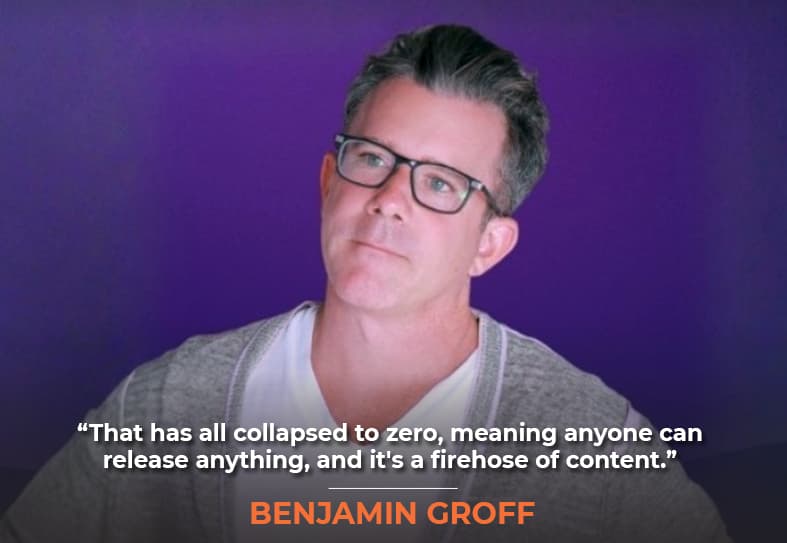
So that has all collapsed to zero, meaning anyone can release anything, and it’s a firehose of content, so it shouldn’t surprise your listeners in whatever medium or segment they work in that the challenge is attention. The challenge isn’t just being good; it’s being outstanding. And the other part is creating that level- you’re creating perennial, amazing pieces of work- and then the other part of that is getting the right attention and cutting through the noise. I’ll just quote one of our friends because we have both gone through several things with Tony Robbins.
I believe that songs are really just vessels for energy.
But I was reading this RPM thing. I don’t know if you’ve done the RPM, which is a Rapid Planning Method book, and it’s from 1996. I found it somewhere on Amazon, and there’s a quote from Tony, which goes something like: “if you do poor if you do poor work, you’re going to get no results. If you do good work, you’re going to get poor results. If you do excellent work, you’ll get good results.
And if you do outstanding work, and by outstanding I just don’t mean like a 91 out of 100, but something that hardly anyone can do except you, like truly outstanding, you get all the rewards.” That’s the streaming game right now. If you are outstanding, like if you have this triangle, this middle section is now starting to seep into the larger base because there’s just so much of this mid tier, and the top triangle is getting smaller, but in my opinion, worth way more because there are so fewer people who can do that.
Yeah, and this applies. I would say this concept of being outstanding in your creative work applies to anything, not just to music, right? So art and writing and everything. I want to share a music example. I’m sure you’re familiar with this, but when divine inspiration pops in, you’ve got to seize it and use it, right? When that intuition comes in, or that serendipity arrives, my favorite example is- I forget how to pronounce his name, but it begins with Israel Kamakawiwoʻole, right? And he wrote the song Somewhere Over the Rainbow.
So that song, the Hawaiian version of that song, he ended up getting it, like, coming into a download in the middle of the night. He called a producer at a music studio or a recording engineer at a music recording studio. Middle of the night, three a.m., he begged the guy, “please let me come in, wake up, get up, and let me in, and we’re going to record this.” He recorded that song, the one that has like you know pretty much everyone can can sing because we’ve we’ve all heard it before that song recorded on one take at three in the morning yeah so that’s the top of the pyramid that’s the top you know where if you are outstanding where you have divine inspiration or something that you’re meant to share with the world, you don’t ignore the intuition; you act on it immediately.
Yes, and I believe that songs are really just vessels for energy. And I had this conversation, kind of like an obtuse, cerebral conversation. One was with Moby, someone who I also brought into Kobalt, and the other one happened to be the CEO of Snapchat. I forget his name. I forget his name, but I’m sure. Yeah, I think it’s Sam. I think it’s something, Evan Spiegel. And I was meeting with him, and he asked a very artistic and cerebral question, which is, “What is a song? And I was taken aback for a second. I was like, “Well, what do you mean by a song? A song is melody and lyrics. “Yeah, but where? Like, it’s not like, what’s it- it’s not like, where does it exist?” And Moby was saying a song doesn’t really exist in physical form.
Of course, you can write out sheet music, or you can have a CD, but that’s not how you experience a song. A song is energy that is being carried through molecules in the air that are hitting your ear in a certain way that evokes an emotion in you, and that emotion can be love; it can be getting on the dance floor; it can be anarchy; it can be whatever that emotion is intended for. And in my definition, and that’s how I experience music, it is just through energy and the level of energy that’s in that vessel. Whatever the intention is of the writer, if it exceeds a certain point of energy, to me that’s what I would call an important song, and that’s what I resonate with.
Yeah, that reminds me that Beethoven, when he was deaf in those later years, he would hear the music in his head. So he didn’t even need to have the molecules, the sound vibrations, hitting his eardrums. He heard the music in his head, and then he could turn that into his compositions. And some of the most famous works he ever wrote came after he was deaf.
That’s right. Yeah, that’s right.
So I’m curious, like, if you were to say what would be the things that are the skills or the habits of a person who’s not just resilient, but thriving, adaptable, anti-fragile in this new era that we’re entering with massive amounts of change- you know, it’s just a crazy amount of adaptation is going to be required because 12 years into the future is like going back 100 years and then transporting yourself to today because of the rate of change being so much faster now.
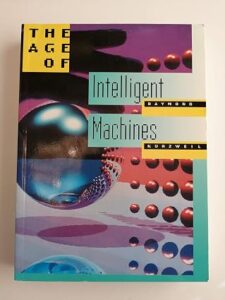
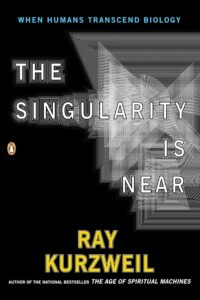
I remember learning this from Ray Kurzweil, who wrote The Age of Intelligent Machines and The Singularity Is Near, plus a whole bunch of other groundbreaking books, and he was a pivotal figure in the evolution of technology. Yeah, so I’m curious. What are the habits? What are the skills that you see that will be indispensable for our listener in the coming years?
A great question. Absolutely, there are several things. I think anyone who wants to excel needs the right coach or mentor, as Tony Robbins would say: “success leaves clues.” So no matter what field that you’re in, if you can find someone who’s already having success and then emulating that, and hopefully having a direct dialog and connection, and someone who can objectively be guiding you through the process, and who has trusted and done it before. Those people are invaluable.
I will also say that, for some reason, I might get some flak for this, but the arts usually get a pass in this area. But the metaphor I would use is that if you want to be an Olympic athlete, the best in the world or whatever you do or if you’re looking to win the Super Bowl, those people don’t exist without a great, great coach. No one gets, you know, to be placing in the Olympics, much less getting to the Olympics, if they don’t have a great coach who can objectively tell who an expert is and can objectively tell their trainee how to become excellent, because your right hand can never touch your right elbow.
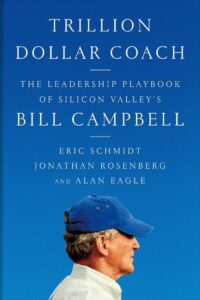
So if I said to you that someone was looking to be a world-famous tennis star, and they’re like, “You know what? I don’t need a coach. I’m just going to do my own thing, and I’m going to, you know, thanks, thanks for those tips, but I’m just going to do it.” I’d say that person has a very low chance of getting there. Versus if you had the best coach in the world, and it’s not. I’ll give you another example in the tech world. He was known as the trillionaire coach. His name is Bill. Oh, I’m forgetting his name, but he coached Bezos, Steve Jobs, Larry, and Sergey at Google. And you know what? It’s not a mistake. I think that some of the best coaches create the best students and best performers.
Your right hand can never touch your right elbow.
That’s the guy. Unfortunately, he passed away several years ago. By the way, he has a great book called The Trillion Dollar Coach, which I recommend checking out. But it’s not a mistake that these people create champions, so I think you should align yourself with that person, align with them, help, be open to feedback, and grow. I think that is such an important thing, and yet so many, unfortunately, I think so many creative people resist that because they want to do their thing and they put their music out to the world, and it’s very pure, and I get that.
There’s a great argument for that as well, but if you look back in the history of music, the people who have really excelled- Clive Davis may be a great example of that. You don’t think of Clive Davis, the famous American record executive, as a coach, but he was. He was a bar of excellence that you had to attain to work with him and to create records. And if it’s Whitney Houston or Aretha or so hundreds of those artists, Janis Joplin, that’s where those people come in. The other thing I would say also is that I’m not only looking to have success today in my company, but I have to build the company of the future.
So I think if you’re an artist or a songwriter, you have to, even if you’re creating music, or you’re doing whatever process you’re doing. I would implore you to look toward the future, create the future and bring it into today. Like, think a couple of years ahead and what music would be fresh in 2028 or 2029, which is a couple of years from when we’re recording this. So it’s intercepting the future, and then I think the other overlooked thing, and again, it’s a little bit woo-woo, but it’s really not. The more I think of it, it is like your identity, what you believe is possible for yourself, and we musicians and songwriters, artists, spend so much time creating songs, learning our instrument, and recording.
But if you believe that our friend Nick- you know Nick Cownie, correct? Or were you? Yeah, okay, yes. So Nick would say that 85% of your success is not skills. Maybe 15% of your success is based on skills, and 85% is based on your identity, beliefs, and mindset, and what you believe is possible for you. Your internal self-dialogue is saying, because if you show up believing that you are a hit songwriter, even if you are not a hit songwriter, if you wear that belief and that energy, and you’re tuning into that frequency, versus showing up constantly in an internal dialog saying, “I’m never going to make it. It’s not happening. This is too hard.
That person already has more momentum than I do. No one cares. Whatever that self-talk is, people generally manifest it. So I think that is extremely important and very much overlooked. And I don’t hear anyone else talk about it.
By the way, Nick was a past guest on this podcast. So, do you think AI could do the coaching or mentoring? If somebody had programmed a Tony Robbins-type AI coach, could that replace a human coach? What do you think?
I think at a certain level, yes, and I’m already using AI and Claude for my own coaching. For example, I’m passionate about trading and creating revenue out of thin air. Songwriting is the same way. You know, you just create ideas and create wealth around that. Like, I will download all my trading logs, put them into Claude, and say, “Tell me, don’t you know, don’t beat around the bush. Tell me where my strengths are. Tell me what I’m doing wrong. And so, like, I’m already making my own coaches to give me directions in my own world.
And even for myself as a CEO and president of my company, Claude is trained through my inbox and all my files and things like that, and I’m creating a co CEO who is telling me very bluntly what is working, what’s not working, and what needs to change for me to get on track for my big goals. So when it comes to songwriting, I think it is possible. The trick right now is: can AI differentiate a classic song or a hit song from just another song? And a little bit like Claude will be able to fingerprint the general mechanics of a song and match other songs to it, but I think if you know what to shortcut the answer, I think in the world of AI we have to believe that anything is possible.
85% of your success is not skills. Maybe 15% of your success is based on skills, and 85% is based on your identity, beliefs, and mindset, and what you believe is possible for you.
Yeah, superintelligence, right? That’s where we’re heading.
Yes, it’s probably very highly likely.
And so having your personal brand and your ability and skills as a tastemaker really differentiates you from these super-intelligent AI algorithms because if people resonate with you and your brand, brand is a promise, right? So if they resonate with your personal brand and like your taste, they’re going to trust you. They’re going to follow you. They’ll take your recommendations seriously and not just rely on an algorithm. So I think developing yourself as a tastemaker and honing that skill is a really important attribute for the future.
Exactly, and this also comes back to AI and music generation. And I’ll go back to Clive Davis, who is, by trade, a lawyer. Also, then one of the most famous American record executives. He’s not a musician, but I could probably guarantee you that if he were driven to be a guitar, you know, be a musician or a guitar player, he’d be famous as a guitar player because his taste is impeccable. And what I believe is happening is that you can give someone all the AI tools in the world, but if they have subpar tastes, and sometimes it’s not their fault because their schema is.
If you’re 18 years old today, you really, you know, compared to someone who has lived 60 years of lived music experience and studied another 100 years before that, what you think is a nine or a 10. The reality in the grand scheme of things is really a three or a four, and that’s also a very big problem today in the music world. I’ll be talking to a singer-songwriter from one of the famous music colleges, and we were in my office, and she said, “Oh, hey, who’s that on the wall? Like That’s Simon and Garfunkel.” “Oh, who’s that? Who’s that?” “Oh, that’s Billy Joel,” and, like, people, it drives me nuts, and again, I get some flak about this because I get frustrated. If you are a singer-songwriter, musician or artist, you need to know your music history.
You need to stand on the shoulders of giants, and that’s just not really happening today, like it was, say, 20 or 30 years ago. Or even more years ago, when to get in the room you had to be at a certain level, and now we just need a computer, a laptop, or even a phone and an internet connection. And look, the other argument is, yes, I can create this content, and I can go viral on TikTok and have a living. But what we are also seeing in the music business is people who have gone viral, artists who have gone viral on TikTok, gotten crazy record deals. Generally, they haven’t stayed on that big initial breakout, and certainly haven’t surpassed it. It’s generally this big spike up, and it can’t be. It generally is not repeated. And in four or five years following that, they go from their one song having 500 million streams on Spotify, and then they can’t break a million streams, which is sadly a lot of people.
You need to stand on the shoulders of giants, and that’s just not really happening today, like it was, say, 20 or 30 years ago.
That one hit, that one hit wonder thing.
Yeah, that’s right.
Yeah. All right. So if you want to leave our listener-viewer with one final, immediately actionable tip takeaway or to-do, what would it be? Something that we haven’t already spoken about.
I think it is. I’m just going to default to something Tony would say. And again, I’m just thinking of Tony because you and I are keyed in on him. Is it to take action? To take action,
Yeah, massive action.
He says to take massive action, absolutely, and do something today that sets you on that course. Suppose you have a goal and an objective to do, like do one thing, like we’re talking about mentors and coaches and things like that. Find, start researching and finding someone that can get you to the next level, and also try to be available and get out of your head- this, like, fear of reaching out to people and any self talk you would have in that process, like “oh they probably don’t want to talk to me or they’re not interested or why would they want to help me” whatever that might be. I would say take action.
Yeah, and you’d be surprised that many people you think would be inaccessible or not interested in coaching or mentoring, if you ask them and you’ve got a compelling reason, they just might say yes, right? I provide coaching. Do you provide coaching?
I do, I do, and on my website there is BenjaminGroff.com/coaching. I provide group coaching, one-on-one coaching, and that’s it. I think part of that is that no one in my industry is really doing this. I think it’s going to be part of the future of the music business, and music publishing is about having access to people who can help you directly. So yes, I do, and I totally agree.
Yeah. Well, as they say, it’s not just what you know; it’s who you know.
Your network is your net worth.
Yeah. And I don’t know if this is a Joe Polish thing or not, but I love the phrase, “Your network is your net worth.
Yeah, I love that too. I think Joe Polish said that. Yeah.
Yeah.
Another past guest on this show.
That’s right. That’s right. You get all the superstars.
Yeah, awesome. All right. So again, it’s BenjaminGroff.com, and you’ve got coaching, you’ve got courses, and you’ve got your publishing company. It’s brillpublishing.com. Is that right?
My publishing company is Brill Building.
Yes, B R I L L. And my last name is Groff with 2 Fs, G-R-O-F-F as in Frank. And on the website, I’m nearing my 100th article, and these aren’t just 100-word articles; they’re 3000 words. And I really pour my heart and soul into sharing this. I just think, if I can say, I think it’s some uncommon wisdom and things I’m seeing and actionable things that you can dive into, and to be frank, in my opinion, stuff that just people aren’t talking about.
Yeah, awesome. Well, thanks for being you. Thanks for sharing your light in the world.
Yes, so good to see you, my friend.
Yes, good to see you, and listeners, viewers, please do something massive. Take massive action because this is not a dress rehearsal. This is your life. Make it a great one. We’ll catch you in the next episode. I’m your host, Stephan Spencer, signing off.
Important Links
Connect with Benjamin Groff
Apps/Tools
Books
Businesses/Organizations
People
Previous Marketing Speak Episodes
Previous Get Yourself Optimized Episode
YouTube Videos
Your Checklist of Actions to Take
- Ask people the “five-second question.” When scouting for talent or new opportunities in your own field, ask trusted contacts “who are you excited about right now?” — if the answer doesn’t come in five seconds, it’s not a real lead.
- Look past the headliners. At any event, festival, or competitive market, dig past the well-known names into the “small print” — that’s usually where the freshest talent or ideas are hiding.
- Don’t rely on data alone to make decisions. Virality metrics and trend reports show you what’s already popular, not what’s genuinely great — real curation and taste still beat a spreadsheet.
- Remember that new tools rarely eliminate a craft — they change it. Just like the drum machine didn’t end drumming and the player piano didn’t end pianists, treat new technology as a new tool to master, not an extinction event.
- If you use AI in your work, put in real revision time. The people getting the best results aren’t stopping at the first output — they’re running hundreds of revisions until it’s genuinely right, which takes real effort, not none.
- Study the history of your craft before trusting your own instincts. Know who came before you and what they built — without that foundation, what feels like a “10” to you might only be a “3” by any broader standard.
- Get an outside coach or mentor, no matter how good you already are. You can’t objectively evaluate your own blind spots — that’s exactly what an experienced outside perspective is for.
- Manage your internal self-talk deliberately. How you see yourself and what you believe is possible for you matters more than your raw skill level — treat your mindset as something to actively train, not something fixed.
- Aim for outstanding, not just good. In a crowded field, “good” and even “excellent” work barely moves the needle anymore — only truly outstanding work gets disproportionate attention and reward.
- Connect with Benjamin Groff. Visit benjamingroff.com for his coaching and 3,000-word articles, or check out his publishing company at brillbuilding.com.

About the Host
STEPHAN SPENCER
Since coming into his own power and having a life-changing spiritual awakening, Stephan is on a mission. He is devoted to curiosity, reason, wonder, and most importantly, a connection with God and the unseen world. He has one agenda: revealing light in everything he does. A self-proclaimed geek who went on to pioneer the world of SEO and make a name for himself in the top echelons of marketing circles, Stephan’s journey has taken him from one of career ambition to soul searching and spiritual awakening.
Stephan has created and sold businesses, gone on spiritual quests, and explored the world with Tony Robbins as a part of Tony’s “Platinum Partnership.” He went through a radical personal transformation – from an introverted outlier to a leader in business and personal development.

About the Guest
BENJAMIN GROFF
Benjamin Groff is a music publishing executive with over 30 years of industry experience. After holding senior positions at BMG and EMI, he launched Kobalt Music Publishing’s first U.S. office in 2006, serving a decade as Executive VP of Creative. In 2016, Groff founded Brill Building Modern Copyrights, a self-funded boutique music publishing company named in honor of the historic Brill Building era of songwriting.
Administered globally by Kobalt, the company focuses on early-stage talent development. Throughout his career, Groff has built a reputation for discovering and signing major artists, songwriters, and producers before they achieved mainstream success, including Ryan Tedder, The Lumineers, Greg Kurstin, SOPHIE, Grimes, and Savan Kotecha. In addition to Brill Building, he runs the music blog and incubator platform We Are: The Guard and offers songwriting education and industry coaching.






Leave a Reply