



Most companies eventually give in to the pressure to maximize profit at any cost, but a rare few resist that pull entirely and stay true to their mission for decades. My guest on today’s show is Eric Ries, creator of the Lean Startup method and author of the bestselling book by that name, along with The Leader’s Guide and The Startup Way. He’s also the founder of the Long-Term Stock Exchange, the AI research lab Answer.AI, and the legal startup Virgil.
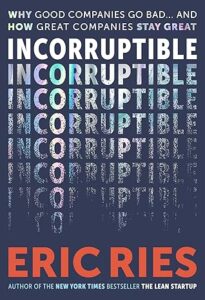
In our conversation, we explore Eric’s new book, Incorruptible, and the mystery behind why companies like Costco and Patagonia manage to resist the corrupting pull of shareholder primacy while so many others don’t. Eric explains the idea of mission guardianship and why structural integrity matters more than culture or stated values alone. We get into why information overload makes deep, primary-source learning more valuable than ever, and why an old idea like the low information diet still holds up. Eric also shares his honest take on where AI’s real capabilities stand today, separate from the hype, and why the timing of a protective decision in a business matters just as much as the decision itself.
If you’ve ever built something you care about and worried what might happen to it under pressure, this conversation offers a real answer along with the tools to protect it.
In This Episode
- [02:24] – Eric Ries explains why the Lean Startup’s core principle of validated learning is even more relevant in the AI era, where rapid innovation amplifies uncertainty but human learning remains the ultimate competitive advantage.
- [06:06] – Stephan asks Eric Ries how he avoids information overload and stays focused in an AI-driven world filled with endless content, summaries, and productivity tools.
- [11:35] – Eric Ries explains that while vision and inspiration spark entrepreneurship, success comes from rigorously testing and refining those ideas in the real world.
- [14:53] – Eric Ries shares how years of watching promising companies lose their values and identity inspired Incorruptible, his exploration of the hidden forces that drive organizations toward corruption and conformity.
- [18:46] – Eric Ries discusses how widespread founder displacement and product decline inspired Incorruptible, offering a blueprint for building companies that are structurally resilient against corruption and short-term incentives.
- [20:45] – Eric Ries explains why Incorruptible is structured as a mystery rather than a business book, revealing how exceptional companies defy conventional governance to resist corruption and challenging readers to question why these alternative models are so rarely taught.
- [24:39] – Stephan asks what makes enduring companies different, and Eric Ries explains that organizations remain incorruptible by pairing a strong mission with governance structures that protect their values across generations.
- [28:37] – Eric Ries explains that Incorruptible has received more silence than direct pushback because it challenges the conformity and shared assumptions embedded in business education and corporate power structures.
- [31:52] – Eric Ries and Stephan discuss how Neal Stephenson’s Snow Crash and The Diamond Age accurately predicted today’s AI-driven information landscape, personalized media, and the unintended consequences of technological innovation.
- [34:48] – Eric Ries reflects on today’s growing uncertainty while expressing hope that, like previous generations, society can overcome crisis through personal responsibility, civic renewal, and rebuilding stronger institutions.
- [39:33] – Stephan asks whether AI could replace all white-collar jobs within 1,000 days, and Eric Ries argues that while AI capabilities are advancing rapidly, its strengths remain uneven and many complex tasks still require human judgment.
- [42:24] – Eric emphasizes that protecting a company’s mission must happen early because waiting always makes it harder and eventually impossible to implement.
- [44:22] – Stephan wraps up by asking where listeners can learn more, and Eric Ries shares resources for Incorruptible, his consulting ventures, and organizations helping founders build mission-driven companies for the long term.
Eric, it’s so great to have you on the show.
Stephan, I really appreciate it.
So I’d love to just understand from you. First of all, you’re best known for The Lean Startup. It isn’t just a best-selling book. Many, many copies have sold. I purchased it years ago, of course. And, you know, it became a movement and a methodology that many people adopted across their businesses and startups. And I’d love to know how much more, maybe less, relevant the Lean Startup is now in this AI era than it was when you wrote it.

Yeah, I don’t know. I think it’s held up pretty well. You can’t ask an author those questions. It’s like the market has to judge; history will judge. I don’t know. I think it was useful then and it seems to be useful now. If you look at the major AI players, they seem to be following the method, the ones that are having success. And what’s interesting to me about it is one of the book’s predictions.
What I had kind of forgotten about, but people who’ve been interviewing me have been like, “Hey, do you feel vindicated by what happened?” I’m like, “Vindicated, what?” Like, “Well, you said in the book that there were two dimensions of change that would continue in this revolution. That access to technology would become more democratized; they’re driving cycle times down, allowing people to do more faster. And at the same time, the world’s underlying uncertainty would increase. So planning and forecasting would get more difficult, and therefore traditional business management tools that rely on being able to forecast the future.”
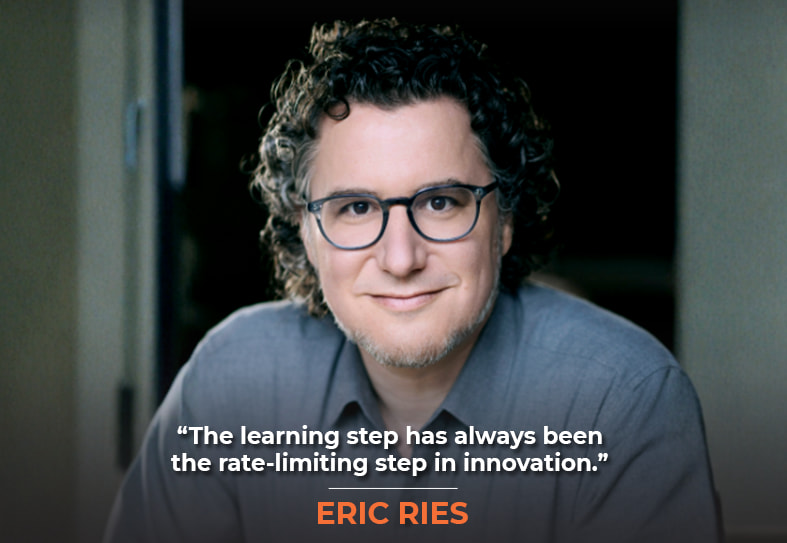
And I was like, “Yeah, that sounds pretty good. High uncertainty combined with fast cycle time, that really is the sweet spot for lean startup. And we absolutely have seen the world evolve in just that direction. Who I used to say in my talks, who here feels like the world is getting more and more stable every day? Never, never did I get any hands go up for that. And at the same time, all that is happening, what’s really interesting to me is the most radical idea in lean startup: the one that passes over people’s heads or like they nod their heads along, like, “yeah, sure, sure, sure.” The idea is that the unit of progress in a high-uncertainty situation is learning, validated learning, build, measure, learn. The learning step has always been the rate-limiting step in innovation. How quickly can you process the information you are getting about what the market is telling you, about what customers are doing, about your own ideas?

And for as long as time immemorial, people have been trying to outsource the learning. You know, people used to try to outsource it to developing countries to get the cost advantage. It’s like, well, you can’t outsource the learning part. They can build it for you, sure. And you see the same thing happening with AI. People are desperately trying to outsource their brains to AI in hopes that it will do the hard work for them. But as far as I can tell, even now the rate-limiting step is still how quickly human wetware can learn.
You know, ’cause like if you’re wanting to outsource or delegate going to the gym and lifting the weights, that’s not gonna get you the benefit.
That’s exactly right. In one of my talks, someone told me this funny story about a famous Olympic bodybuilder. And someone asked him, ” What’s your secret? How can I become a bodybuilder? What’s your secret to your success at the beginning?” And he was like, “Well, the problem with weightlifting is nobody wants to lift all these MFing all these heavy weights.”
And he’s like, “That’s the problem. You can do all this other stuff at the end of the day; you gotta lift the weights.” And I just thought that was such a funny example of how we treat so many of these problems as something that, like, we want to do. But then when it comes time to lift the heavy weights, we’re like, “Is there any way I can outsource this to somebody else? Or, is there any way I could get out of doing the painful part of it?” And that’s true. It was true in Lean Startup; it’s true in the new book too. You see this. We’re teaching people a model of leadership that I think is about finding the easy way out or avoiding doing the hard work. And as a result, I think we do people a real disservice.
Yeah. But then we have so much information overload, so much data smog, and it’s really easy to get drowned in it and kind of lose your way. Not focused on your mission, but more inundated with too many ideas, too many opportunities, too much information. So I remember reading in Tim Ferriss‘s The 4-Hour Workweek many years ago about low-information. Right? So you don’t want to overload your system with too much information. So how do you balance this? Like, do you have a low-information diet sort of approach? Do you have a way to organize the data and the knowledge that you’re acquiring? For example, I use Recall for YouTube content that I wanna consume, and it summarizes it.
It organizes it into mind maps and does all this cool stuff. Helps me not have to watch all those videos, even at 2x speed. That’s one thing, you know, and there’s NotebookLM, and there’s just, you know, the different apps- ReadWise Reader and so forth that help me to keep this somewhat organized, and I’m curious what you do.
Yeah, I think most of the information you consume is not that valuable. So summarizing it’s not that helpful. It’s like, I think, all this idea that you’re gonna, like, sift out the really valuable info. But and and listen, LLMs are really good at summarizing things. So that I think is one of the few things they’re truly, truly good at. They’re not creative, but they’re great summarizers. The problem is, increasingly, if you do that, you find yourself reading summaries of summaries.
And so to me, the bigger question is like, how do you get access to the primary sources that are really meaningful and trust that and then build yourself, like, information systems around you, such that when you need recall of some fact, or you need to learn something specific, you’ll be able to do it. So yeah, I tend to go really deep on a given topic, reading the primary sources as much as I can until I’ve solved whatever problem I was going into those sources to find.
They’re not creative, but they’re great summarizers.
The problem with a lot of information architecture is it is organized around the information rather than around the problem. And to me, the big insight of the Lean Startup was that rather than trying to teach people things in the abstract, you put them in a situation where they are motivated to conduct experiments that will facilitate their own learning. Since one of the oldest lessons of the scientific method, going back hundreds of years, is that if you can’t fail, you can’t learn. So kind of getting people to actually make falsifiable hypotheses and invalidate them, that’s still far more important than any kind of information system because once you are motivated to figure out what the hell is going on with something that is defying your expectations, then you will have the most important resource, which is like the hunger, the desire, the morale to actually get to the bottom of whatever it is.
And one of the foundational principles of the lean startup is that you shouldn’t be afraid to fail and to treat the business, this new business, as an experiment.
Not only should you not be afraid of it, but you should also recognize that that’s what it is, whether you admit it or not. Because at the end of the day, and I just think this is something that is not appreciated in our time, entrepreneurship is one of the truth-seeking disciplines. It’s up there with being a scientist or an artist. You’re trying to get to the bottom of something. You’re trying to really understand how the world works. And so you can do that using the scientific method if you want. That’s the lean startup theory.
The startup is a hypothesis, no matter what.
You could use some other knowledge system if you want. You don’t go for it. But either way, it doesn’t change that the startup is a hypothesis, no matter what. And I know a lot of people are trained in business schools, especially in the kind of pop-culture understanding of entrepreneurship. It’s like, no, you make things happen through the power of your mind. And it’s like, that’s only one step removed from using crystals, man. Like,
I just like, yes, there is a manifestation thing happening in our world for sure. But like a lot of entrepreneurship it requires much more mundane, boring, complicated stuff, you know, about pricing and marketing and value prop and team building and call like all this stuff. It’s just like it’s unknown on top of unknown, stacked on top of unknown. And so I think the more rigorously and efficiently you can knock down those unknowns and turn them into knowns, the faster you’ll be able to figure out if there really is a way, a path to product-market fit here in a given entrepreneurial situation.
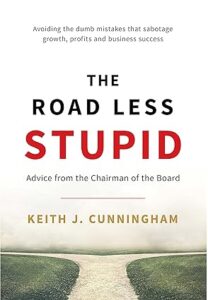
Yeah. You know, funny you mentioned manifestation. My favorite definition, I think, comes from Abraham Hicks: thoughts become things. So if you apply your thinking and actually book a timeout to think, right? I love this idea that I got from the book The Road Less Stupid, which is to have a thinking chair and you only sit in it when you want to do deep thinking, and you schedule time to do that deep thinking, and you don’t check mail or, you know, answer DMs or anything like that while you’re sitting in that thinking chair. You’re only thinking and maybe journaling it.
Yeah. But I think people just use the thinking tool less than they think they do. And as a result, they miss out. So I guess I don’t want to be dismissive of the deeper inner work; the spiritual dimension of this is, for sure, important. Because, of course, there’s nothing quite so useless as doing efficiently what should not be done at all. So, yes, figuring out.
How to, like, where do you want to go in the first place is not a question that Lean Startup can really help you with. Right? To do science, you have to first have a hypothesis formed. So if you haven’t had enough life experience to have any, to have an idea, to have any good ideas, go get some good ideas. And then I think a big trick to this is: where do these ideas come from? When you have an idea, when you find yourself gripped with this kind of vision, where does it come from?
I think when we’re younger, it’s very natural for entrepreneurs to be like, “I came up with the vision.” But as you get older, I think most of us come to see that, at best, you are accessing or channeling something bigger than yourself when you’re doing this activity. So I don’t want to take anything away from that. The reality distortion field, the vision and the seeking aspect of entrepreneurship are very real. But that is not enough by itself because beings are exceptionally gifted at self-delusion.
At best, you are accessing or channeling something bigger than yourself when you’re doing this activity.
Maybe our ultimate superpower is to convince ourselves that things that are manifestly not true are true. So once you have what you think is an insight, a strategy, a vision or a destination in mind, we have to find out whether what you imagine is actually true. And that’s really where both the real tactical, strategic business work begins, but that’s also the real spiritual work.
Because what happens is in your fantasy, and I just don’t know anybody that can avoid this, in the fantasy version of the dream that you have had, you sit down in your thinking chair, you say, “I will not sit, I will not stand from this chair until I’ve had a brilliant idea.” Whether it takes me an hour, a week, or a month, and you, you know, after a month of fasting and meditating, you come up with a eureka. And you exit, whatever the process was; you come out from it. Okay.
In the fantasy version of it that you had, there are never any trade-offs. Everything just works. You’ve had this insight. And in reality, of course, there will be things that have to be traded off. It’ll turn out that two different elements of the vision are in contradiction with each other. So we can only have one, or we have to find some kind of way to unify. It’s a lot of work to then take this imagined thing into the real world and figure out how to get from point A to point B.
To point B to point Z, right? Like that’s like an incredible amount of work. And so Lean Startup is about giving you the tools you need to navigate that part of the process, not taking anything away from the original flash of insight. Still, the insight is usually insufficiently detailed to act as a roadmap or a blueprint. It requires a little refining, and that’s what this process is about. The goal is to refine without losing our commitment to the vision itself. And a lot of people struggle.
Or losing the passion.
Yeah, like, a lot of times, people’s morale is one of the scarce resources that they squander, and then they can’t continue.
So how did you come up with this new book, Incorruptible? Was it one of those blinding flashes of insight downloads, or was this an obvious thing as you were maybe writing your previous book?
No. It’s very different. I have been helping people start companies for 15 years now. Every day. Someone calls me, you know, someone’s got advice, someone wants my take, right? Like, that’s the privilege of having had an experience like writing about the Lean Startup. So I’ve seen the very best this industry has to offer, but I’ve also seen its dark side. I’ve seen people lose control of their companies.
I’ve seen companies go public and then get ruined, forcibly taken over or found to have been rejected; with companies that see through the lens of such idealism are now monsters. And we see it as some of the most evil companies in the world. I’ve been doing this exercise especially with younger founders. You know, I’ll give a talk or do a workshop, and I’ll ask people, “Hey, everybody, just who do you think is the most evil company in the world?” And people will name this company and that company. And it used to be that those companies were, like, the typical villains in, like, you know, a typical movie, right? An oil company or a, merc arms mercenary, maybe some kind of weird bioengineering kind of firm. Man, it’s now very common to work at tech firms. And sometimes, even in recent tech firms, there are people I know personally who are named as the most evil people in the world. I’m like, “My God, how did this happen?” So I’ve been around all this, all this destruction.
The goal is to refine without losing our commitment to the vision itself.
And that really, like this is not a philosophical or abstract problem to me. This is a practical problem that I have been grappling with for a long time. How do we build organizations that can resist this force? In the book, I call it the force that no one controls, but everyone obeys, that comes for these organizations in the end. And I think it’s kind of sad. If you look at many so-called successful companies today, you know, they look the same.
Their press releases are all the same. When they lay people off and claim it’s about AI, they do it in the same way. Everything’s the same. And this kind of business monoculture, this homogeneity, I think is really quite sad. But anyway, regardless of how you feel about it, the fact that it’s so predictable to me is evidence that a force is operating behind the scenes. You know, when I talk to normal people, civilians who are not in the business, and I ask them, “tell me about a recent brand that you love that got ruined. What happened?” Or like, “Tell me about a product that you used to like and now it’s terrible.” And I’ll just all be like, “Yeah, the company went public, or they got acquired by a public company, or they got taken over by private equity. And then they got ruined.” What’s so interesting to me is you say, “Well, why?” Surely sometimes you would think the addition of more resources, the vast financial resources of the private equity firm, would make the product better. Can you tell me a story like that? No. And you say, “Well, well, why would they do that? Why would investors want to destroy it?” They say, “Well, they did it for money.” These companies are being destroyed, oftentimes like literally driven out of business in the name of profit. What is going on? So that mystery is really what motivated me to want to.
Yeah. I have friends who’ve been the victims of vulture capital. And in fact, one of my co-authors, Rand Fishkin. Do you know Rand, by the way?
Yeah, I know, right?
So he and I co-authored The Art of SEO, the first two editions he was on. And boy, he got screwed over and had to leave his company. Company he co-founded, SEO Moz, which became Moz, and I’ve known him for decades. Knew him at the very beginning of SEO Moz, and now, you know, he’s thriving again. But boy, it was bitter tears he was crying as he went through this rough ride of being pushed out of his company.
Yeah. I have found it really interesting because I’ve been researching this problem for years. And the book contains dozens of case studies. I have a full, extended chart that you can download via a QR code, with hundreds of examples of this happening over hundreds of years. And yet, despite all the research I did on this book, in many of the interviews I do and events I host, people tell me a story I didn’t know about. You know, it’s amazing how many of us know a story like this every time. The most recent one, someone just sent me and the funny thing is, it’s really predictable. If you are someone, you just look at the press release about the acquisition, and then you go find the Reddit thread, the red subreddit where they talk about this product, and you can just read thread after thread after thread about how disgusting the food is now or whatever it is. Someone just sent me a tortilla company. Tortilla company taken over and sold, and customers are in arms because the tortillas taste bad now.
It was just, it’s just amazing to me. Like us, I now have a whole file of companies whose product names are human names. And then that person is ejected from the company, and they have to kind of watch as their name now comes to stand for something that is just such a pervasive problem. We don’t even know what to call it. We don’t even have a word for it. And I just, you know, I know in tech we have Cory Doctorow Enshittification, which is definitely like a very specific instance of this problem.
But we don’t have a word for the broader phenomenon. And it just occurred to me, in writing the book, that our grandparents and great-grandparents would have had a much easier time talking about this than we do, because they would have called it corruption. And that was really a big unlock for me to understand how I was gonna have to know how this book was gonna work, how I was gonna have to write it. At the end of the day, this corruption has become pervasive in our society.
But then that opens up the possibility of asking, “Well, how could you build an incorruptible company?” And that’s really what the book is not just about: these depressing stories of failure, but it’s meant to be a blueprint that people can follow to create organizations that are structurally designed to resist these forces.
In that sense, would you call it a manifesto?
No, I don’t consider it a manifesto, although it has its rousing moments for sure. I think we have enough motivational speakers on this topic; we need practical details on how to get this done. So I think of the book as a mystery. It’s actually not really a business book. It’s not structured as a business book, and it doesn’t end as one. If you read it through, you’ll see that this is only tangentially related to the business genre. But I want it to start as a business book.
The unit of progress in a high-uncertainty situation is learning: validated learning, build, measure, learn.
To bring business and non-business readers alike on this journey. And the key to it is it’s like a double mystery. Mystery number one, we’ve already been talking about. Why does this happen? Why would you murder a company in the name of profit? Doesn’t that seem odd? Just, we don’t; it doesn’t seem strange to us anymore because we see it all the time. But if you zoom out, it’s very weird. Okay. The second mystery, though, is if you ask most normal people what’s going on.
They’ll say, “Well, it’s inevitable when companies get big, when enough money gets involved, when they go public, when they have quarterly returns, when they have whatever people have a just-so story about why it must be this way.” But the second mystery is if this corruption is inevitable, why are there exceptions? Because even the most ardent person who is so convinced of its inevitability can tell you an exceptional story. Because they’ve shopped at Patagonia or they’ve shopped at Costco, or they have a Vanguard Mutual Fund, or they’ve eaten a Hershey Chocolate Bar, or they’ve taken a GLP1 medicine, or they’ve shopped at IKEA, or they have a Grundfos Water Pump, or they’ve worn a Rolex. Like there are all these companies that we interact with every day, some of which are decades or even centuries old, that don’t seem to have this happen to them. And so why is that? How can an inevitable force have exceptions?
And in fact, if you take that set of companies that have had this exceptional outcome and say, “what do they have in common?” The answer is very surprising. Because the answer is not culture, values, purpose, goal, industry, company; they were started in different decades by founders with very different values. They have very different brand aesthetics. They’re very different from each other.
In fact, many of them would find their peers’ values hostile to their purpose. You know, right? Like, think about the difference between Costco and Rolex. They would be mutually incomprehensible and yet say they have something in common. And what they have in common is that they literally defy today’s so-called best practices about how you’re supposed to build, structure, and govern an organization.
Entrepreneurship is one of the truth-seeking disciplines. It's up there with being a scientist or an artist. Share on XMany of these companies, if rated by governance rating agencies, would get the lowest possible score. And yet they’re having these exceptional returns. Returns that our modern financial modern finance theory says would be impossible. So I think that, through the combination of my own experience helping to build companies like this and a bad, I’ve battled against this force for several decades now. And having studied the research on these exceptional companies, I think there’s another way, a way that most practitioners have never heard of, and yet is hiding in plain sight, that requires no regulatory change or nothing.
No one needs permission from anybody to do it. It’s a simple thing that pretty much any organization can grasp. And yet most people have never heard of it and do not consider it a possibility. And so my goal with this book is to lay out this mystery and then solve it. But in doing so, I hope it prompts the reader to ask themselves this question: all this research, all these models and case studies, why did I have to learn about it from this guy in this book? So many of us have so many friends, we have advisors, we went to business school, we had professors, we have lawyers, we have bankers, we have lobbyists, we have all kinds of highly paid people. People we trust and who seem to be deeply experienced. Why didn’t they mention it until now? Isn’t that odd?
Yep. So what is that controversial or counterintuitive anti-best practice that they all have in common?
Yeah. So they have two attributes that we don’t consider to be very important today, but I think are the most important. The first is ethos. They have a character. They stand for something particular. I mentioned their values may be antithetical to each other, but they are aligned internally around their own values. They generally serve an additional financial purpose.
That they are committed to, and it’s very different. It could be, you know, that Costco is famously about being the low-cost provider and being a fiduciary to the customer. And Nova Nordisk is about scientific research as a public benefit. You know, that’s a very different business. Yet they are consistent with their own actions. They are consistent with their own values. They’ve been able to maintain that integrity over long periods. They’ve solved the succession challenges, passing those values down from generation to generation of managers.
And they do this by following a principle I call harder is easier. The opposite of what we generally teach today. You know, Sol Price, the founder of FedMart, the precursor company to Costco, he practiced what he called capped margins. He thought margins were not a source of strength; they were a liability. If they were too high, that actually was a sign that something was wrong with the business, not that it was a strong business. And the same business school can teach in the morning.
That margins are a source of strength, and we should try to increase them as much as possible. And in the afternoon, teach Jeff Bezos‘ famous dictum that your margin is my opportunity. So which is it? So there are a lot of leadership and cultural management lessons that they have in common, and they’re very counterintuitive. But the second dimension, there’s not just ethos, there’s also integrity. Integrity means the ability to keep a promise. And I mean it in the sense of structural integrity.

If you look at these companies, they reject the doctrine of shareholder primacy, which is the law in most places now, in most industrial companies, in countries, certainly here in the US. Shareholder primacy says you, the leader, you the founder, you, the board member, maybe you think a company is a beautiful living organism designed to create high-quality products and compete in the market on value creation. Sucker.
That’s what you think? What a chump you are. No, no, my friend. According to shareholder primacy, a corporation is nothing more, literally nothing more, than a financial instrument designed to enrich its shareholders. All other concerns are merely meat for the grinder.
The problem with a lot of information architecture is it is organized around the information rather than around the problem.
So this has given rise to a whole bunch of practices that put shareholders first in the set of fiduciary commitments that companies have, and has kind of erased corporate purpose from corporate charters. If you look at most corporate charters now, you’ll just find “maximize shareholder value” is all you’ll find. And I think this is a very degraded view of what a corporation can be, but it’s also self-defeating. Companies that are organized around this principle are too structurally weak to resist pressure.
And this financial gravity that we’re all meriting in is the ultimate pressure. It pushes organizations into conformity with this, with this field, with this set of values that are very extractive. And so, if you look at the companies that have endured, they must have some mechanism to resist that pressure. They have to have some mechanism of what I call mission guardianship. Now, the legal mechanisms by which that can be achieved, there’s a whole bunch. There’s actually most people think this is an impossible, unsolved problem.
Not realizing there are like 20 solutions all around us. So Costco, Novo Nordisk, Patagonia, Vanguard and Mondragon in Spain are each protected by a completely different kind of mission guardian. And anyway, in the book I lay out all the different kinds and try to walk people through how and when to choose one versus the other. But the most important thing is to have somebody, somebody whose job it is to make sure that the organization has the architecture of institutional longevity and fidelity to that mission across generations of managers.
Wow. So have you gotten any pushback from some of the power structures for putting this book out?
Not, you know, honestly, not yet, which has been a bit of a surprise. There’s been a bit of a media blackout about it. I think that’s more how people are responding. So, you know, compared even to Lean Startup, I published Lean Startup when I was an absolute unknown. And you know, I was on TV talking about it all the time and was covered by all the major places. Like, this has gotten a much more muted response from some kind of corporate-owned media, which I thought was surprising, although a bunch of people warned me that this was gonna happen.
It's always too early until it's too late. Share on XBut it’s been counteracted by a very warm embrace from podcasts, founders and people who’ve actually read the book. So it’s kind of spreading much more by word of mouth than through a kind of top-down, you know, air campaign of media success. But yeah, I think so far they’re kind of holding their breath and hoping that nobody will pay attention, versus there hasn’t really been that much pushback yet. But it’s only been a month. Give it some time. I’m sure they will come.
You’re competing with the UFO files.
You know, what are you gonna do? It’s very strange. We live in a very strange information environment and ecosystem. I will say I did a podcast with one of the big consulting companies,, and the interviewer, in the middle of the interview, was like, “Wait a minute, trying to tell me that the things I learned in business school are not true?”

And I was like, “well, let’s talk about that.” Like, “are you open to looking at the evidence?” Don’t you have to take my opinion. This book is not a book of opinion. It’s got almost as many footnotes as the main body text. Are you willing to look at the evidence that some of the dicta that you absorbed in your education were not correct? And he was kinda like, you could just see in his face like, “not really.”
Because you have to understand, for people who are in this gravitational sphere and who are having success in their careers- this is true for investors, managers, executives, board members. The benefit they get from having gone to business school or law school, having absorbed a common set of terminology and values, is not really that the stuff is true in any absolute sense, but rather that it creates class solidarity amongst all the people who share those same beliefs.

So having the same beliefs as everyone else fosters mutual trust and enables transactions, accelerating one’s career. Once you step outside of that, you sound to everyone you work with like a bit of a crazy person. And that’s very dangerous if your goal is to have a career through mimesis, right? Through conformity to the values of the people that are around you. That’s why financial gravity is so powerful: human beings have a tremendous instinct for conformity.
And so yeah, I’m very sympathetic to people who are like, “Yeah, I hear what you’re saying, but to advance my career, I gotta, you know, I gotta I gotta pay lip service to this thing.” What’s interesting is, I think, there are actually whole organizations full of people where not a single person actually believes in the thing they are all telling each other they believe. It’s a bit like the old communist system where, like, until one person dares to say, “Hey everybody, do we really believe this?” I don’t think we do. Like, until the spell is broken, that feeling of what’s called normative consensus can create tremendous pressure to conform even to an ideal that no person trapped in that system actually holds.
Curious, have you read or listened to the audiobook of Snow Crash by Neal Stephenson?
I have read Snow Crash many, many times, but I have not listened to the audiobook.
That’s great too. But it’s a pretty dystopian view.
Yeah. I went to work with a very, very dystopian view. And listen, I went to work at a company trying to build the metaverse. You know, this is before Meta, before the current universe of it. Like, really, as I now crash-informed tech companies. This was many years ago. And, you know, I really see now.
That you know there’s that joke about how science fiction authors will write books that’s like, “please do not build the torment horror nexus” or whatever. And, like, tech people will read that book and be like, “ooh, what a great idea for a product: the torment-horror nexus.” Like, yeah, absolutely. I’m just like, by making the dystopia vivid to a certain kind of reader, you actually make it really exciting. And I really didn’t pick up on the fact that Snow Crash is meant to be a dystopia the first time that I read it. Like, I was that kind of person where it’s like the technology of it, the innovation of it, like, very exciting. And only, you know, only as I became a little bit older and wiser do I understand the lessons that the author was trying to communicate, but absolutely, it went right over my head the first time.
Maybe I should franchise my business.
Yeah, like, anyway, and there are things in that book, and especially in The Diamond Age, the book that he wrote after.
Yeah. I love that book, yeah.
Yeah, like those books are full of these moments of clarity that are so prescient. And I think about them all the time. And the one that popped into my head when we were just saying that was in The Diamond Age: where you have the Neo Victorians who have built this, like, high-tech, futuristic. Very hierarchical society, like, pretend-like, kind of all cosplaying that they’re still in the Victorian age. And this is in a far future where everyone has a super hyper-customized newspaper newsletter that, like, shows them just the news they’re interested in. Like this very, like, very prescient idea of what our information environment would look like today. But I remember in the book that as you go higher and higher up this very elite hierarchy, people eventually start reading paper newspapers again.
Because they understood that having all the elite people have the same set of facts was critically important and I just thought, what a what an insight. And like, boy, have we lost that sense of cohesion at the top that we probably need to get back.
Yeah. And the fact that movies in The Diamond Age will be interactive experiences, customized to your desires, your foibles and all that. And the actors that you’ll be engaging with will be interacting with you in real time, and I see that’s an inevitability. I mean, it’s already happening: people are creating movies with AI that would normally take six months, and they can get them done in six hours. Who’s to say that this couldn’t be done in real time? Yeah. What’s the thing that worries you the most about where things seem to be heading?
Well, look, it’s a very dark time. We’re living in a very dark time. Just read the news. I mean, even just today, the news is just appalling. And I have these moments, I’ll admit, to feeling like, “did we just somehow branch it on the wrong timeline?” Like, just if everything has become stupider, you know, just as stupid as you can imagine. And then the next day it gets even stupider. So I like, you know, I know there’s this whole conspiracy theory that COVID had caused cognitive impairment.

And so, like, we actually have lost collective intelligence. Like, I just feel like something has gone terribly wrong. So I’ll admit to having those dark days and feeling like, “wow, this is really terrible.” But I’m still fundamentally an optimist. And the book is meant to be an optimistic take, which is interesting for a book whose part 1 is called The Shape of the Abyss, you know. Just to be real. As I promised, I was like, I’m not gonna sugarcoat anything in this book. We’re gonna talk about the real problems. But I really do believe that despite all this darkness, the solutions are accessible to us. There’s nothing in this book that’s like, after the revolution then.
These are all tools and techniques people can reach for and use today, right now, this moment. And it’s been very heartening. Some of my favorite reviews of the book have been from people who had given themselves over to cynicism and despair, saying that the book has renewed their sense of hope. The reason I have hope isn’t really based on any facts, because the facts are quite dark right now. Rather, it’s remembering that humanity has faced dark moments before.
Despite all this darkness, the solutions are accessible to us.
And found a way to push through. And I think a lot about the darkness that our grandparents saw, in some ways very similar to what we’re seeing now: the rise of fascism, the rise of totalitarianism, this kind of testing of Western liberal values in this profound way. And I think about how it must have seemed to them, how impossible the task must have seemed, how unfair, how their own lack of agency must have felt total at many moments. And yet somehow they did two things that I don’t see us doing right now that I wish, I hope, I’m confident we will eventually get there. One is that I see too many people saying we need to plan for the day after the darkness passes. So instead of working to solve the problems, I’m gonna work on positioning myself for maximum advantage in the new world to come. Don’t do that. Please stop doing that. Okay.
Our grandparents really saw ourselves as personally responsible and accountable for driving this darkness out of our world. So get to work. But as a result of that, they got their hands dirty. They understood what was at stake. And when the darkness did pass, they engaged in a spree of civic renewal and institution building, many of which are institutions that still operate our world today. We live in the house that they built for us. And I kind of feel sometimes like we’re like that episode of Star Trek.
Where they land on a utopian planet, and it’s like the Garden of Eden. And it turns out that the people who live there, the utopia is being powered by underground machines that none of them even know exist, let alone know how to operate. And so I feel like we’re kind of like that. We have these tools; we have these structures that we inherited, and we play-act operating them, but mostly we ruin them. And if you go to people and say, “I think we should build a new one of those,” they’re like, “Ha, we don’t know too. That’s the kind of thing our grandparents did. We don’t do that anymore,” you know, like we can’t. We can’t pass laws. We don’t amend the Constitution. We don’t create new ones; we don’t start new institutions. We don’t start anything new. So I feel like there’s, like, a sense of incapacity in our generation that has to pass. And eventually we have to go on that exercise of renewal. And, you know, when the time comes, I hope we will take inspiration from what our grandparents went through and what they accomplished to do something similar.
Hmm, yeah. You know, are you familiar with Neville Goddard?
Yes, but why am I familiar with them?
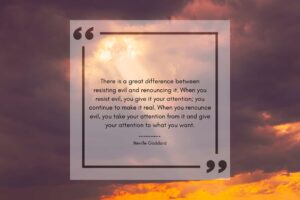
Well, there’s a great quote. It’s about the darkness and not resisting the darkness, but instead renouncing it, because when you resist it, you perpetuate it. Yeah, it’s really powerful.
That’s okay. No, but that’s, I mean, that’s an old spiritual teaching going way back that is, of course, incredibly important. And one of the most surprising things for me, as an entrepreneur, is the power of equanimity. That it’s very difficult to judge if anything is good or bad when it happens to you. You want to, you want to say, this is bad. I know so many people who’re like, “It’s bad that I got laid off.” It’s bad that my company failed. It’s bad that this happened or that. We lost this deal. We lost this opportunity.
And later you realize, that’s the best thing that ever happened to me, you know? And it’s like, well, when it’s happening, can you find that space within you to say, “look, it’s not really my place to judge this right now. I just need to discern what is needed and kind of accept what is happening so that we can take appropriate action. And I just think that I found that very difficult, very difficult to learn and to master in my life.”
So there’s an idea theory from Emad Mostaque. I’m not sure if I’m pronouncing that correctly, but CEO of Stability AI, which created Stable Diffusion. And he says it’s the next thousand days that is our window of opportunity, and after that pretty much all bets are off. Like, all white-collar jobs will be gone. It won’t be just that there’s no benefit to hiring human beings. It’ll be a net negative; it’ll be a loss to a business to hire a human instead of an AI. And I’m curious what you think of that. What, and if you agree with that?
Maybe. I mean, I know Emad and I understand where he’s coming from, but I think the jury’s still out on that. We’ll see. I think the power and capabilities of agents are pretty severely overrated across a wide range of tasks. Whether that will continue to be the case, you know, I don’t know. But I just think there’s what people talk about: the jagged capability or the jagged frontier of AI. And the way I like to think about it is you imagine a histogram plot from zero to infinity.
Of every individual task you might ask an LLM to do for you. Every task. Think about it. Just invent me a drug, make me a website, write this email for me, summarize it right like every possible task. And if you imagine that each bar on this graph represents a capability from zero to a hundred, zero meaning to just do it. A hundred is, like, the very best in the world. You would never hire a human to do it anymore because this thing is amazing. It’s a really crazy shape that’s being made by this graph, right?
So when we talk about the increasing capability of these agents, which is real, the LLMs, the models are getting better and better and better and better, especially the open-source models. We’re filling in this graph. But it’s so vast. Think how many tasks there are. So think about how much area there is, like in the task that you care about. It could still be zero. Whereas over here, people are like, for my task, it’s at 85. This is incredible, right? Like, it’s just there’s an immense set of space to fill in there. And I just don’t know that even at the incredible rate of progress we’re making now, we can truly expect those kinds of returns. Now, he might be right. And the fact that the tools cannot do the thing he’s describing today is no reason for complacency.
Rather, I really like to think about, to figure out what is the morally justified or the most important action to take in a situation like this where there’s a wide range of possible futures we’re trying to protect against. And where many people would say the action that you want to take to protect your future is the very action that I think creates the dystopia in my future. And that’s what we fight. We have to ask ourselves: given the uncertainty here, which actions make sense across a wide range of possible futures? And do those.
So if you were to offer a wisdom nugget for our listener or viewer to leave them with, maybe it’s not something we’ve even spoken about so far. What would it be, and yeah, how would you make it immediately actionable?
Gosh, there are so many things we could pick. What I would say is this: one of the most important ideas in the book is not really what to do, but when to do it. So we’ve been talking about things you can do and for those that want like a quick checklist, like become a public benefit corp, establish fiduciary commitments beyond just to shareholders, establish a checks and balances system where the board of directors is held accountable to the mission, stuff like that. Okay, those are all really important things to do. But the question is not so much what to do, but when to do it.
And the principle in the book is this: it’s always too early until it’s too late. It’s never the right time. There’s no right time. If you ask your lawyer on incorporation day, “hey, should I worry about this stuff? Eric told me we worried about this stuff. I heard him on a podcast. I want to have what are called mission protective provisions.” That’s what you can ask your lawyer for. Your lawyer will tell you, “yeah, it’s fine to do that, but it’s kind of too early to worry about that. Why don’t you do it later?” The same thing will be true at your Series A; the same thing will be true in your growth round.

The same thing will be true in your IPO prep. I’ve been in the room. I’ve literally sat in the room where the CEO is turning to their CFO and being like, “Hey, those mission productive provisions, did we ever get around to doing that?” And the CFO’s like, “you were serious about it?” The CEO’s like, “yeah, of course I was serious about it.” “Yeah, you should have told me.” “I did tell you”. “You said it was too early.” “Yeah, it was. But now you’re telling me it’s too late?” “Yeah, now it’s too late.” “When was it the right time? When was it the right time?”
So I can’t tell people always ask me, is it too late for me? I don’t know. The only way to find out if it’s too late is to try. But generally speaking, this gets harder to do the longer you wait. So if you can, if you’re in the sound of my voice right now and you can take these steps, you may not have that power, you may not have that ability in the future. Do it now.
Wise words. Awesome. Thank you, Eric. Now, if our listener or viewer wants to read your book or listen to the audiobook, I think you have some bonuses, maybe if they send the receipts.
Yea. If you go to incorruptible.co, you can find out all the cool bonuses. And you can please sign up for the mailing list. We got a lot of cool stuff you can get. If you’re signed up, you’re part of a community of like-minded people. We have resource guides and implementation guides. There’s a secret chapter of stuff that got cut from the main book. There’s a lot of good stuff you will get if you go to that page. That book, that page also has links to all the places you can buy the book, which is pretty much everywhere books are sold. Of course, you can get it from the major retailers; you can get it in ebook, print and audiobook format.
Integrity means the ability to keep a promise. Share on XThe audiobook has a bunch of cool bonus material that’s exclusive to it, and I’m especially proud of it. And in any event, you can also get it at hundreds and hundreds of local independent bookstores all across this country. And if you live in a place with a local independent bookstore, maybe buy it there because they really could use your help. It’s a hard time for them, and they’re an important community resource. But yes, those are all of your options. Appreciate everybody who gets a chance to pick up a copy or 10 and share it with everybody they know, get it for their team, and all those things. It makes a huge difference to me trying to get this idea out.
Yeah, yeah, you got an important mission. Yeah. And also, how do you work with clients? Like you have an organization, I mean, a startup organization.
There’s a lot of ways to do that. Please, you know, people should feel free to get in touch with me. You know, I’m very easy to get a hold of. A new organization is forming specifically to provide consulting and support to companies on the ideas in this book. It’s called Escape Velocity. You can check that out. For those who want help with the legal side of implementing these provisions, I helped start a full-service, AI-powered law firm called Virgil, which you can access at tryvirgil.com.
Virgil can help at a very low cost with the things we’re talking about, while other firms charge a lot of money for them. They also do AI-powered back-office stuff and will make your life infinitely easier as a founder by hand-taking care of your payroll and finances and all kinds of other junk that you really don’t want to do, all in a flat-fee subscription. I highly recommend that. And of course, the classic is still the Lean Startup Company, where you can learn more about the Lean Startup and how to implement it in companies of all sizes.
So yeah. I’m pretty easy to get hold of. And if you’re planning an IPO or you’re in a public company and you’d like to be in a public-market environment that supports long-term thinking, you can check out the long-term stock exchange at ltse.com.
Wow, you are prolific. Amazing. Well, thank you, Eric. What a pleasure. and yeah, you’re an inspiration. And you too, listener, you are an inspiration. Go out there and make the world a better place. We’ll catch you in the next episode. I’m your host, Stephan Spencer, signing off. All right.
Important Links
Connect with Eric Ries
Apps/Tools
Books
Businesses/Organizations
People
Previous Get Yourself Optimized Episodes
Previous Marketing Speak Episodes
YouTube Videos
Your Checklist of Actions to Take
- Treat your startup as a hypothesis, not a sure thing. Entrepreneurship is a truth-seeking discipline, so make falsifiable predictions and test them, because if you can’t fail, you can’t learn.
- Do the learning yourself instead of outsourcing your brain to AI. Let tools build and summarize, but remember that the rate-limiting step in innovation is still how fast you can learn, and no one can lift those weights for you.
- Go deep on primary sources and organize around the problem. Skip the endless summaries of summaries, and build your information systems around the specific question you’re trying to answer rather than around the information itself.
- Honor your original vision while you refine it, and guard your morale. The first flash of insight is rarely a full blueprint, so work through the real-world trade-offs without losing your commitment to the vision, and protect your morale as the scarce resource it is.
- Build your company with a clear ethos beyond profit. Stand for something specific, stay consistent with your own values, and plan how those values get passed down through generations of managers.
- Give your mission a guardian so it survives financial pressure. Reject the idea that a company exists only to maximize shareholder value, and put a structural mechanism in place whose job is to protect the mission over time.
- Follow the principle that harder is easier. Choose the more demanding path, like capping your margins or keeping every promise, because the easy way out usually leaves you structurally weak.
- Practice equanimity when things seem to go wrong. It’s very hard to judge in the moment whether an event is good or bad, so discern what’s needed and accept what’s happening before you rush to label it.
- Put your mission-protective provisions in place now, not later. It’s always too early until it’s too late, and these steps only get harder the longer you wait, so if you can act today, do it.
- Connect with Eric Ries. Visit incorruptible.co for the book and bonuses, check out Escape Velocity for consulting, tryvirgil.com for low-cost legal support, and the Lean Startup Company to go deeper on the method.

About the Host
STEPHAN SPENCER
Since coming into his own power and having a life-changing spiritual awakening, Stephan is on a mission. He is devoted to curiosity, reason, wonder, and most importantly, a connection with God and the unseen world. He has one agenda: revealing light in everything he does. A self-proclaimed geek who went on to pioneer the world of SEO and make a name for himself in the top echelons of marketing circles, Stephan’s journey has taken him from one of career ambition to soul searching and spiritual awakening.
Stephan has created and sold businesses, gone on spiritual quests, and explored the world with Tony Robbins as a part of Tony’s “Platinum Partnership.” He went through a radical personal transformation – from an introverted outlier to a leader in business and personal development.

About the Guest
Eric Ries
Over the last two decades, Eric Ries’s ideas about continuous innovation, long-term thinking, governance, and market reform have reshaped company building and management practices. He is the creator of the Lean Startup method and the author of the New York Times bestseller The Lean Startup; The Leader’s Guide; and The Startup Way.As a founder, he has put his own ideas into practice with The Long-Term Stock Exchange (LTSE); Answer.AI, an AI R&D lab; the Lean Startup Co, which teaches and supports the implementation of Lean Startup; Virgil, a legal services startup; and IMVU, where the ideas that became the Lean Startup method were forged. On his podcast, The Eric Ries Show, he talks to guests including world-class technologists, thought leaders, and executives working to build profitable companies for the long-term benefit of society. Eric has served as an entrepreneur-in-residence at Harvard Business School and IDEO. He lives in the San Francisco Bay Area with his wife and three children.







Leave a Reply