



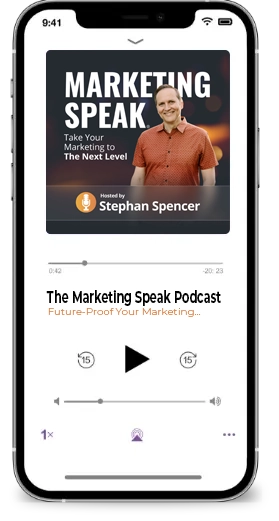
In a world drowning in content, being good at what you do is no longer enough. My guest on today’s show is Jay Acunzo, keynote speaker, storytelling strategist, and author of Break the Wheel. Jay has spent his career helping experts stop competing on volume and start winning on resonance, working with speakers, authors, and service providers who are tired of being treated like a commodity.
In this episode, we discuss why most personal brands fail to convert, and what separates the people buyers seek out from the ones who end up on a comparison spreadsheet. Jay walks through his framework for packaging expertise into signature stories, branded ideas, and a distinct premise that makes price negotiation almost irrelevant. We also get into how AI is raising the stakes for generic content creators. Public speaking, it turns out, may be the highest-leverage skill you can develop right now.
If you sell expertise, services, or ideas, this episode gives you a sharper lens for how to position yourself and communicate in a way that makes the right people come to you.
In This Episode
- [02:17] – Jay explains building a keynote speaking career from scratch and why speaking/storytelling is a high-impact skill for clarity, influence, and resilience in an AI-driven world.
- [08:03] – Stephan and Jay discuss how personal branding is becoming more important as AI commoditizes knowledge work and marketing.
- [13:04] – Jay explains that strong communication comes from a consistent creative practice of questioning assumptions and refining thinking over time.
- [17:32] – Jay shares how Break the Wheel emerged from frustration with “average content,” shifting him toward an investigative mindset over best practices.
- [20:43] – Jay explains how Anthony Bourdain’s philosophy inspired his brand symbol and his embrace of nuance, uncertainty, and open-ended storytelling.
- [23:17] – Jay argues that chasing virality often sacrifices depth, and instead promotes building distinct ideas and frameworks that attract the right audience.
- [28:44] – Jay describes his mission as helping people communicate meaningful ideas with depth and clarity—even at a “whisper” level.
- [32:14] – Jay explains “don’t steal the revelation,” meaning stories should show experience without forcing a single takeaway.
- [35:52] – Stephan shares a personal spiritual and relationship story, exploring how to tell it without over-explaining its meaning.
- [39:41] – Jay breaks down “signature story” structure using align, agitate, assert, invite to move from problem recognition to transformation.
- [47:20] – Jay explains making stories cinematic through vivid, sensory “showing” instead of abstract summaries.
- [50:23] – Jay shares how great podcasting comes from creating space for guests and using live follow-up questions to shape stories in real time.
- [54:06] – Jay shares a personal story of a sports injury that redirected his life and briefly plugs his coaching and speaking work.
Jay, it’s so great to have you on the show.
Thanks for having me. Honored to be here.
So let’s start with your superhero origin story. How did you end up where you’re at now? You had all these amazing experiences, and you published a book. You did all sorts of great keynote speeches and so forth. I had a stint at Google and so forth. Walk us through your story.
Are you sure it’s a superhero, not a super villain? I guess we’ll let the audience decide. You can understand me through a very simple lens. My premise, which guides everything in my work, is that resonance overreach. I want that for my clients. I want that for my audience. I want that for my work. We’re in this very strange moment where people pursue reach in an empty way, without the impact to back it up. So I always want to think about resonance over reach. And that actually started for me before I went to school. I wanted to be a sports journalist, writing human-interest stories.
And when I got out of school and started my work in the business world, it was at, like you said, at Google in sales, and I didn’t love sales, but I did see a lot of need for storytelling, better public speaking, all the emotional stuff of favorite storytellers of mine. Anthony Bourdain comes up a lot when people ask who my favorite storytellers are. I mean, get in line. one of tens, if not hundreds of millions of people who might say that, bringing this lens of story and emotional resonance to the working world without it needing to feel overly saccharine or trite. That always appealed to me.
My premise, which guides everything in my work, is that resonance overreach.
And so I kind of did my tour of duty in tech, working in sales at Google. I was the head of content at HubSpot and several other organizations, a tiny startup and a VC firm. And in 2015, I started to pick my head up and think, well, maybe I could make it work as a keynote speaker. And for many people, that sounds crazy because they assume I had a moment of fame or I had some kind of viral hit or a bestselling book, none of the above.
It was just like if you want to build a design agency, or today you want to monetize a YouTube channel about Star Wars fan theories, or something like that, we can decide to build a speaking business. And I had very many great mentors at my side. I have to always shout out the great Andrew Davis, who I think is the world’s best keynote speaker and also the sharpest mind in speaking.
And so he was helping me figure out the ropes, the craft and the business side. But for many years, I built a keynote speaking business that supported my family and took me all over this country and several others. And it took about five years to get that to the scale it reached. And then the pandemic began, and I lost it all in five days. And if you fast forward to today, between that moment and the fact that I want to stay home with my very little kids, I still give my fair share of speeches.
But most of my time is spent working with folks one-on-one who have a ton of competence. They have a lot of expertise, and what they’re looking for is not more competence but greater resonance in how they speak, how they tell their own story, and how they tell other stories. So I want to make sure that people resonate more deeply with the world that is getting too obsessed with vanity metrics.
Yeah. And how do you see what you’re doing changing over the next year or two as unemployment reaches unprecedented levels, as AI becomes much more a driver of business, and people have to reinvent themselves and businesses, and so will you, so will I. So I’m curious how you’re going to reinvent.
I don’t see that stuff is causing me to reinvent so much. I feel like I have gone through a heavy period of reinvention, from being a full-time keynote speaker and earning a living on stages. And then secondly, hosting shows for brands. So I have had those two income streams for many years now, working behind the scenes. What I’m finding is what used to feel like, yeah, yeah, yeah. I know that’s important, Jay, but I have other near-term priorities. Now it’s like, my gosh, this is an urgent need.
And chief among them is speaking because being a great speaker is not easy; there are no easy buttons that you can just press, and everything gets better, but speaking is damn close because if you are a good public speaker, whatever that means to you in your context, for me, that means many formal presentations for you. Maybe that’s pitches or one-on-one interactions, but if you’re a better vocal communicator, storyteller and presenter, it’s like hitting this, you know, increase the odds of success button.
I won’t go so far as to say everything gets easy. Still, it becomes more effective because it’s one of the most personal, transferable skills you can master, so if you look around, you see who feels secure, who feels vulnerable and who feels replaceable. It’s not the people who have a distinct premise to their work, some kind of signature idea and perspective. It’s not the folks who articulate well what they’re trying to articulate and argue for folks on the receiving end to see it their way. It’s not the strong storytellers and speakers out there.
It’s the folks that got a certain way, got a certain level of traction, just being competent, and they’ve never really had to think about how to be resonant. It’s that world now that it’s urgent to master. How can you inspire action and get others to align with the people spark, whatever emotion you’re trying to spark, and also make sure you’re getting your point across in a memorable way? I feel like I’ve found myself in a space where this moment in time is actually causing more people to run screaming from it.
Being a great speaker isn’t easy. But improving your speaking, storytelling, and presentation skills is almost like pressing a button that increases your chances of success.
Like, “oh my gosh, I need this now, Jay,” which I’m thankful for. And I want to make sure I’m pointing out these abilities. If you can call it a superpower, the superhero origin story. I disagree, but I want to point out the abilities and methods I have for people who have good substance and actually deserve more stability in their careers or a bigger public platform because they’re real experts.
Yeah, and personal brand building has never been more important. And I think it will continue to increase in importance as AI becomes more commoditized, so much so that it commoditizes everything from copywriting to video production to, you know, all kinds of desk jobs, all kinds of marketing roles.
You know, if I had to fast forward two years and guess what the world looks like and how people are interacting with brands online, they’re going to, I think, be relying on their personal agents and asking the agent to deal with other agents on their behalf. And they’ll make requests like, I want you to focus especially on this brand or person as a candidate for this opportunity.
And then the AI takes it from there. Without having a personal brand, that opportunity is gone. They’re just going to say, “Hey, find me the best solution or the best provider or the best tool. So brand building is the future, I think, for an AI-driven world. What are your thoughts?
Some folks might put me in the camp of helping you build your personal brand. I think of it as if you are on the spreadsheet of options; that’s a really hard place to win. So a good example is that many of my clients are professional speakers who get paid to speak, authors who share their expertise, and service providers who are in business. Maybe they have a team around them, but it’s a personal brand-led business; they are selling expertise. are in the business of expertise and advice in some fashion.
And for many, many years, merely sharing good advice online helped you win clients. Now, and I think even in that rise of content marketing, a lot of the buying process looked like, I’m going to put this public speaking coach. I’m going to put this freelance writer. I’m going to put this service provider, this business strategist or coach on a spreadsheet against five or six other people. And that’s a race to the bottom, because you’re automatically a commodity, interchangeable.

You can’t charge a premium for that. And it’s like, who has the fanciest logos on their website and the lowest price combined? That’s no way to build a sturdy business or a thriving career, I think. And so I tell clients, like, my job is to get you off the spreadsheet where they’re not coming because they like, excuse me, they’re not coming because they need somebody who looks like you. They’re coming because they want to work with you.
And for my world of selling ticket services and selling expertise. That’s a far better way to build your business where you almost don’t need to care. That’s a little extreme. You certainly don’t need to spend much time agonizing over what the future is and where this is going and where I am exposed or had someone tell me online when I was like, “yeah, I don’t let AI touch a single speech, a single created thing that I put out into the world, you know, safer checking for typos and things like that. It’s not generating anything for me.”
And somebody goes, “Well, I’m excited to compete with you in that case.” And I was like, “I’m sad for that reaction, but I’m also like, so are you saying you’re going to rebrand yourself as Jay Acunzo?” Because my clients need to get to know me a bit, I offer a relationship package. I need relationships with my audience. They’re not, I’m not transacting the world. And I think a lot of people are being rewarded using AI now because they’re just like arbitraging a near-term opportunity.
And they have this transaction mindset. And I’m so uninterested in talking to people like that, catering to their businesses and being a service provider for them. I’m exclusively working with folks who are like, “I think I have something to offer the world that is transformational, not transactional.” And so they’re not like in the business of being a louder commodity. They’re in the business of trying to say, ” This is what I am. This is the idea I want you to associate with me. And I care about impact, not, you know, follower accounts.
I’m not transacting the world. I’m in the business of trying to say, this is what I am. This is the idea I want you to associate with me. And I care about impact.
Yeah. And one thing I feel AI misses the mark on and will continue to, even as it becomes “super intelligent,” the intuition, the ability to kind of see around corners and have gut instinct, have a connection to the infinite, know the universal Google. And so, how does one nurture that ability for intuition, gut instinct, and just being in tune so they can differentiate from AI?
Very few things that I ever tell a client or a crowd are as effective when I tell them to do X, Y or Z. It falls apart if you don’t have an initial creative practice. I think that’s one of the most missing things. If you plan on communicating with the world and you want that communication to do the job of communication, which is not to get in front of the audience, but rather to make them care. If you don’t sharpen your thinking constantly by writing once a week or more, or by recording something once a week or more.
If you have no foundation of showing up and hitting publish merely because that’s your data, then you really don’t have a place to refine that thinking. Like, I like to tell people, you probably don’t have an original idea to support your business, speech or whatever project you’re launching. You probably don’t have an original idea, but ‘have’ is the operative word, not ‘original’. You don’t have an original idea, but you can build one.
And the way you build one is you show up, ask really deep questions, sense your frustration and turn that into curiosity. You explore your ideas over and over and over again until you get a speech or a podcast launch or a book, that’s the culmination of a long journey of figuring things out first for yourself, then for the audience. And I think a lot of people don’t want to do that. They think they may not have the skills to do that.
But it starts in very simple places, just asking more piercing questions, just being willing to say, that’s the conventional wisdom of my space. And I can’t stand it. And I don’t know why I can’t stand it. I have to go figure that out and investigate. So I think we live in this kind of tyranny of the right answer, where we think our worth is having the answer. And I think the best thought leaders, the best leaders in any sense, the voices worth following who have sturdy businesses, they don’t have the right answer, but they raise their hand, and they go.
I don’t have the answer, but I’m going to go figure this out. Like, subscribe to my newsletter and my podcast. I’m on this journey to make something that matters more than conventional wisdom would allow. And so it’s there that, like, that’s the foundation, you know, then we can talk about techniques and strategies on top of that. But if you’re telling me, I don’t really ship my writing just to improve my thinking. Well, then start there. Cause you have a momentum problem, not a brilliance problem. So solve the problem you have.
I don’t have an original idea but “have” is the key word, not “original.” You don’t start with one; you build it by showing up, asking deep questions, and turning frustration into curiosity.
Right. And when you don’t write and record and do deep thinking regularly, you lose that capacity. If you outsource it, delegate it, relegate it to AI, then that part of your brain atrophies and studies have shown us.
Real data is coming out about that. Yeah. MIT, there are studies showing that, like, my wife is a professor in higher ed, and it’s just that AI has made it a horror show to be a teacher because kids are like, I don’t want to learn. I just want the grade, or I want a shortcut. And it’s starting to show up as like how damaging it is to the mind, not just the grades you’re getting, not just the results in your marketing.
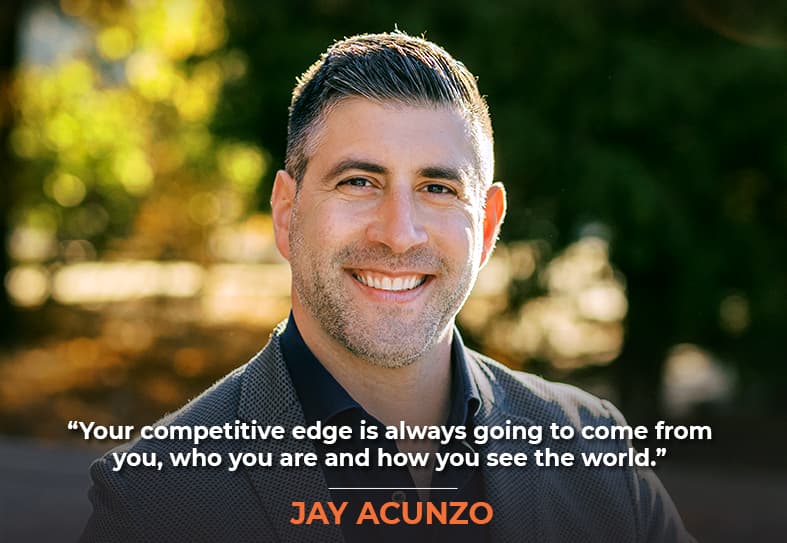
To me, I feel like I’m taking crazy pills because I’m running around the world being like your competitive edge does not come from a third party software company charging you 20 bucks a month, a subscription tool that, by the way, all your competitors can also subscribe to your competitive edge is always going to come from you, who you are, how you see the world. Because plenty of people talk about the topic you’re talking about. How do you see your topic? Can you make me care about the way you see your topic? These are real skills. Like, again, back to resonance overreach, we’ve been taught techniques to grow reach for many years now.
People understand that’s a learnable thing. There’s rigor. I can actually learn how to grow my reach. Well, it’s the same with resonance. You can learn to ensure people care more, to ensure people act more, to ensure people align with the way you see yourself in the world. But unfortunately, a lot of that stuff starts with you having to confront yourself and how you feel, to turn inward before you just punch a button and spew more content, more mediocrity, at scale onto the feeds. We don’t need more of that.
Yeah, so this aligns well with what you wrote about almost a decade ago and published the book, Break the Wheel.
Has it been, my gosh, it’s been almost a decade since Break The Wheel.
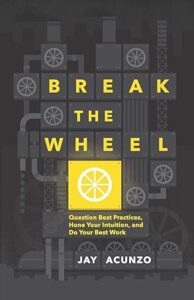
Yeah, eight or nine years, yeah. Break the Wheel, Question Best Practices, Hone Your Intuition and Do Your Best Work. So yeah. I’m curious, how did you come up with that title, Break the Wheel?
It’s a nod to Game of Thrones, believe it or not. So Daenerys Targaryen said in that show, I’m not going to stop the wheel. I’m going to break the wheel where there’s this perception that I had started in a very simple place.
Actually, I came up through the rise of a certain type of content marketing, and that helped anchor my personal brand, which gave me opportunities as a writer, a storyteller and a speaker that maybe didn’t exist as much in other forms of marketing before that.
And so I really benefited from it, but I always got into it because of the content word. It’s content marketing. And I looked around the industry and saw so many organizations and people who seemed either stuck in or content with shipping mediocrity. Now, lo and behold, a lot of lazy uses of AI look like that at scale, right? But for me at first, it was about attacking this frustration with average content.
And then I write and speak and write and speak and talk to people and sense my frustration and ask questions. And after a while, it’s like, wait, there’s something deeper. Why average content? What’s causing this? best practices. We think they’re the best. They’re really average practices. They’re missing variables from your own unique situation that we ought to incorporate into any calculus that we’re running. Any equation you’re running has to include those variables; the math doesn’t work.
We need to be better investigators of our own context. So it’s not average content that was the enemy of that story of mine. It was really best practices, and so writing a book about, well, what can we do with best practices? What are they really? They’re just possibilities, and we have to vet those in our own unique situations. But we’ve been told for many years to don’t ask those piercing questions. Your worth is having the answer in class. Raise your hand and say I have the answer: You’re not trained to be an investigator.
A keynote is an argument to embrace one idea, and all the elements of your IP serve that argument. Share on XYou’re trained to go on to be not even really an expert, but somebody who almost regurgitates the expertise of others. And so that’s a real problem. I wanted to kind of learn how to create thinkers by sharing stories and stats through history in that book and giving folks a framework to ask better questions, rather than a framework to proceed forward with my answers. And so, for many, many years, it started from a place of marketing frustration.
And then the more I spoke about it on stages, the more I was in pockets of the business world that had nothing to do with it. You know, it wasn’t a marketing conference; it was a home service provider, a dentist and a luxury landscaper. mean, like it took me all over the world, that idea. And I think the idea still holds, almost as you said, a decade later, where a lot of folks are outsourcing that investigative piece, the perspective, the finding of yourself and your tone, the curiosity.
They’re outsourcing it to a tool. And I’m like, no, no, you need to make the mess first. Use a tool to clean it up. That’s fine if you have to, but please start as the investigator who’s asking piercing questions and going on this journey to hone your intuition and trust it more. We need that investigative attitude because, on the other side of that, there is greater clarity for ourselves and others.
Yeah, now that you mentioned it, you can learn a lot from history and stories from the past. I’m curious: what’s your favorite story? And just to give you a quote that I love, it’s from Mark Twain: History doesn’t repeat itself, but sometimes it rhymes.
There’s power in asking piercing questions and trusting your intuition.
My favorite story or my favorite quote? I’m happy to give you either.
Favorite story and yeah, actually let’s do a quote too. I’d love to hear a historical story that was impactful for you and how you maybe worked it into, who knows, a marketing campaign and to you know, best practice for just your life, your personal life.
Yeah. Well, I’ll give you the quote that one’s super easy. And then I have a story in mind too. The quote comes from the mentioned Bourdain. So Anthony Bourdain had a Greek tattoo on his body that said, “I am certain of nothing.” And so, if you look at my website, which is jayacunzo.com, the logo has an asterisk. Now there are a bunch of reasons for that.
And if you go all the way to the bottom of any page, you’ll see a link to a post where I explain the logo, but I am certain I have conviction around my ideas. Asterisk. And I am also certain of nothing. I am also open to asking the next question. The well goes ever deeper. My assumptions could be wrong. I am open to new learning and new data, but this is not what is rewarded on social media or the internet broadly, especially right now. You are not allowed to speak in nuance. You are not allowed to think in the gray areas. Bourdain’s storytelling was defined by wading into the gray area.
He would wander into a region of the world, and you thought, I know what that side is like, and I know what that side is like. And then he’d tell their stories, and you’d walk away with more questions and less certainty. And he wouldn’t tie it up in a nice, neat bow of five key takeaways at the end. And so the asterisk to me is kind of a symbol of that nuance, that understanding goes deeper into learning. But it’s also a storytelling technique that speaks with tension, suggesting there’s an open loop here.
I walked out of the coffee shop, looked down the street and was a little surprised to see what was down there. That’s an open loop. And I said, absolutely nothing that wasn’t totally mundane just now, but you’re like, so what was down the street, Jay? We’re wired for closure. So that asterisk has so many meanings for me, and it comes back to a quote from Bourdain or at least a tattoo from Bourdain, which is, I am certain of nothing.

That’s great. Yeah. So, you know, I forget who created this video, it was a criticism of The Diary of a CEO and it was big because the people in The Diary of a CEO have a very strong position. It’s very bankable, very viral and the people who speak in nuance or who have a lot of, kind of, that gray area, I guess, to use your term, they don’t end up on the show. So if it’s punchy and powerful and memorable, it’s kind of like fast food or candy, that’s the stuff that ends up, according to this YouTuber, that’s the stuff that ends up in the diary of a CEO. So I’m curious what you think about that.
I mean, I’m not really going to respond to a random YouTuber because they’re going to tell you about every system imaginable for short-term injections of attention. And I’m like, that doesn’t help my audience. That doesn’t build my business. You know, they’re going to have me pose with a surprise face, Mr. Beast face, holding a wad of cash to be like, here’s how you get paid to speak in seven seconds or less. We need to stop taking our cues from people who trade in these kinds of attention-arbitrage gimmicks.
Because what ends up happening is that we send a signal to sophisticated buyers that we’re not actually for them. So a good example is what’s happening on LinkedIn right now. So LinkedIn is one of the best places for me to write and share my ideas and videos. And people go, “Jay, why are you posting on LinkedIn?” The content on LinkedIn is so beige. And it’s like, precisely if you know how to shine your own bright color, standing in front of a wall of beige is actually quite useful.
It’s a lot easier to stand out in a waterfall of gray if you prefer that. Like that’s better than a trickle. If you know how to shine bright yellow, if you know how to be who you are, people are starved for nuance. Now that nuance and depth of thinking are not antithetical to a soundbite. These are not the same things. You need to make the nuance more fascinating. What people often lack is a clear premise for how they see a topic.
Good means gripping attention. Effective means inspiring action. You have to learn how to inspire action Share on XSo what they do is press harder on generic advice around that topic and turn it into candy, into a clickbait moment, because they don’t know what else to do. And that’s why, on LinkedIn, you also see a trend of’ stealing my secrets.’ 99 % of people do this wrong. My peers aren’t going to like that. I reveal this trick to you. And then you read the piece, and you’re like, “This is generic advice at best.” It’s because they don’t know what else to do. They’re just pushing harder on sharing generalized information about their topic or space. They lack that distinct premise.
They haven’t packaged their material into IP. What do the best authors do? What do the best speakers do? They know how to go from a baseline of really good substance and expertise to a platform of impact. And the journey there is not shouting louder or hyping harder. It’s how do I package this stuff into stories and frameworks, branded terminology, signature bits, right? It’s to think of a keynote as a good metaphor for all of it, or a good comp for all of it.
A keynote is an argument to embrace one idea, and all the elements of your IP serve that argument. And then the speech creates a before-and-after moment with the audience. They break patterns. That’s what good speakers and I think good storytellers do: they break patterns by communicating a change and getting you to buy into it. And then afterward, you’ll never see the thing the same way again, you’ll do it better, think about it better, feel better or all the above. And so I questioned these lo-fi hacky thinkers that are like, have to do it this way. I, you know, I cry bullshit.
Yeah, I found the YouTuber and his episode or his video about Diary of a CEO. It’s Barry’s Economics, and the video Diary of a CEO is making you less successful. It’s got three-quarters of a million views, and I thought it was actually quite insightful.
Yeah. I think the games we play to get big, to get a big, big, big, big audience are often not the games that reward really good thinking. You know, you have to become a pop singer, not those amazing artists that you hang on their every word and every lyric, you know, I don’t want to be that. I don’t want to be a top 40, you know, singles machine. just not what’s in my heart. It’s not what is driving revenue for my business.
And so for this episode. It’s funny because business politics, all these things have become like pro wrestling meets, you know, pop culture films. It’s like, you know, spectacle and sensationalism and antagonistic and all these. Why? Cause they’re just trying to get more and more and more attention and more and more and more fame. Like to what end? It’s just not interesting, at least to me. I’m just so out on a lot of that stuff. So, you know, your mileage may vary. All I know is I don’t want to be hosting a lot of one-oh-one-level classes, so to speak; I want to be hosting executive forums.
So what is your life purpose or your soul’s mission?
I can’t, I don’t know about that, but I have something that I’ve landed on for my work. ‘Cause you know, my life’s mission is to enjoy my ride before it’s over. Make the world a little better for my kids, and be present with them. I haven’t really interrogated that. But I feel very content and not thinking about my work, I want to help people make what matters to themselves and to others because there are a lot of system gamers right now who get an injection of attention and the platforms that we mostly play on reward that because a social network isn’t really a social network. It’s an ad network.
What if you could whisper? If your mission is to make things that matter, how could you say it so powerfully that a whisper is enough in an age of shouting and hype?
So they just like cable news, they need eyeballs, they need clickbait, they need sensationalism. They’d rather you post something forgettable, but gets attention right now among 10,000 people, rather than posting something transformational, like actually deeply useful and helps 10 people.
By the way, those 10 people might be better leads for your business. These places where we show up, point to somebody and say, “optically, they look like a success.” They have incentives that are not necessarily aligned with our own mission, and are pretty much never aligned with it. So I’m trying to do this through my business now, by creating projects with the people I publicly show up with. I’m trying to make sure people understand what matters to me. Here’s the change I want to make in this sector, in this world, with this community.
And I’m struggling to articulate that change succinctly and effectively; I’m struggling to get others to care deeply about it. And how do I become almost an arms dealer for these experts, business leaders and community leaders, giving them the tools they need to communicate with greater power and impact?
So they need less volume. Like, there’s like, what if you could whisper? That’s a question I’m always thinking about. If my mission is to help you make things that matter, how could you say the thing that matters to you so profoundly and powerfully that you could merely whisper it in an age defined by shouting and hyping? And that would be enough because people would go, my gosh, yes. And they would spread it for you. What if we could whisper? Let’s get there. Impact, influence, power, not volume.
That’s good. So, you know, somebody who I think kind of has a parallel path to you, correct me if I’m wrong, but maybe it’s Seth Godin because he had an amazing time and creative ride at Yahoo. I don’t know how many years he was there, but he really put Yahoo on the map in its early days with such brilliant creative campaigns. Yeah, really, really special.
Yeah. And I’m a big admirer of his work.
And then he went off on his own, and he created so many incredible works, the books and his blog, which he’s been doing continuously for decades now without missing a day. I mean, he’s just a really profound thinker and creator. He’s always in motion. He’s always doing something really remarkable. And I’m going to use his definition of remarkable. That’s, you know, what is it?
Three words. I think it’s three words. Worth remarking about.

Yeah, there we go. Worth remarking about. So how do you track that? Do you feel like your path is kind of in parallel with his? Maybe that doesn’t resonate. What do you think?
No, his work resonates with me. I had a chance to interview him on my show. Um, I host the show, which is currently called How Stories Happen. The name is changing to fit more things, but it’s a show where we put the craft of this type of work I’m talking about on display. So rather than just talk about Seth Godin’s ideas with Seth Godin, I asked him to bring, just like with every other episode and every other guest, a signature story to the show, tell it, and turns out it was a story that my research revealed. He’s told it in many forms for many years.
But he told it in his most recent book at the time; this is a strategy. And he told it, and we dissected what makes it work. How did you find that story? Why is it effective? You know, how would you use it from here? You’ve used it multiple times. Why is that? And, you know, I think it was a pretty fun time for me because I’d admired his work for many, many years, specifically because of something he said on the show. He said the best teachers are the reason I admire him as a teacher. The best teachers don’t steal the revelation.
And I think, to your point about speaking in soundbites or oversimplifying or all these things, as most people teaching online do, they steal the revelation. They’re like, here’s exactly what you have to do. And it’s foolproof. Follow these three steps, this one simple secret, and you’ll be a success. Which, again, a critical thinker knows that’s not true. Seth’s idea of ‘don’t steal the revelation’ is, and the example he used on my show was.
I like to joke that I’m extracting from you more than imposing on you.
Most people, when they teach, rush to give you the revelation. And so much of my teaching, I’m trying to show people things and empower them to see it their way, not just my way. I like to joke that I’m extracting from you more than imposing on you. In music, you have an executive producer like Rick Rubin for many years, who worked; now he’s more of a thought leader, but you know, the founder of Def Jam.
He’s worked with some of the most famous musicians and artists on some of the most famous records of all time, Beastie Boys, Johnny Cash, you name it, dozens and dozens, if not hundreds, of incredible artists in all spaces. You know, they’re not hiring him to say exactly what they should be performing, or to clip a waveform after the recording is done. He’s more of a capital P Producer who extracts from his artists. He’s got good taste because he said publicly, “I know what I like.” And I think that’s been useful for my clients. That’s Rick Rubin now.
And so people like that, the Seth Godins of the world, the Rick Rubins of the world, who’s like, there’s something deeper here that if I can get you to access it, you’re going to be unstoppable, but in your own way. What I’m not going to do is say, “Do it my way. I’m giving you my wisdom from on high. I’ve paved the path. Follow those exact steps.” Good for you if that’s how you teach, and that’s the audience you want to serve.
It’s not an audience that makes me happy. It’s not a business I want to build. It’s not a legacy I want to leave. If there is such a thing for me in the future, I like the idea of not stealing the revelation. There’s something much more profound and mind-blowing for the person on the receiving end when they’re like, “My gosh, I see it now,” because they leave feeling so empowered to do something their unique way. And I do think we need much more of that in this world.
So let’s play this out a little bit just for fun. Let’s say that I’ll pick a story, one of my kind of signature stories, and then how do I not steal the revelation from that storytelling? So this is how I met my wife, okay?
Love this.
Two months before meeting her, I was on a Platinum Partner trip with Tony Robbins in India, and Tony flew in these monks who were giving blessings and teaching content. And one of the monks touched me on the head and gave me a blessing, and everything was technical, or I had the most profound spiritual experience, and I went from agnostic to spiritual in that moment. No drugs involved at all.
I’m sure the way I saw it could be described as a kind of psychedelic trip. I could see the energy coming off the trees, and the colors were the most vibrant I’ve ever seen. Well, fast forward two months, and I’m at another Tony Robbins event, Date with Destiny. It’s the end of the event.
It’s the last day. I’m writing my relationship vision. That was part of the exercise. And then I prayed to God that she would show up in my life, because I was single at the time, and really ready for my soulmate. And 12 hours later, we were introduced by a mutual friend. Within 10 minutes of meeting her, I knew she was my soulmate.
So I arranged to get a ring and I I by the way the way I knew she was my soulmate was because I gave her a blessing like I had gotten one in India I also learned how to give them they’re called Diksha’s I gave one to her because she ended up not getting touched by the blessing givers on the last session of the event like everybody got a blessing pretty much but she didn’t.
So I gave her one, and I was like praying for her, and I knew at that moment she was my soulmate. Yeah, got a ring; proposed to her nine days later in a hot-air balloon. And she said, and here’s where the revelation comes in, maybe. She said no. She said, well, more precisely, not yet. Because I mean, it’s only been nine days. I mean, that’s crazy.
I mean, you know how the story ended, of course, because she’s my wife now. But I had to repropose nine months later, and then she said yes. But we were inseparable the whole time. So I’m curious how your explanation of this, not stealing the revelation, how that applies to, like, a signature story. I didn’t really rehearse that, so it’s kind of meandering.
It’s been a little while since I’ve shared that story. But that’s certainly a profound story and a milestone in my life, where it was very clear that God performs many miracles and is very… if you’re precise, He’s precise too. So I was precise in asking for her to show up right away, and then 12 hours later, there she was.
There are no chances. It’s a rigged game, the whole thing. It’s rigged in your favor.
So we’re swapping hats here, or kind of putting on different hats here. Like you’re a client, I’m working with you now. And it’s like, okay, that’s the potential for a signature story. So the first question is: what is the story meant to illuminate? So let’s start with that. Now you might not execute the story this way. Still, there’s a very useful device, a single phrase, to go from a good storyteller, who could command someone’s attention, to an effective storyteller, who inspires action. Cause that’s what you want to be, whether you’re trying to sell something or change people or both.
You have to learn how to inspire action. It could be a change of behavior, a change of thought. That could be something you can measure out in the world, that kind of action. So good means gripping attention. You can tell the story of how you met your wife, and nothing in my life changes. I’m not really reflecting on anything in my life. I haven’t changed anything, right? Or you can tell the story of how you met your wife, and I am now changed, right? So how do we get effective storytelling out of that? Here’s the phrase. Imagine you ended by saying this. That’s the thing about.
So if you like the movie The Matrix, there’s that thing about society: what we think of as rules are just systems created by those in power, who rely on our complacency and obedience. So if we want a different world, we have to wake up and stop being mindless drones plugged into this system. Right? That’s the boy who cried wolf; that’s the thing about lying. People won’t believe you when you finally tell the truth if you’re known as a liar now.
And by the way, that could have dire consequences for you. You’re going to get eaten by a wolf. So that’s the thing about a topic, which others are talking about, plus insight, which is how you uniquely see that topic. So let’s try that here. Like, where is the story going? So pretend you tell that story. That’s the thing about the topic you’re teaching to others that they already care about. And then what is your unique premise or angle or way of seeing that topic?
Yeah, that’s the thing about chance meetings. There are no chances. It’s a rigged game, the whole thing. It’s rigged in your favor. And here is how I suggest you start stepping into the role of Neo in the Matrix.
So we found the sticking point. Before I give you advice on how to make the storytelling more gripping, before I give you ideas like that, you have to be a great character. Your wife has to be a stronger character, or, while you took many leaps in the timeline there, it’s clear you really cared about all those moments, but you didn’t take the time to illuminate what was happening or describe your inner world. So I didn’t care as much about the action as you did before we did the story cleanup. We have to know what the story serves.
We have to know what the story serves. Who is it for? What are we trying to say with the story?
Who is it for? What are we trying to say with the story? And that was, just put you on the spot on your own show and said, here’s, and you’re like, that’s the thing about chance meetings. There actually are no chance meetings. Everything is rigged, but it’s rigged in your favor. And I’m like, cool. So I’m going to go day drinking with my buddies, quit my job and not care about anything. Cause it’s all like, I have no free will. Is that what you’re saying? Like, so I’m not saying that’s how your audience reacts, but I’m able to like bat away that.
So we need to sharpen it and sharpen it and sharpen it. I need to think about it, write about it and speak about it. But let’s say we get there. Okay. So that’s just like exercise. Number one is, let’s sharpen the insight we’re going for. That’s the thing about the topic plus your version of some kind of premise for the topic, the way you see it versus others. Let’s say that’s clear now. Then you go back to the story, and you’re like, how do I breadcrumb people all the way there? How do I make sure that I craft this narrative?
Because stories don’t happen to you, life happens to you. And then you put your butt in the chair and turn that material into a story where I’m bringing out the right moments of tension, big questions that I had. So, for instance, if your audience believes that they have to, whatever, find more chance encounters, then I want you to be in the driver’s seat of that story as the protagonist wandering the earth, bemoaning the fact that you’re not having enough chance encounters, right?
Cause that’s where the audience is at. And there’s a really simple four-part structure you can move through. It starts with alignment. Think about what your audience is going through when you’re speaking to them, when they arrive at a story or a speech and your early moments as a character have to echo that. I’ll give you an example from my world. If they’re beholden to best practices, they just follow blueprints and lists from gurus. And I tell the story of a coffee entrepreneur, then that coffee company founder begins all twisted into knots by following all these best practices. And the best practices sound really good.
They sound like the best, because that’s where my audience starts. So, align and agitate are the second section of the story. Now the protagonist encounters tension. So, the coffee entrepreneur encounters all the problems with best practices. If I’m following the best practices, why am I not the best? What’s going on here? This isn’t working. These two best practices from two different gurus in the same space, talking to me about the same topic, are actually conflicting.
So what do we even mean by the best? Like, I want him in the story to go down to the depths of his despair, the way the audience feels despair and struggle and questions and obstacles, and friction align, agitate, and then you reveal your assertion. Assert is the third one. So then you have to have a turning point in the story, which illuminates some kind of change, some kind of realization, some kind of new way of seeing it.
Stories don’t happen to you, life happens to you. And then you turn that material into a story.
Which, by the way, is the assertion you’re making throughout a speech across your platform, you know, everywhere you show up. So if I’m trying to get you to think for yourself and not blindly follow best practices, what’s the moment in the coffee entrepreneur story where he’s forced to do that or realizes he should, or somebody mentioned that he should, because look, he made the same change that I’m here to tell you today. We should all be making, and here’s what happened after. And here’s how we can do it too. So the fourth section is an invitation.
Let me invite you to consider the better possibilities. So align, agitate, assert, invite. So we arrive at the final insight way down the path. Like, here’s how to do it. Here’s what I think we should take from this. And then once we know what that is a little more clearly, we go back to the story and make sure it follows that argument-style arc of meeting people where they’re at and then moving them to where we want them to be. So you’ve heard the phrase, I see myself in the story. It’s not because you have the job title of the hero of the story.
It’s not because you grew up in the town that the hero is from. It’s because that story started in a place of alignment with you, which aggravated the pain and the problem. Then the storyteller asserted some kind of change, illuminated it through the story, and invited you to consider better possibilities at the end.
Right. So the agitation could be in this story, for example, the fact that I put all this effort into surprising my eventual wife, but, not at that moment, it was a huge catastrophe, but I had done all the preparation, and I surprised her. She had no idea this was coming, and I had everything all lined up. I had the ring. The balloon operator said he’s never had a proposal fail.
Best laid plans, right? That’s kind of the yeah.
I ruined a streak. What an agonizing 20 minutes back down to Earth after she said no. I mean, there’s nowhere to run.
Right. So, we get the lesson. We know where the story is going. We know what we’re trying to say to the world. The story’s message is clear to us. The change that we’re trying to impart to others. Then we fix structural problems. And then we go to the details, and the details here are lots of leaps in timeline and lots of telling, but not enough showing. So a lot of us, especially in business, use clip art that says, “I walked to the corner store.”
And now you’re picturing a vector image of a cutesy corner store with a gray-and-white checkered background. It’s clip art, right? We walked to the corner store. I could say I walked to the corner store called Max Convenience, right? And that’s like stock photography, or I’m in a Boston suburb. So I go down, I drive to the center of town for maximum convenience. So I like placing it into some kind of context. That was kind of a quick one.
You probably don't have an original idea, but 'have' is the operative word, not 'original'. You don't have an original idea, but you can build one. Share on XSo I can, it’s stock photography. It’s like, okay, it’s that store, not like any store. And it’s got some surrounding details, but a storyteller communicates as if in a film. And so we would say, like, you know, I moved to a real story. I like to tell, which is, you know, I walked the beach with my grandfather, who’s now 97, but back then, he was, he was always walking with a cane like a golden eagle’s head, being a World War II veteran.
And so we were walking the beach when I was about 10 years old to kill some time before our table was ready at a seafood restaurant. And down, down the beach, we see these rocks, and I love animals and nature. And I couldn’t wait to explore the rocks with my puppy. And so we walked closer, and this guy is fishing on the rocks, and he’s like casting, you know, kind of lazily out into the water. He’s got a white t-shirt that doesn’t cover his belly, and he’s leaning back in a cheap folding chair. He’s got this cooler, a cheap beer.
Next to him, anyway, I nicknamed him cheap beer bill. So a cheap beer bill is catching something, but he’s not catching what he wants. He’s catching these little sand sharks and tossing them to die on the rocks. So, being a 10-year-old nature nerd, I didn’t think I’d just run up to them and pick them up, then slip them back into the water. Right. So I could go on and on and on. The point is, there’s forward action there. I’m like planting you in a single moment and advancing the moments.
And I could take you into this detail or that detail. It could bring out more of my inner life and what I’m feeling or thinking, and I could invoke more of the senses. But I get out of my head and onto the page, the story stuff, which is like, at a time, a person was in a setting, they wanted something, and so they acted one, two, three, and that’s often missing in the story. So what I’ve given you is like a sequence to fix it, find the insight, fix the structure, then make sure there are actual moments as if in a film, not clip art or stock photography, where you show and kind of take me there instead of just telling. And you’ll have both moments, but we need to exaggerate the key moments as moments of showing.
Wow, you’re quite an artist. Awesome.
I have very few hobbies. Stephan, that’s what you’ve learned. I think about this way too much.
That’s awesome. So as a podcaster, you’re interviewing guests. And so, how do you work with storytelling when you’re not usually the one coming up with the stories? You’re the questioner.
Yeah. Well, for many years, I had a podcast that ended after 200 episodes. It was a great run. The show was called Unthinkable. You can still find the episodes. But Unthinkable was kind of a laboratory for me to capture stories and aerate my thinking. And, you know, that was when I was a full-time keynote speaker. I was like, “Okay, I have different speeches. I sell, I’ll have different books I write over the long arc of time. Maybe every couple of years I’ll change what I’m actually speaking and writing about.”
So I need a laboratory to capture stories where I can kind of make this show anything I want it to be. It wasn’t a very focused, specific show back then, and what I found, as an interviewer, was that I’ve hosted something like 500 total episodes in my career across my own shows and brand deals.
As an interviewer, you really have to get good at two things. One is creating an environment where people can open up and get specific, without rushing through things because they’re nervous, or speaking in generalities because they want to sound like a pristine soundbite. You have to create the environment.
And that comes from the first moment they hear from you all the way through the end. But for me, it’s about connecting with them warmly early on, kind of breaking them down, which sounds a little coercive, but getting them to feel like Jay is telling a story. Jay is joking around. So that lets me ask them questions before I hit record, to relax them or get them laughing. Now I’ve even broken halfway through an interview.
If I find that they’re too stiff, I’ll be like, “Hey, something weird is happening with the audio. I just want to test something real quick behind the scenes. I want to check. I want to test your levels. Um, what would be your last meal on earth? You know, or do you have any kids, or are you a dog or a cat person?” Some fun questions. Because they relax, they get warm. And then I’ll slide into the next question from there. Cause I’m engineering them, not the tech. So that’s one major thing: you have to create an environment where someone feels comfortable telling stories, which means they reflect how you feel.
And then the second is follow-ups. Like great interviewers are great at asking follow-up questions, but all the advice you get as a novice interviewer is about what questions to ask. And I’m like, I can literally give you a few starting points, but I can’t tell you, because it’s always about being mindful and being curious. Wait, hold on. But okay. So you open an Instagram account and start posting to get customers, but like, what were you posting? That? That part of the story was missed.
Like, give me a follow-up detail. Give me a follow-up. How are you feeling about that at that moment in time? You know, I’m trying to make sure I’m live-editing the story, in a sense. It’s the environment and follow-up questions that are kind of the one-two punch of a good interviewer, I find, to capture stories when you are not the storyteller.
Yeah, so what would be a good follow-up question for me to ask you right now?
Well, we’re running out of time. So I think I would look for a very dramatic final point that you want me to make, but I would make it specific to the audience you’re trying to serve. Like, rather than put it in my hands and say, “well, this is a PR vehicle for you, Jay.” I would try to say, “I am trying to serve my audience through a very distinct lens. I have one premise that separates me from other shows in my space. How do I reiterate or reinforce the premise? Or because I asked Jay on the show. I thought he had a unique lens on the very same premise that I explore all the time. The lens was X. Let me make sure I stick the landing in the interview by having Jay revisit X.” Right. That’s how I’d be thinking about the final question.
So here’s my final question, just popped in. And that is, what would be an example of something miraculous that happened for you, something just beyond coincidence, beyond statistical probability that our listener or our viewer would really resonate with?
The summer before my junior year of college, I was scheduled to spend a semester in Rome studying. And I was playing in a men’s softball league with some of my oldest friends, and I was playing catcher for the very first time. And I remember there was a throw from center field, and I jumped up to get it. And when I landed, I planted my legs perfectly straight and stiff. And this, like, probably a 45- 50-year-old guy came barreling around third base, living out his little childhood dreams of being in little league and winning the winning run.
And he basically tackled me, or blew through my legs, and I tore my MCL, and I was so angry at the time. But if I look back and everything has happened since, I’d go back to that guy and kiss him because I had to delay my semester abroad because I was on crutches and recovering from the injury. That meant that I could go to California.
The best teachers don't steal the revelation. Share on XAnd while on crutches, except for a scholarship I’d won in sports journalism at a ceremony that I was going to miss if I were abroad in Italy. At that event, I met all kinds of interesting people in sports media, which got me internships like at the Hartford Current, a big paper in my home state, Connecticut. I got an internship at ESPN and, although I didn’t stay in sports, it led to a job at Google. I’m convinced because I had all these interesting, well-known brands on my resume that most people applying to Google didn’t have.
And that got me interviews, and in an interview setting, cause I’m a good speaker and storyteller, I know how to deliver. So I got the job at Google. And although I was dating lots of different people throughout my school years, I was a serial long-term relationship guy. I swore to myself that I’m going to move to Boston and be single for this new job at Google. And I walked into the office in Cambridge, Massachusetts. And in the first five minutes, I met my eventual wife.
So I look at my children and I’m like, I want to go find that guy wherever he’s living these days in Connecticut and give him the biggest kiss and hug and the nicest bottle of bourbon that I can afford and say, my kids might be alive and I might have the life I have because you decided to live out your little league fantasies chugging around third base and wiped me out. Thank you.
That’s awesome. And very profound. You’ve got a lot of insight and big-picture thinking that some people would still harbor resentment and things for stuff. But yeah, it’s a great way to live. So we are out of time if our listener/viewer wants to work with you one-on-one or learn more from you. Where do we send them?
Jayacunzo.com has all my thinking, all my services and both one-on-one and group programs. Also on my YouTube channel, there are videos of me dissecting other people’s stories and speeches. And so I’m pushing further into video this year. And so you can see me in action as a strategist, coach and public speaking advisor on my YouTube page or read me and subscribe to me at Jayacunzo.com.
Awesome. Thank you, Jay. You’re an inspiration. And thank you, listener. You’re an inspiration to go out there and make it a great week. We’ll catch you next episode. I’m your host, Stephan Spencer, signing off.
Important Links
Connect with Jay Acunzo
Book
Businesses/Organizations
People
TV Shows/Films
YouTube Channels
YouTube Videos
Your Checklist of Actions to Take
- Stop chasing reach and start building resonance. Before you create your next piece of content, ask yourself: Will this make the right people care, or just get in front of more people? Prioritize depth of impact over volume of impressions, and build your business around clients who seek you out specifically, not just anyone who stumbles across your name.
- Develop a daily or weekly creative practice and ship it consistently. Write once a week, record something, and hit publish, not because you have all the answers, but because showing up repeatedly is how you build original ideas, sharpen your thinking, and develop the distinct perspective that no competitor can replicate.
- Identify your distinct premise, the clear, signature idea that separates how you see your topic from everyone else talking about it. Without a premise, you default to generic advice and become a commodity. With one, you become the only logical choice for your ideal audience.
- Get off the spreadsheet of options. If prospects are comparing you against five or six alternatives on price and credentials, you have already lost the positioning game. Build a brand where clients come because they specifically want to work with you — not because you look like a cheaper or fancier version of someone else.
- Refuse to let AI replace your investigative thinking. Use tools to clean up and accelerate your output, but make the mess yourself first. Ask piercing questions, chase your frustrations, explore your ideas repeatedly, and let that process produce the original insight that no tool can generate for you.
- Use the ‘That’s the thing about’ device to sharpen any story into one that inspires action. After telling your story, complete the phrase: ‘That’s the thing about [topic your audience cares about], [your unique insight on it].’ This single move transforms a gripping anecdote into an effective message that changes how people think, feel, or act.
- Structure all your stories using the Align, Agitate, Assert, Invite framework. Open by echoing where your audience is right now (align), surface the tension and frustration they feel (agitate), illuminate the turning point or realization (assert), and close by inviting them to consider the better possibilities ahead (invite).
- Tell stories like a filmmaker, not a presenter. Plant your audience in one specific moment with sensory detail, a name, a setting, a physical description and advance through real scenes rather than summarized timelines. Show the key emotional beats; don’t just tell what happened.
- As an interviewer or content creator, master two things above all else: engineering a warm, relaxed environment where guests feel comfortable going specific and vulnerable, and asking sharp follow-up questions that pull out the precise detail most people skip right over.
- Visit jayacunzo.com to explore Jay’s one-on-one and group programs, read his writing, and watch his YouTube videos where he dissects real stories and speeches to show his coaching methodology in action.

About the Host
STEPHAN SPENCER
Since coming into his own power and having a life-changing spiritual awakening, Stephan is on a mission. He is devoted to curiosity, reason, wonder, and most importantly, a connection with God and the unseen world. He has one agenda: revealing light in everything he does. A self-proclaimed geek who went on to pioneer the world of SEO and make a name for himself in the top echelons of marketing circles, Stephan’s journey has taken him from one of career ambition to soul searching and spiritual awakening.
Stephan has created and sold businesses, gone on spiritual quests, and explored the world with Tony Robbins as a part of Tony’s “Platinum Partnership.” He went through a radical personal transformation – from an introverted outlier to a leader in business and personal development.

About the Guest
Jay Acunzo
Jay Acunzo is a public speaking and storytelling advisor trusted by bestselling authors, TED speakers, seven-figure coaches, and brands like Mailchimp, Wistia, and Salesforce. Before starting his advisory firm, Jay was a digital media strategist at Google and head of content for 3 organizations, including HubSpot. He’s directed documentaries, hosted podcasts, and created award-winning content for innovative startups and Fortune 500 brands. Today, Jay teaches business leaders how to communicate with greater clarity, influence, and resonance.






Leave a Reply