



Podcasting has never been easier to start, yet standing out has never been harder. AI can write scripts, clone voices, generate artwork, and even produce entire shows. But the technology raising the bar also makes one thing more valuable than ever: genuine human connection.
My guest on today’s show is Rob Walch, Vice President of Podcaster Relations at Captivate. Nearly a decade after his first appearance, he returns with a fresh perspective on where podcasting is headed. As one of the industry’s most respected voices, Rob has watched podcasting evolve through every major shift, from the early days of RSS to the rise of AI.
We discuss where podcasting is heading, how AI is helping creators without replacing them, and why human-generated content continues to earn trust. Rob shares what the data really says about YouTube versus audio-first podcasts, why consistency still beats chasing algorithms, and how listener behavior can shape smarter episodes. We also explore common promotion mistakes, sponsorship myths, podcast SEO, and whether it’s too late to launch a successful show.
If you want your show to grow without losing the human voice that makes people recommend it, this conversation hands you a clear map for getting there.
In This Episode
- [02:20] – Stephan asks how AI, technology, and industry changes are reshaping podcasting.
- [04:51] – Rob shares how Adobe’s AI tools save hours on audio cleanup while stressing that AI-generated voices should always be disclosed to maintain transparency and comply with emerging regulations.
- [12:37] – Rob explains how listener feedback and Apple Podcasts analytics help him refine episode structure and prioritize the content audiences enjoy most.
- [17:21] – Rob explains why email and voicemail have consistently been more valuable than YouTube comments while emphasizing the importance of staying focused on creating rather than criticizing.
- [20:40] – Rob explains why audio remains the strongest platform for most podcasters while encouraging creators to use YouTube as a complement rather than a replacement.
- [24:43] – Rob discusses how podcasters can switch hosting platforms without disrupting their audience.
- [27:57] – Rob encourages new creators to start podcasting with audio, arguing it’s still far from too late to stand out and grow an audience.
- [31:37] – Rob shares proven strategies for launching a podcast, emphasizing strong branding, cross-promotion, and long-term consistency over shortcuts.
- [42:31] – Rob highlights why the biggest return from podcasting comes from authority, not ad revenue.
- [47:56] – Rob supports using AI-generated hosts and voices as long as they’re clearly disclosed and guided by genuine human creativity.
- [54:36] – Rob shares how listeners can connect with him and learn more about Captivate.
- [01:33] – insert.
Rob, it’s so great to have you back on the show. It has been a long time.
Thank you so much for having me back. I appreciate it.
Yeah. So let’s talk a little bit about where things have been in the podcasting world and where you think things are going because there’s been a lot of change with AI, with technology, with acquisitions and all sorts of different things that you know make people wonder what they should be doing with their creative outlets. After all, you know, they can’t keep up with all the announcements, all the changes.
There’s always something new, right? Every day I’m checking the news. Okay, what are people gonna be most interested in? But, you know, the big one has been AI. How’s it gonna help? How’s that gonna hurt? And I always look at AI in multiple buckets. There are the AI tools, and I think they’re really helpful for podcasters. You know, you can use the AI tools to do some research for you; you can use the AI tools to clean up the audio and clean up the video for researching who you should have for guests. AI tools that help you with the production are great. Then there are the other AI tools. There are the AI tools that create the whole content from scratch, right? From lack of any better term, AI slop. Those are not so good.
And some people are creating thousands of shows, not episodes. Thousands of shows with hundreds of episodes each, and they are just burning and churning out this fake artificial content for lack of a better term. You hear it, you know it, it’s not good. But they hope that a few people will check out the shows because they optimize the titles correctly. And if they get a few hundred downloads from a few thousand m, they’ve gotten a few hundred thousand downloads. They monetize that, and the ROI for advertisers is horrible. And then for those podcasters who are doing it the right way, they see their CPMs go down. It’s like shoplifting.
So I’m not a big fan of that. But I think there are some really great AI tools to help you out. There are a couple that help you with the post-production, promoting your show, creating, going through and looking at your content, coming up with clips and what to promote, and some will even go out and promote it for you onto social media and things. And those things are great. You finish your real editing at two in the morning, and you wanna be able to have these tools kick in and take over for you. And I’m okay with that.
So which ones are you using? Are you using CapCut, for example, or what sort of editing?
I am not using them yet. Other than that, I use Adobe, so the biggest AI tool I use is Adobe’s tools for a cleanup on the audio. Those are the ones that I use the most. So Adobe’s AI cleanup tools have really helped me. So before, where I was going in literally and clipping out every, you know, background noise in between, and if I saw something, you know, those little clips and mouth noises, now those take that out. And it’s, you know, that saves me so much time on the editing. So that’s what I’m using. I’m not using the stuff for promotion. I’m actually looking at a couple. I’m testing out. so I can’t recommend anything quite yet.
Okay. But you use the enhanced speech capability from Adobe. Isn’t that a free tool?
No, I’m using the paid one.
Okay. But they have a free version, I think. So podcast.adobe.com. You drop your clip into the page there, and it will enhance the speech. It will make it sound like it was in a professional podcasting studio, even if you’re in a tin can or out walking the street. It’s really impressive.
Yeah, I’m using the paid Adobe Podcast one. If you go to podcast.adobe.com, you get the enhanced plan. So I pay for that one.
Got it. What’s the difference between the enhanced plan and the standard plan?
You can upload longer clips. I have hour-plus-long episodes when I’m usually editing. So I think that was one of the bigger differences. And then I think you can upload more. But I think, from a cleanup point of view, versus those shorter clips, I don’t think there’s probably any difference.
What are your thoughts about using AI to simulate your voice? Let’s say you write your own scripts and you use ElevenLabs, which sounds spookily like the original podcaster. Are you in Descript? I mean, has been around for a while. Descript does as well. Descript will learn your voice.
So there are a couple of places where it helps podcasters. One, you lose your voice. I know one podcaster used to use Descript for that. He does a daily podcast, and he lost his voice for a week, and he used Descript to fill in. Now I will say this. He said at the beginning, you’re listening to AI Brian. And he disclosed. And I think disclosure is really important.
I agree.
There are laws in India that say you need to disclose and state that it’s an AI voice. So, depending on where you are, different countries are starting to have different laws come into play. But India’s got one, and I recently received an email from Geo Salvin that said, “Due to Indian laws, if you’re using AI and you don’t disclose it, when we contact you, you have three hours to put the disclosure in, or the content will be removed.”
Wow.
That I know, so they’re coming in. And then the FTC in the US has made it pretty clear that if you’re using AI voice, you’re supposed to disclose, especially if you’re doing an AI ad read. And if you’re using someone’s voice to do an ad, that person needs to be non-endorsement unless it’s clearly stated that it’s AI.
Don't be married to the title of your podcast. If trends in the world change, change with them. Share on XBut you’re not really supposed to do an endorsement. Like you can say, “hey, Macy’s has a sale, fifty percent off this Saturday.” That’s fine. But you can’t say, “I love Macy’s. You should go to Macy’s. You should check out what’s going on there.” I’m just the biggest fan of Macy’s. You can’t use an AI voice for that.
Yeah.
So you have to be careful with the FTC in the US on what you use AI voice for.
Yeah. Good point.
And then some people can’t speak at all, that have lost their voice, cancer, whatever the reason is and that. But I still think anytime you use an AI voice, disclose it. Just disclose that you’ve done that. And then just like you should disclose if you used AI to write the script. You know, you’re a human; some people do that too. They have the whole episode created by AI. They read it with a human voice. You kinda need to say, “this content was created with the help or use of Grok or ChatGPT or whatever you’re using.”

And then there are copyright implications too, because I guess you can’t copyright AI-generated content.
Yeah, if it’s not your content, yeah. If you didn’t create it, and the problem comes up with where did AI get that information from? Did they, ’cause you know, there’ve been a lot of cases where AI has borrowed content from a source. Yeah. they’re not just making it up; when they do make it up, they hallucinate, and it’s usually wrong. So you gotta question where it’s getting the information from.
Yeah. Right. And if you guide the AI to essentially copyright infringement by saying, “make an image in the style of Ghibli Studio,” of course it’s gonna do a pretty uncanny version of a Ghibli Studio image or video, and that’s probably a copyright violation, trademark violation too.
And there was a podcast, or there was a studio- we’ll call it a studio- that was creating multiple podcasts that were looking at people’s popular podcasts and creating artwork that looked like their artwork and titles that looked like their titles and putting that content up. And they got called out; Podnews called them out, and a few other places called them out on that. So there have been people that have used AI for very nefarious reasons already in the podcast space.
Now there’s a trend of using podcasts as a way to learn, where you feed it a PDF or some ebook, feed it to Google’s Notebook LM, and then it will generate this podcast episode of two, you know, fake people riffing back and forth about the topic that you’re trying to learn about. Have you ever tried that?
I have not tried that. I know Spotify, for example, has a feature where you can create your own AI-generated podcast based on topics that you’re interested in. It could be the news, the local news, the local weather. And those are very personalized AIs. And that’s another bucket, right? Personalized AI-generated content for you. I think that’s fine if you can’t find the content on your own that you’re looking for. But those very personalized ones will take up time. They will compete with someone’s ears and eyes with human-generated content, you know, HGC.
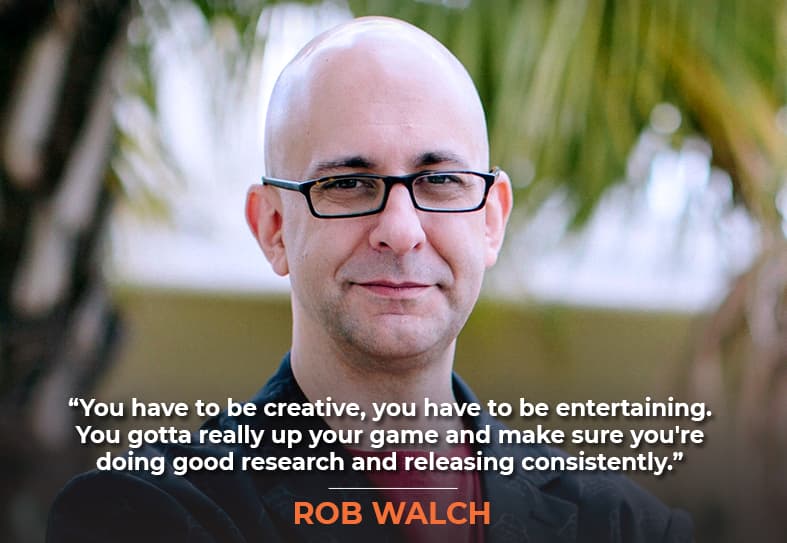
So I think that the more of that that becomes available, the harder it is for you as a podcaster to find an audience. So you have to be creative, you have to be entertaining. You gotta really up your game and make sure you’re doing good research and releasing consistently. I still think that’s one of the most important things. Be there. Don’t give your audience a reason on a specific Tuesday or Wednesday when the episode’s supposed to come out, to find something new to listen to or watch.
So you said be creative and entertaining. How are you upping your game? Cause you’ve been podcasting for what,
I’ve been podcasting for so long.
Fifteen years or something?
Yeah, so I’m back. My regular podcast is In & Around Podcasting. I do it with Elsie Escobar. Previously, we did a podcast about the last place we both worked, and now we’re both at Captivate, so we pick that podcast back up and do it every other Tuesday. We record every other Wednesday, and it’s really about making sure that we’re doing the research, listening to our listeners and figuring out what they want to hear about.
Rearrange your episode based on what your listeners are actually listening to and how they’re listening.
I mean, that’s in podcasting; that’s always been one of the most important things: having feedback from your listeners, answering it, communicating with them and getting some feedback. Look, what do they like? What do they not like? Now you can also find that out by going into Apple Podcasts and looking at your consumption for your episodes. Where are people listening? Where are they dropping off?
This is one of the most powerful tools that Apple gives you in Apple Podcasts Connect. And if you watch your episode, say it’s an hour long, and you find a 15-minute segment where the same percentage listened all the way through. What were you talking about? What was it that captured their attention that they didn’t leave? And then conversely, if you see a part where they’re dropping off, what is it you’re talking about that didn’t capture people’s attention? Rearrange your episode too.
If in the beginning, there’s a segment where they drop off and come back. Move that segment to the end of the show if it’s a regular segment. If you have a piece that’s where they’re staying and it’s near the end, move it closer to the beginning. Rearrange your episode based on what your listeners are actually listening to and how they’re listening.
But if you’re learning stuff about a particular episode after it’s aired, you don’t go back and redo that same episode.
No. I’m talking about planning for future episodes. So if you’re talking about a certain topic and listeners are going in, or if it’s a certain segment you have, a recurring segment in your show, you can learn a lot. I mean, I learned this from my own show where I had a segment where people were constantly listening, not dropping off, and it was where I was playing back listener feedback. So my listeners liked hearing other listeners’ feedback and questions.
So I moved that to the beginning of the show. And the part they didn’t like- there was a segment that they would drop and come back in- was a segment that I loved doing, but people, evidently, not all my listeners loved it as much as I did. I wasn’t ready to get rid of it. So I moved it to the end of the show.
The reality is that active podcasts releasing new content in the last thirty days or last ninety days are less than half a million. Share on XWhat segment’s that?
It was a segment on how wrong they were? So I would find quotes for people that were for my Today in iOS podcast. And I would find quotes people had made about the iPhone or the iPad, in you know, whoever it was. I’d find a quote from two or three years ago, four years ago, and then I would go, “How did those quotes work out?” And find, you know, having the ability to look back, twenty twenty vision.nBeing able to say, this is why you were wrong. You know, you know, you said the iPhone was gonna fail for this, or that big iPhone wasn’t gonna work, or Apple wasn’t gonna do this. And no, well, they did it, and it worked out. So it was a fun segment for me. It was just a chance to pull up quotes from Steve Ballmer or whoever and have a little riff with it. I liked the segment. Again, not all my audience liked it, but some did, but not as much.
Are you still doing that show?
Unfortunately, no. That show’s gone on hiatus. Because you asked about it in your game, I couldn’t keep up with that show; the amount of effort that it took to do that show. I did twenty-plus hours a week on that show to do it correctly, and work and move and other things got in the way, and it was just too many five-hour energy drinks up till three or four in the morning too many times to get those episodes out and done right.
So I pulled back on that and focused more on the podcasting side of things. And then those are the podcasts that I focus on and do the most work on now. I did start another podcast called Space Business 411, where I’m interviewing people that are in startups in the space industry, but that’s more of a side hobby project. More because I have a son who is an aerospace engineer at Purdue, and I’m trying to build up a Rolodex for him. So when he graduates, I will have these contacts at all these startups. So I mean, I’m not hiding why I started the podcast.

That’s cool. Great idea. You’re a cool dad. So what do you think about, first of all, actually before we switch into this topic, but you said you monitor for feedback. Where do you look? Is that like the YouTube comments, Spotify comments, are you getting emails, people doing a SpeakPipe audio thing? I never got people, by the way, giving me SpeakPipe audio feedback ever.
So, yeah, the number one and two ways are email, and then I get a lot of voicemail feedback. I, you know, I always have a call-in number like 206-666-4357 (206-MOM-HELP) or 206-666-6364 (206-MOON-DOG). All right. So I’d have these numbers that I could associate with and tell people, “hey, call into this if you have feedback, but also record it on your device and email it to me, you know, at podcast411@ gmail.com. Send me your feedback.” And I would get a lot of feedback that way. So, and then I still have a Podcast411 one that’s on the side. That podcast is still there in the background. And I still have five episodes recorded that I have to edit and get out. But I started at Captivate in February, and I’ve been very busy. So I’ve had to put them on hold a little bit while I focus on the podcast for Captivate. And yeah. So, but yeah, that’s how I get feedback. I will, now and then, look at YouTube comments, but YouTube comments are so Not helpful. I’ll put it that way. yeah. It seems like people on YouTube woke up on the wrong side of bed before they go and do comedy.
I’ve gotten some cruel comments on YouTube before on some of my videos. Really undeserved, or really disproportionate. Weird. I love this concept from Jay Baer. He actually named a book after it, Hug Your Haters.
Well, you can find a lot of haters on YouTube, that’s for sure. I mean, I remember I put a video up that got really popular. It was: I bought a go-kart for my kid. And the go-kart had a horrible turning radius. I mean, a turning radius that was like a hundred feet. My kid had to learn how to do three-point turns to turn around in the street. And so I figured out how to modify it. And I created this mod plate, and I put it on it, and then I put a video up showing, “hey, if you get this go-kart, which otherwise was great, I go, here’s what you need to do to modify it.”
And it’s still twelve years later; I’m still getting emails from people saying, “Hey, if you have a question, just email me; I’ll send it to you. “But I would get people who go, I said something like turning radius or circumference, and I used the wrong word. They’re like, “you said this and you meant that, and you know, what kind of you.” It’s like I’m just trying to help people who bought this go-kart for their kids and now realize the thing actually doesn’t turn left or right. It just goes straight. And here’s how you make it turn in a circle.
Yeah. Either you’re in critic mode, or you’re in creator mode. You can’t be in both. And people who are in critic mode, yeah, they miss all the creative opportunities because they’re always criticizing. If you’re in creator mode, you don’t have time for criticizing others.
So for your podcast, where are you finding when you promote where are you finding the best success?
I get more traction with YouTube than with other channels. It used to be Apple Podcasts, but I’m actually curious to hear your take: Is Apple Podcasts still a thing? It used to be the thing. And then Spotify and, you know, YouTube apparently is the number one consumption channel for Podcast listeners. Is that true?
That is true from a certain point of view. If you include the data from the top 1% of podcasts, then it’s true. If you take the top 1% of podcasts and you throw them out and look at the other 99% of podcasts, what you find is YouTube makes up anywhere from 2 to 5% of their audience. So people that are audio-first and then come along with video, or release the audio as video as a static image. When you look at their audience, Apple Podcasts is number one on average, anywhere from 50 to 65 percent of their audience. Spotify is number two, anywhere from 15 to 20, 22 percent, somewhere in that range for number two. And then number three is either Overcast or YouTube, around three percent.
So both of them come pretty close there. And if you have a real tech podcast, Overcast typically is above YouTube. If you have more relationship podcasts, then YouTube might be a little higher than that spot, Overcast. But again, for the ninety-nine percent of podcasters, if you’re starting, unless you really are really good at video, it’s a much more competitive market to break free, to break through in video. You have a lot more competition.
There is less time in the day for people to consume video. So I always say, more time in the day for audio. So what I recommend to people is: if you’re audio first, remain audio. There’s more time. Embrace the audio, and you have less competition. And be consistent on that. Am I saying don’t be on YouTube? No. Am I saying don’t do video? No. But if you don’t want to do video, you don’t have to. There are very successful podcasts that are audio only. History podcasts do much better on audio. True crime podcasts do much better on audio.
How do podcasts become popular? It's the same way movies become popular. Word of mouth. Share on XIf your audience is gonna be female-oriented, audio is better because you’re gonna have people have more time in the day to consume the audio, especially women who are trying to juggle work and children and everything else; they have a lot more on their plate. So if all women are your audience, I would say audio; you’re gonna be more successful on the audio than you will on the video side of things. And if you look at what YouTube has been doing the last year, YouTube, well, everyone else- Spotify’s gone and done video, Apple’s done the HLS video- YouTube has been embracing audio. So they’ve been creating more tools to consume just the audio when the screen closes.
And they even announced a partnership with Sirius XM to bring audio-only advertising to YouTube. So, YouTube, while everyone else was getting enamored with video, YouTube was going, “hey, there’s more time of the day to consume audio. We should get this audio thing going.” So even YouTube themselves have been embracing it.
Right. So there’s a YouTube Music app so you can listen to your favorite artists without having, like, a Spotify subscription.
And the podcasts are on YouTube Music. And if your podcast isn’t in there on YouTube, you can take your RSS feed and drop it on YouTube. You can create a channel on YouTube or add a podcast to your YouTube channel. It connects, and when you release a new episode, it automatically publishes that new episode to YouTube. It’s pretty easy to set up. With some podcast hosting companies, you can publish right from your host to YouTube. But you know, if you wanna control it, again you can drop your feed in over at YouTube Music.
But what if you are using a hosting platform for your podcast, like I am- your former employer, I’m using. And what if I want to switch, let’s say to Captivate, and all those RSS URLs will need to be updated- everything from Apple Podcasts Connect, Spotify, everything.

Switching podcast hosts is really actually easy. It’s just a simple redirect at whatever host you’re at. You add in the redirect, and then it redirects to your new host. So that will cover you for the majority of your downloads. That’s why anyone that’s consuming from the RSS feed. If you were connected to YouTube, if you were taking the audio and having it automatically generated to video up at YouTube, you need to go into your studio.youtube account and update it to be the RSS feed. Then it’ll pull from that RSS feed. So you disconnect from where you were, and now you connect the RSS feed in. And it’s a pretty easy process. Any hosting company you move to will guide you, and it’s always the hosting company you’re moving to that should be the one that gives you the help on the move. Not the one that you’re moving from, right? It’s not incentivized for them to help you. So you always reach out to the company you’re moving to and say, “hey, I want to move over.”
And they’ll give you guidance on what needs to be done. But it’s pretty easy. I’ve moved so many shows over the years from one hosting company to another. And then you leave where you moved from to live for 30 days. You see if there’s any traffic to the direct URLs. Then you track down where that traffic’s coming from, make some updates on those links. Sometimes maybe you’ve gotten mentioned in a blog, or like you had an episode that went viral.
Someone put a clip to the direct URL for that episode, or maybe you interviewed somebody, and they put the player up on their site, and you see you’re getting traffic from that, and you go to them and go, “hey, here’s a new player. Can you replace this on your blog?” Or “here’s a new link. Can you replace this on your social media post?” So those are ways to make sure you’re still getting all the traffic when you move. But it is pretty easy to move and capture; we even allow you to bring in some of your stats from your previous host. So you can bring in some legacy stats that go over in a legacy area of the statistics.
But what if, like, say your RSS feed URL is RSS.Libsyn.com/shows slash da da da, and that’s what you fed to Apple Podcasts, and you fed it to Spotify? That’s what I did for both my shows.
And that’s fine. When you put the redirect in, from say Libsyn to Captivate, it will redirect the traffic over to the new URL. Apple Podcasts and others will look at that and realize that there’s a new URL, and they update their database.
Okay. But I still have to have an active subscription with the old provider.
The more niche you get into, the more specialty, the higher dollar that niche, the more opportunity there is, but you have to do the work. Share on XOnce you close down your old provider, a permanent redirect will go in place if the provider is good. Yeah, and no, and Libsyn, if you close down your account, there’s a permanent redirect that goes in place. So I always say keep it up for thirty days, then you can close down the account, and the permanent redirect goes in place, and you’re good. Yeah. So you won’t lose your audience.
Okay, good. Yeah. Good to know. So you mentioned if you’re just starting, and that made me think about, well, are new podcasters just starting, or did they miss the boat? Is it too late to enter the podcasting space, in other words?
Yeah, a lot of people get scared. They’ll hear numbers thrown around like two point eight million, two point nine million podcasts, four point I’ve seen four point seven, four point eight thrown out from different services. The reality is active podcasts releasing new content in the last thirty days or last ninety days is less than half a million. And if you take it to how many have released new content and have at least ten episodes live, then you’re l under four hundred thousand. That’s it. And 400,000 to some might sound like a lot, but when you look at how many hundreds of millions of YouTube channels there are, or how many hundreds of millions of blogs there are, 400,000 is a really small number. It allows you to stand out and differentiate yourself from others by having a podcast.
And do you think it should be mainly an audio podcast that they should be focusing on, or if they wanna do like a YouTube video type of channel slash podcast, that there’s still room for that?
Ultimately, it’ll depend on what you’re talking about, what you’re comfortable doing, and how much time and money you have for equipment and production. Audio: I recommend it for people who are starting and not sure what they want to do. And you have a topic that you think you want to get into, start with just audio. You can add video later on. Start with audio and see if the topic that you want to talk about resonates with anybody.
All you need to compete at the highest level on audio is a quiet room and a hundred-and-fifty-dollar microphone.
And then, if it does, you can always add video. The worst thing you want to do is start full-blown production, three-camera setup, get all this equipment, lighting. You’ve got to go hire someone to do some editing because you probably don’t want to do the video editing. There’s a lot of stuff that you have to do if you want to compete at the highest level on video. But interestingly, all you need to compete at the highest level on audio is a quiet room and a hundred-and-fifty-dollar microphone.
And if you’re on par with NPR, you want to be on par with PBS. It’s a lot more expensive. It’s a lot more intensive. And if you’re just getting into it, I say start with audio. Now, maybe the topic you want to talk about has to be video. Maybe you want to do product reviews and that. And maybe it doesn’t even need to be a podcast at that point. Maybe you just do YouTube if it’s really going to be video only. The question comes down to: if the video goes off and you just listen, you close the screen, and you just listen, is there value to that? If there’s value to it when the screen’s off, in a lot of interviews, like this interview right now, the screen’s off, same value as screen on. That’s a podcast, right? You can do video, and some of the big ones, Joe Rogan does that, and he does well on that.
But even Joe Rogan gets more consumption, more downloads from the audio than he gets from video views. So, he gets a lot of video, don’t get me wrong, but he still has a huge audience for three-hour episodes. It’s easier to find three hours in your day to listen than it is to watch. So my recommendation is if you’re not sure, start with audio. That’s the simplest solution.
Yeah. And what about promoting it? Like how do you get a new show out into the world and get people listening?
There, you’re going to want some video clips. Video clips definitely help out on social media. But you also are gonna have to cross-promote on other podcasts in your genre. What you don’t want to do is hire someone off of LinkedIn who reached out to you who says they are a podcast promotion professional from Bangladesh. They are not. They will take your money and give you a fake audience.
You don’t want to actually sign up for any service that guarantees downloads. Anybody who says, “I’m going to get you downloads,” will not grow your audience. So promotion really comes down to whether you can cross-promote with other podcasts; if you can’t pay to have your promo run on another podcast in your genre, right? It doesn’t do you any good if you’re an MMA podcast to have your promo run on a true crime podcast. The audiences are completely different. They’re not gonna work out for you.
But if you’re a history podcast and you’ve got a history podcast. You want to talk about, I don’t know, the Louisiana Purchase and you want to create a podcast all about the Louisiana Purchase, then running a promo on the Revolutions Podcast with Mike Duncan or running a promo on the History on Fire podcast, those would be great places to get word out about your show and hit an audience that cares about that kind of topic. So know who your audience is going to be.
Think about three or four keywords you would search for to find a podcast on your topic. And now you’ve found the words that need to be in the title of your show.
The other thing, and the most important thing in promoting your podcast, is the title of your show. People try to get really cute with the title of their show. What I say is think about three or four keywords you would search for to find a podcast on your topic. And now you’ve found the words that need to be in the title of your show. Cause that’s what other people are going to do.
I started the space podcast, you know, in it, and I was like, “do I want to call it space business 411 or space economy 411?” So I went to Google Trends and said, “are more people searching for space business or space economy?” And it was like 10 to 1. People were searching for space business over space economy. So my podcast became Space Business 411. I like space economy better. And if the trends ever change, I will change the title of my show to Space Economy 411. That’s the other thing. Don’t be married to the title of your podcast. If trends in the world change; change with them.
Use Google Trends; although not many people are still using Google, a lot of people are using AI these days over Google, but there are still a lot of people searching on Google. And it’s enough to give you an idea of what people are searching for, so the title is so important. And then the artwork: having good-looking artwork where the title is clearly shown when you shrink the artwork down to fifty-five by fifty-five pixels, because that’s how it’s gonna preview up on Apple Podcasts and Spotify and other places. So good artwork, good title, cross-promote. If you’re launching, those are some of the best things you can do to launch a podcast and be consistent. You know, it’s tough. You know, we see a lot of people that get five episodes in, six episodes in, and they quit. They give up.
They pod fade early. They didn’t realize it was gonna be hard work, or they hoped that they were gonna have a thousand or ten thousand listeners out the gate, and they didn’t get that, and they gave up. Understand that this is long-play podcasting. It’s not short-term, viral. There are no algorithms in Apple Podcasts that you can game to move up. There are some algorithms on YouTube. But there are no algorithms on the Apple Podcasts or the Spotify side, really for that matter, to get your content found.
Right. So getting a certain number of reviews in a certain period of time, ratings or listens is not going to shoot you up to the top of Apple Podcasts?
There are different charts and different charts work in different ways. So Apple Podcasts charts for the top showsare based on the total number; it’s based on the number of new subscribers in the last seven days, with a weighted average for the last 24, 48, 72 hours. So if you have, like, an organic email list that you have, when you launch your podcast, send a link out to everybody and say, “go to Apple Podcasts and subscribe to my show.” That’s a great way to move you up that chart.
Then there’s the top episode list. That’s based on consumption. That one, you’re not as a new show; you’re not going to get in that one, period. Because those are shows that are established, and you’ll go and look at the top 200 overall, and you’ll see that Joe Rogan usually has like four or five episodes in the top 200 because he is that big. But the top shows list is always full of brand-new shows because it’s based on new subscribers in the last seven days. And a few hundred subscribers in a couple of days will move you to the top of almost any category. And you get 500 or 600 in a day, and you’re more than likely gonna break into the top 100 of shows overall. So it doesn’t take a lot to get you there.
Figure out who your clients are and interview them. Share on XSo if you have a large organic email list- not one you purchased from somebody that says, “Hey, buy this list,” but an organic list that you’ve built over time for your other presences on the internet- that’s another great way, when you launch a podcast, to promote out there.
Right. Cool. And are you advertising on other people’s podcasts?
I personally don’t. I’m not trying to make money. I’ve been around. I’ve got email lists; I’ve got, you know, people to reach out to and social presence. So I probably should. When I launched a space business one, I probably had a couple of likes this week in space with the Twit network. I probably should have run a promo there. Maybe I will if I get a few more interviews in the can. Maybe I’ll reach out to Lisa over Twitter and go, “hey, I want to run a promo. You can even run a promo for my show,” but yeah, knowing which podcasts are right to run it on. I haven’t done it yet.
Now we are making it easier at Captivate. I’ll say this. We just launched a marketplace, and if you’re in Captivate, you can put your podcast into the marketplace. If you want a place to come over and find a podcast to promote on, you can find a podcast and negotiate a rate to run a promo on their shows. And there are other places too. PodTrac just announced a promo service that you can use as well. So PodTrac has something. So I don’t want to just talk about Captivate. There are other services out there. And there are promo exchanges. There are some free ones as well where people have agreed to do exchanges.
So, if you do some research, you can find different places to run promos on podcasts. What I don’t like is the feed drops. And there are services out there that do these feed drops. And it says, “You might also like,” and it’s an episode that becomes older than your most recent episode. And the problem with that is, like, someone like Jay Shetty will use that service, and his podcast will then be a feed drop on, like, eight or nine or ten or a hundred different podcasts, and listeners will see that on multiple podcasts they listen to and complain about.
It’s one of the most complained-about features in podcasting. I’ve seen a lot of listeners complain about this from a listener’s perspective, giving negative reviews to apps, thinking the apps were putting these promotions in. And the worst part is it doesn’t say it’s a paid promotion. And to me, that’s not ethical. I think if you’re gonna have these feed drops, it should clearly state that this was a paid promotion.
Where podcasting makes people the most money is as it sets them up as an authority.
And I think when it doesn’t, it confuses the listeners, and that’s why the listeners complain about it. They don’t know who it was; they don’t realize that the podcaster was getting paid for it, things like that. And ultimately, listeners don’t seem to like feed drops. They don’t want a whole episode of another show on their feed. I mean, there was a point- what was it? Gimlet, I remember if you went and looked at half the Gimlet shows, the last three or four episodes were all feed-only, feed drops of other shows, not the show you were actually subscribed to. So I don’t recommend you do feed drops. Even though we’re gonna offer feed drops. I just saw too many complaints from listeners about it.
Yeah. What about podcast swaps? Like guests, I’ll be a guest on your show if you’re a guest on mine. What’s your take on that?
That’s a great, great way to promote because you’re bringing value, hopefully, to the other show. And you’re getting exposed to another audience. So you’re doing a favor to that show, and they’re doing a favor to come on yours. And hopefully it’s great content and content works out well, and both audiences win.
And hopefully each producer wins by getting a little bit of those other audiences, and people are like, well, you know, some people are like, I don’t want to do this, I don’t want to lose my audience. And they forget there are 168 hours in a week, and your show was maybe one of them. So people have time for a couple other shows. Most podcast listeners that are power listeners listen to five or six episodes a week on average, depending on which Edison research report you look at. So people are consuming more than an hour’s worth of content. I mean, Joe Rogan, right, number one, his shows are three hours long. But this so there’s a lot of time out there for people to consume podcasts.
Well, that’s your whole listening budget probably if you’re the average. It’s just that one show.
Yeah, my younger son especially likes Joe Rogan, so he’ll listen to that, but he listens to others, and so he finds time.
How many shows are you listening to a week?
Regular podcasts that I listen to week after week after week, there’s about three. And two are history, and one is all in. And then after that I sample ten, twenty different shows a week. In one episode and move on, one episode and move on because I’m at Captivate, I’m trying to learn who our podcasts are.
And then now and then I’ll find one that I really like. And then I get stuck listening to like 10 episodes. I’ll have 10 episodes playing. I have a HomePod that sits on my desk. So I usually have the podcast playing on the HomePod. So it’s in the background. But then when I get on phone calls, I gotta hit pause. But if I’m not on a phone call and I’m working on spreadsheets or emails, I usually have a podcast going. Now and then. Something really good comes on, and I’m like, “I gotta stop working on my emails right now. I gotta listen to this. I gotta go back.” I’m like, you know, like, “Hey Siri, go back.” You know, one minute.
So would you say that for the vast majority of podcasts it’s really a cost center or a labor of love and not a profit center?
The most popular podcasts, when you look at them, usually hit two key points. They educate and entertain.
For the vast majority of podcasts, yeah. If you’re getting into podcasting to make money, I always say, “Well, how much money are you gonna spend on your podcast?” All right, now go to Vegas, go to the roulette wheel and put it on black or red, whichever one you’re feeling, because you’re gonna have much, much better odds of making money with that at Vegas on that roulette wheel than you are getting in launching a podcast. Yes. But where podcasting makes people the most money is as it sets them up as an authority.
Where they’re not using the podcast to make money from advertising or merchandise or premium, but rather to present themselves as an authority in their field, a lot of people get in, and they do a podcast on a specific niche that they’re in. They get invited to speak at different conferences. They get consulting work. I mean, what was it? Project Management Podcast, I think it was, PMP. They launched the podcast on project management. And two or three years later, they were charging four times the rate they were charging before they launched the podcast, and they were basically sold out. They couldn’t take any more clients on. So they used the podcast to talk about what they did and the service they offered, which made money. John Jantsch from Duct Tape Marketing is another great example,
Yeah. He’s been a guest on this show.
Right, and if you talk to John, he used the podcast as an intelligent way to get cold leads, right? Rather than sending someone an email saying, “Hey, I have this marketing service and offering,” he said, “Hey, I think you’re brilliant, and I think your brilliance would be really greatly shared with my audience. Why don’t you come on the show?”
He would talk with them and go, “By the way, I do this. And if you ever need this, let me know.” And you know, he talked about that. He got clients by interviewing people that he thought were potential clients. So it’s a brilliant, brilliant way to use a podcast to make money. It is to figure out if you’re a consultant, figure out who your clients are and interview them.
Yep. Yeah, we just did an episode not long ago about that very topic. Jason Osborn. Yeah, he gets a lot of clients from inviting his ideal client avatar to be a guest on his show. Yeah. And they actually provide that as a service to other businesses: help some get clients who would be just agreed to be guests, and then once they’re a guest, and they’re interested in a second call. And that call is where they get closed. Yeah. What about sponsorships and getting, like, having some of the costs offset with a sponsorship? What percentage would you guess if podcasts are sponsored or take advertising?
It’s probably in the five percent range, and those have advertising, right? And of that five percent, most of them are getting programmatic ads now of those that have ads. And the ones that actually have a true sponsor, like the sponsor says, “I want to advertise on your specific podcast.” That number is down, probably still in the 1% range, 2% at best, 2%. Because not all the big podcasts, first off, a lot of people don’t realize this, not all the big podcasts want advertisement, right? The Trader Joe’s podcast, a huge podcast, has a large number of downloads.
As long as you’re clearly disclosing it, I have no problem with it.
It will never take ads, right? Trader Joe’s podcast isn’t about advertising. It’s about promotion. The podcast itself is a promotion vehicle. So there are a lot of large podcasts. There’s a podcast from Consumer Reports. Ping Golf had a podcast; Callaway had a podcast. Right. Those podcasts, branded podcasts, will never take ads. And there are some big ones. So now you have to go to the pool that will take ads. And of those, there aren’t that many percentage-wise of the podcasts out there that are big enough for a sponsor to say, “yes, I’m gonna work with you now.” Some small shows will get sponsorship because you’re a very specific niche. And that is going to be up to you as the podcaster to find that sponsor. Like, if you’re a chameleon breeder podcast. If you’re the chameleon breeder podcast, there’s only a few people in the world that are going to advertise on your show, but you’re the only show they’re going to advertise on. So you guys have to meet.
There’s nowhere else if you’re committed, if you’re making breeding cages for chameleons; there ain’t a lot of places that you’re gonna find an audience that’s gonna fit for you. So you have to find that and match up. So the more niche you get into, the more specialty, the higher dollar that niche, the more opportunity there is, but you have to do the work. The horse podcast, Glenn the Geek with his whole horse equine network.
Yeah, not very big podcasts, but they do get sponsorship because there’s a lot of money in equine. So if you’re gonna get into a niche, here’s the trick. Get into a niche that has money. Don’t get into a niche where everybody’s broke. You don’t want to be in a niche. I’m trying to think. I don’t, I don’t want to get into it. But there are certain niches you want to stay away from that the audience is not gonna have any money. So stay away from the broke teenagers, don’t-have-a-job-yet niche.
Got it. Okay. So a couple quick questions before we close out the interview. One is, what’s your take on AI avatar-type episodes or channels? For example, Julia McCoy has a very popular AI clone YouTube channel. And those are actually pretty good, those episodes, but they’re all AI. It’s AI audio, and it’s AI video. So there she’s using HeyGen for the video and ElevenLabs for the audio. But it’s actually quite a good show.
Is she clearly defining it as AI-generated?
Yeah. It’s clearly disclosed.
As long as you’re clearly disclosing it, I have no problem with it. And you’re not just doing it again; you’re not where you’re a studio creating hundreds and thousands of shows for the sole purpose of tricking people into the content. So if you’re not trying to deceive the audience in any way, shape or form, you’re clearly disclosing it’s AI. It’s just part of the ecosystem; there’s no way around that. People are gonna have this created. People are gonna come up with ideas. They’re gonna, you know, use their tokens to get the content created. And they’re just gonna say, This is what I want this episode to be about, and this is what I want that to be about. But here’s the thing, and they may even say to the AI, tell me what my next ten episodes are going to be about, right? They’re so there’s still a little gray matter in there. They’re probably still picking the topic for the episode. There’s some interaction.
Yeah, well, with Julia’s channel, she’s definitely- I think even writing the entire video script herself. But even if it’s AI-assisted, it’s very much guided by her. She’s just not the one in front of the camera, you know, putting on makeup beforehand and, you know, getting all camera-ready, all that sort of stuff. ‘Cause there’s only a certain number of hours in the day, and she puts out a lot of video content. There’s just no possible way she could do that without using AI.
Humans are going to be a lot less likely to recommend to their friends that you listen to this AI-generated content than they are human-generated content.
Well, especially if she’s creating the content part of it, that again puts it into a different category. Yeah. You know, I’m not a fan of 100% AI-created content, imagery and audio. It just doesn’t come across as natural.
Yeah, it feels soulless, but you know, at some point AI will be so good that we won’t be able to tell the difference. I think. And who knows what’s gonna happen when we get to that point.
Yeah. Well, there are some videos like you’ll see the video come up and you’re like, Is that real or not? And you hear the voice and go, wait, that’s the same voice as the burner banana ads. And you go, “Okay, yeah, that’s fake,” so there’s certain voices that you’ll hear. There’s some podcasts I’ve come across where you start hearing it, and you’re like, Wait, I know that voice. That’s an AI voice,” so right.
Yeah, but it’s gonna be to the point where you’ll have unlimited voices. So it’s, yeah, a crazy world we’re heading into, which I guess leads me to the last point here: the last question is like what’s this f what’s the future hold for us podcasters when, you know, the question of even will websites be relevant anymore is a serious question. Like, three years from now, maybe you AI agents will be conversing and transacting with other AI agents much more so than humans visiting websites or even agents visiting websites. Cause it’s not efficient to be clicking around and swiping and zooming in and clicking and all that sort of stuff. Why not just have your personal agent communicate with IKEA and its personal agent instead of going to IKEA’s website? And so in that era, which could be just a couple, two, three years away, where does podcasting sit? Is it still relevant?
I believe it is relevant, and I’ll tell you why. The most popular podcasts, when you look at them, usually hit two key points. They educate and entertain. And those two are really important. How do podcasts become popular? It’s the same way movies become popular. Word of mouth. At the end of the day, the shows that are the biggest. When I’ve talked to the biggest podcasters out there, and I’ve asked them, “What did you do to promote your show?” Most of them have the same answer. Nothing. The biggest ones, it’s really annoying. You talk to you and you get a really big podcast on, and you get in there, and you’re like, okay, what’s your marketing secret? And it’s like nothing. My audience promoted it for me. It’s just like sixth sense.
Right? Sixth Sense was a great movie. Everybody said See it. Here’s the thing about human-generated content versus AI-generated content. Humans are going to be a lot less likely to recommend to their friends that you listen to this AI-generated content than they are human-generated content. Because there’s still a stigma around that, and it will be for a long time, that you’re going to say, I’m listening to this AI.
Or are you gonna say, are you gonna say, listen to Dan Carlin’s Hardcore History? Right? I’m gonna a hundred times out of a hundred Dan Carlin or Mike Duncan, or a human podcast, than I would ever sheepishly say, go check out this podcast that’s all AI-generated, you’re gonna love it.
So I think word-of-mouth marketing will still favor human-generated content because we are gonna be speciesists, right? Here, what was someone, what was it, who is it? Someone from Google once accused Elon of being a speciesist because he was biased towards humans. I can’t remember one of the I think it was Sergey or one of the founders of Google. I remember calling him Elon, saying that really scared him. But I’m okay with it being a speech. I am biased towards humans over AI. I yeah. Just don’t let the AI overlords know about that when they come, you know, and when Terminator days come. But yeah, they’ll be hunting me down.
Yeah, well, what you just did.
Yeah, I guess I did. Yep. Yes. But no, I still think most people are. I think most people are going to be biased to recommend human-generated content. And if you’re more interactive with your audience, you’re more likely to get your audience to recommend your content.
Awesome. Well, a great way to end this episode. Thank you so much, Rob, for coming back on the show. After what, a decade or something?
Yeah, it’s been about ten years.
I think it was, yeah. Wow. So thank you again, and congratulations on your move to Captivate. With your continued success and popularity on your podcasts, yeah, keep up the great work.
Thank you. And if any of your listeners want to get a hold of me or have any questions about podcasting, email me at [email protected] or [email protected]. Either way, I put my email out there. I will reply to your emails. It will not be my AI agent.
Awesome. All right. And then if they wanna check out your employer, Captivate, and maybe host their podcast with Captivate, where do they go?
Captivate.fm. So captivate.fm is just how it sounds. No, no funky two-web-three-point spelling or anything like that.
Yeah, awesome. Okay. Thank you, Rob, and thank you, listener. Go out there and make the world a better place. We’ll catch you in the next episode. I’m your host, Stefan Spencer, signing off.
Important Links
Connect to Rob Walch
Apps/Tools
Books
Businesses/Organizations
Podcasts
People
Previous Marketing Speak Episodes
YouTube Videos
Your Checklist of Actions to Take
- Audit which AI tools actually help your podcast versus which ones produce slop. Lean on AI for research, audio and video cleanup, and post-production, but stay away from tools that generate whole episodes from scratch. Listeners can hear the difference, advertiser ROI suffers, and CPMs drop for everyone doing it the right way.
- Disclose any use of AI, every time. If you use an AI voice or an AI-written script, say so plainly. Laws in India already require it, the FTC in the US expects disclosure, and being upfront protects your credibility with your audience.
- Study your listener consumption data in Apple Podcasts Connect. Find the segments where people stay engaged all the way through, and the spots where they drop off. Then use that insight to shape and reorder your future episodes.
- Collect and act on listener feedback. Set up an easy way for people to reach you, whether that is email or a call-in voicemail line, and actually respond. Knowing what your audience likes and does not like is one of the oldest and most reliable advantages in podcasting.
- Start with audio if you are not sure what you want. You can compete at the highest level on audio with a quiet room and a solid microphone, and there is far more room in the day for people to consume audio than video. Add video later once you know the topic resonates.
- Choose a searchable, keyword-driven show title. Think about the three or four words someone would type to find a show on your topic, and build your title around those. Check demand with Google Trends, and do not be so attached to the title that you refuse to change it when trends shift.
- Promote through cross-promotion and podcast swaps in your genre. Run promos on shows whose audience actually overlaps with yours, and trade guest appearances to reach new listeners. Never pay a service that guarantees downloads, because it will hand you a fake audience.
- Switch hosts without fear when you need to. Moving is a simple redirect at your current host; keep the old account live for about 30 days to catch stray traffic, then let the permanent redirect carry the rest. The host you are moving to is the one who should guide you through it.
- Use your podcast to build authority, not just ad revenue. The biggest financial upside comes from positioning yourself as an expert, winning consulting work, speaking gigs, and clients. If you are chasing a niche, pick one that has money in it rather than one where the audience is broke.
- Connect with Rob Walch to keep learning about the podcasting landscape. Reach him by email at [email protected] or [email protected] or on LinkedIn, follow his shows In & Around Podcasting and Space Business 411, and check out Captivate at captivate.fm if you are looking for a host.

About the Host
STEPHAN SPENCER
Since coming into his own power and having a life-changing spiritual awakening, Stephan is on a mission. He is devoted to curiosity, reason, wonder, and most importantly, a connection with God and the unseen world. He has one agenda: revealing light in everything he does. A self-proclaimed geek who went on to pioneer the world of SEO and make a name for himself in the top echelons of marketing circles, Stephan’s journey has taken him from one of career ambition to soul searching and spiritual awakening.
Stephan has created and sold businesses, gone on spiritual quests, and explored the world with Tony Robbins as a part of Tony’s “Platinum Partnership.” He went through a radical personal transformation – from an introverted outlier to a leader in business and personal development.

About the Guest
Rob Walch
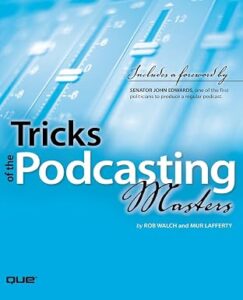
Rob Walch, Vice President of Podcaster Relations at Captivate. Rob was listed as the 5th most influential person in podcasting according to the book “Podcasting for Dummies” – Wiley Press 2005. He has consulted on podcasting for Jack Welch, Senator Edwards, Governor Bill Richardson, Noah Shanok (Stitcher), Tim Ferriss, and the Sacramento Kings/Monarchs to name just a few. He is also a monthly columnist for Podertainment The Podcast Magazine. Rob was Chair of the Education and Outreach Committee for the Association of Downloadable Media.
Rob started podcasting in 2004, and is the host of the award winning podCast411 podcast, where he has interviewed such prominent podcasters as Quincy Jones, Walt Mossberg, Colin Ferguson (Eureka), Ronald Moore (Executive Producer of Battlestar Galactica), Phil Gordon (World Series of Poker), Larry Kudlow (CNBC’s Kudlow and Company) and Leo Laporte (TechTV, G4 TV).






Leave a Reply