



Cold outreach on LinkedIn has become a numbers game. Automated connection requests, templated pitches, and AI-generated messages flood inboxes every day, and the fact is – most of them are getting ignored.
My guest on today’s show is Jason Osborn, a LinkedIn lead generation expert who has spent years helping companies generate business on the platform. But the most memorable story he shares has nothing to do with LinkedIn. It’s the story of surviving a plane crash and the unexpected lesson it taught him about consistency, relationships, and making the most of the time we’re given.
That perspective shows up in the way Jason approaches business development. Rather than chasing prospects with heartless pitches, he developed what he calls the LinkedIn Reverse Podcast Method. The idea is surprisingly simple: interview your ideal prospects instead of trying to pitch to them.
In our conversation, Jason explains why traditional LinkedIn outreach falls flat. He shares how a brief conversation can create more trust than months of messaging back and forth. We explore where automation helps and where it gets in the way. His view is that technology should make relationship-building easier, not replace it.
If you’re tired of sending messages that disappear into the void, this episode offers a refreshingly human alternative.
In This Episode
- [03:05] – Jason explains how growing spam and automation on LinkedIn inspired him to develop the LinkedIn Reverse Podcast Method, which builds genuine relationships by interviewing ideal prospects on a podcast instead of pitching them through traditional outreach.
- [08:15] – Jason explains that the goal of the Reverse Podcast Method is to build enough trust during the interview that the guest naturally wants a second conversation about doing business, rather than being sold to during the podcast.
- [10:17] – Jason explains that inviting prospects to be podcast guests overcomes the skepticism of cold coffee meetings by offering genuine value first, creating trust and relationships that can naturally lead to future business conversations.
- [14:18] – Jason explains that naturally introducing your product by sponsoring your own podcast during the live intro and outro plants curiosity, making it easy for guests to initiate a follow-up business conversation without feeling pitched.
- [17:03] – Stephan shares how he’s using AI to transform podcast episodes into interactive courses and asks Jason how AI can be leveraged to enhance podcast outreach, re-engage past guests, and improve relationship-building outcomes.
- [22:49] – Jason explains that the high success rate of his outreach comes from leading with genuine value and recognizing each prospect’s expertise, making the invitation feel like an opportunity to share their knowledge rather than a sales pitch.
- [29:58] – Jason explains that anyone comfortable with Zoom calls can host a relationship-building podcast, emphasizing that simple equipment and good audio quality are enough to get started without an expensive studio setup.
- [33:36] – Jason explains that LinkedIn is overwhelmed by generic connection requests and automated sales pitches, and that the best way to stand out is by replacing transactional outreach with value-first podcast invitations that spark authentic conversations.
- [42:04] – Reflecting on surviving a plane crash, Jason shares how focusing on one small step at a time helped him recover, drawing a parallel to business where consistent action and gradual progress lead to long-term success.
- [46:28] – Stephan reflects that the true value of podcasting lies in the unseen positive impact it has on people’s lives, emphasizing that meaningful contribution can be more important than financial return.
- [47:37] – Jason outlines his agency’s pricing and done-for-you Reverse Podcast service, then encourages listeners to connect with him on LinkedIn to explore whether the relationship-based client acquisition strategy is a good fit.
- [49:18] – Jason emphasizes that lasting success comes from consistent, focused effort over time rather than chasing shortcuts, while Stephan reinforces the importance of protecting your attention and prioritizing meaningful work that truly moves the needle.
Jason, it’s so great to have you back on the show.
Thanks, Stephan. Really appreciate it, man. You said five years. I like, Man, I can’t believe it’s been that long. It’s crazy.
Yeah. Well, you’ve been known as a LinkedIn expert, and now you’re a podcaster as well. You have a show you’re using as a strategy to generate leads, and we’re gonna walk through it. How did you come across this, or how did this kind of flash of insight come to you to integrate those two strategies?
Yeah, so I have been doing online marketing for almost 20 years now. And over the last eight years, I’ve been specializing in LinkedIn, working with companies all over the world to help them generate leads. One of the things that I started noticing, for anyone that’s listening, if you’re on LinkedIn, you will have noticed this as well. But there is so much spam on LinkedIn, and that has become just absolutely everywhere, lots of reasons for it. It really got bad when all the lockdowns were happening; people couldn’t meet in person as they normally would, so they started using LinkedIn to network. During that time, people realized it actually takes a little time to build relationships.
So everyone started using automation tools, which can actually be really damaging on LinkedIn. I see a lot of people getting their accounts shut down using those. And so what ends up happening is they just use these tools or hire an agency that doesn’t really know what they’re doing, and they’re just being spammed left, right, and center. So the way I came across this kind of hybrid thing that we call the LinkedIn Reverse Podcast Method is I started seeing, well, how do we actually build business? How in the real, like, quote-unquote real world, offline, not online marketing.
On LinkedIn, the direct outreach strategy comes first. Share on XAnd it dawned on me that one of the best ways to do this, and you’ll constantly hear this from everyone, is that some of their best business deals or clients have come through some sort of networking. They’ve gone out to have a coffee, they’ve gone to a networking event, they’ve gone to something. And as a result, when they go out and build the relationship, the business comes after. And so it’s like, well, how do we take that and apply that to online marketing, specifically LinkedIn? So I started looking at how we do this, and we kind of fell into this by accident. There was a client of ours who was kind of doing this, and they wanted us to help with their outreach and all that, and help them build it up. And I saw how amazing it was working. And so we started doing more of it and testing it more. So what we do is we take the platform of a podcast.
But where we flip it, we reverse it. So, where most people have thought leadership podcasts, what we do is we have podcasts that are geared towards interviewing our ideal prospects, not to sell to them on the podcast, not to pitch or anything like that. But it is there to build the relationship. And so that’s kind of how we came across. Of course, I can go into a lot more detail about it, but that’s how it came to fruition: how do we actually start building relationships instead of spamming people on LinkedIn, and look at it from a relationship-led perspective?
Yeah. No, you said it kind of happened by accident. You know, I don’t believe in accidents. I don’t believe in random chance. So, does something come to mind when I ask you, like, was there some sort of synchronicity or beyond a chance kind of occurrence that brought this about? ‘Cause this is a big pivot for you guys, this is a big focus for your agency now. And yeah, I feel like there’s more to it than just an accident.
It’s all relationship-led, and at the end of that podcast, sometimes people are happy to move on to a conversation, sometimes they’re not.
Well, I say an accident. It was something that I had been looking at doing in terms of how to change the whole thing on LinkedIn so that it is more relationship-oriented. I mean, we’ve always been very relationship-driven in how we teach. And we launched our outreach done-for-you strategy. But the challenge with that is that there was
Oftentimes, clients don’t actually do follow-ups with prospects and leads, which blows my mind. I don’t understand why people don’t do that. So I was looking for a way, well, how do we just take all of that off our client? They don’t have to do the follow-up; they don’t have to. We literally do everything for all our guests who show up on the podcast. At the time, I didn’t know that’s what we were gonna end up doing, but I was looking for something that was the easiest for our clients. They don’t have to do anything other than just talk to their guests.
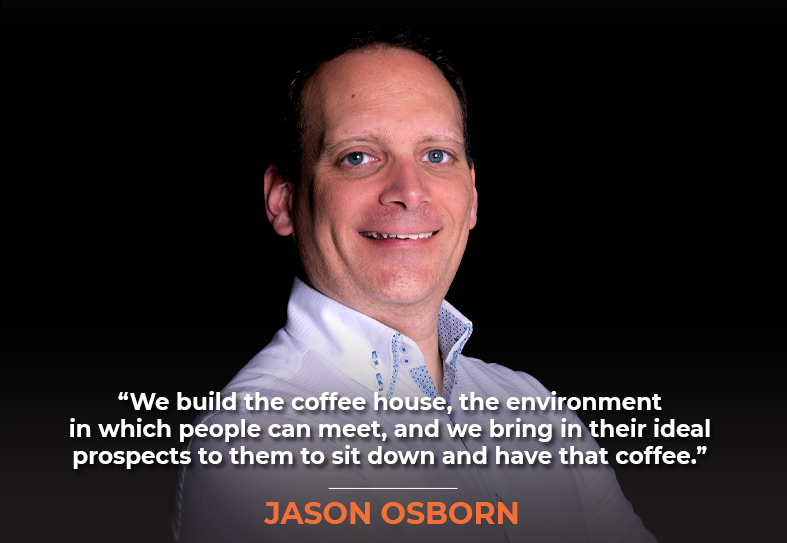
And the synchronicity, I guess, is that whilst I was looking for this, we started working with a client who was looking for the same thing and testing this podcast side of it. And we just kind of came together with it. And I was like, this is actually really powerful. And the way I look at it now is we build the coffee house, the environment in which people can meet, and we bring in their ideal prospects to them to sit down and have that coffee. All they do is just say, “Sit down.” This is the time and place you need to show up at the coffee house, and we’re gonna send people to you just to sit down with you every 30 minutes. And so it’s exactly what I was looking for. I just didn’t know I was looking for that. And it kind of came together, which is quite cool.
Yeah, yeah, and the goal isn’t to sell the prospect during the interview. That would be awkward. What is the goal? To get the guest, your ideal prospect, who’s being interviewed to do what?
Yeah, to build the relationship. So, the best analogy I can give on this is the coffeehouse scenario, right? In the real world, offline, when we meet up with someone to have a cup of coffee, we’re not necessarily going in thinking, “okay, I’m gonna sell them at this meeting,” right? When we go into that coffee house situation, that coffee meeting lets me go in, have a conversation with them, get to know them, and for them to get to know me. Let’s just chat. Let’s get to know each other. Let’s find out a little bit more about what they’re doing. Sometimes that could lead to an in-depth conversation about business. Other times, you just end up talking and having a great time.
And then at the end of that, you’re like, “Do you know what that was really good? Why don’t we talk further?” You know, in like, “yeah, actually I’d love gosh. We didn’t even talk about business. Why don’t I sit down for a Zoom meeting,” or “let’s meet up for another coffee, and really dive deep into the conversation? Because I really like it, I think we could do business together when we think about it.”

Right. So you’re not trying to get them to stay on the call after the recording stops for, you know, another half hour or something. Your goal is to get them to agree or to suggest a second conversation.
Exactly. So in the real world, it makes sense. We’re like, Yeah, of course that’s what we do at a coffee meeting. But online, all of a sudden, it’s like people’s brains short-circuit, thinking. Well, well, how do you do that? What do you mean? Like, how do you sell? It’s like you do the same thing in a coffee meeting. We just use the podcast platform to build that relationship with people, then move them to a secondary call afterward. So absolutely you’re correct on that, yeah.
Yeah. One thing that bothers me about these coffee meetings that people try to have with me is that they try to pick my brain, and they even use that terminology, and it just drives me bonkers. Makes me cringe when I hear that expression. Can I pick your brain for a minute? Can I buy you a coffee and pick your brain? No, thank you. I do not want that. So I think there’s often an ulterior motive, or a less-than-giving motive, for people who are trying to get a coffee meeting, whether it’s in person or virtual. And how do you overcome that? That skepticism.
It’s a great question, and that is why I tell people not to ask for coffee meetings online. There’s an immediate resistance that goes up, there’s skepticism, like, and you’ll get that, “Hey, do you want to have an online coffee or a virtual coffee?” It’s like, “well, why what are you, what’s the purpose, what are you trying to sell me, that there’s an automatic, like, what’s the catch to it?”
Everyone knows in business, you gotta sell. There’s gotta be some sort of transaction to stay in business.
And yes, if in person meeting up for a coffee, sometimes, you know, if you just reach out cold to someone, say, “Hey, would you like to meet up and go to Starbucks,” or wherever, you know, whatever coffee house you like, people might go, you know, what’s the catch? Why do you want to meet up with me? But in a networking environment, if you just kind of meet someone, “hey, would you like to go up and have a coffee?” Often, people are happy to do that. Well, it’s the same thing online.
Yes, it is cold from your perspective, but you’re creating a pure value-driven element for the guest. Because when you’re reaching out to people and saying, “Hey, would you like to come onto my podcast?” One, a lot of people, it’s an ego stroke. They’re like, “Yeah, gosh, I’d love to be on a podcast. Of course I’d love to do that.”
Two, a lot of times it just makes logical sense, particularly if they’re like business owners or they’re somehow in a position where they’re trying to market the business, they see that as an asset. So it’s a pure value-led portion where they go, ‘ Yeah, cool. ‘ I can see I’m gonna be interviewed. I can use that in my marketing, I can cut it up into shorts, I can put it on social media, I can email it to my email list, whatever the case may be.
Put it on their press page or their media page. Yes.
Anything. And even if they’re not the owner, like we’ve got clients who, like we have a client that’s worked with, he’s a financial advisor, and he works with tech professionals, not the owners, just people in tech. And he gets people well, I say he gets people booked onto his podcast all the time. They’re not the owners. You know, well, why would just a quote-unquote normal employee want to come into a podcast? Well, first of all, they never get asked to speak on podcasts.
Right. Number two, they are never asked to speak about their experience and expertise. Right. And so all of a sudden, they’re like, and it gives them a platform to share an experience that most of the time no one really cares to hear. And so again, it builds the relationship. And that’s the key thing. It’s all relationship-led, and at the end of that podcast, sometimes people are happy to move on to a conversation, sometimes they’re not.
If you can do a Zoom call, you can do a podcast because you’re literally just talking to someone. Share on XSometimes you can follow up with them, and they’re ready down the road to have a conversation, but you would treat it like any other sort of relationship-led prospecting method. And that’s the key thing, but everyone knows in business you gotta sell. There’s gotta be some sort of transaction to stay in business. We get that. But you don’t have to do it in a way where people feel that they’re being taken advantage of. Because if they can come onto a podcast and feel valued, appreciated and heard, and you’re asking them questions about their expertise, they feel valued in it, and they can see it as a marketing asset to them.
All of a sudden, you’re giving way more to them than you’re getting from them at the moment, right? And then if it turns into business, fantastic. And so that’s the beauty of it. So, how many coffee meetings do we actually want? Well, how many podcasts can we get? You know, we book up to 20 podcasts per month, sometimes 30 or more, for clients. So this isn’t just one a week or one a month. You know, imagine having two to five of these relationships, which led to conversations every week. And that’s the power of it. It’s really, really cool.
Yeah. So how do you introduce your product or service in a way that seems natural? And then they have an inclination or curiosity that’s been piqued, and you can say, Hey, do you want to talk about this in more detail without it being pitchy?
Yeah. The key thing here is how you’re running the entire conversation. We recommend including an intro and an outro in every podcast. Most podcasts have pre-recorded intros and outros that they edit in afterward. Well, with this, you do it while you’re on the call with them. So they hear what you’re saying, and the intro you sponsor the show with your own thing, right?
Sometimes people feel like, How can I do that? Well, it’s like, well, if someone paid you to sponsor their thing on your podcast, you wouldn’t have any issues with that. But all of a sudden, when you go, this show is sponsored by the LinkedIn Reverse Podcast Method, where we do this, this, and this, we, you know, we provide for established businesses, we provide a reliable acquisition channel of conversations with their RDL prospect that doesn’t rely on any of the spammy traditional marketing methods. All of a sudden, they hear that, and the penny drops just like if you were to sponsor somebody else. But all of a sudden, when we sponsor ourselves, we’re like, Well, we can’t do that, which is so weird. You know, it’s like, why not? It’s your business. So you’re sponsoring the show on your own. People are fine with that. They hear that it drops that seed into their mind.
And you do it at the end as well in the outro?
And the outro as well, because obviously you’ve been talking, asking them questions about their expertise and all that. And so when you say it in the outro, it drops that seed again. And they’re like, and oftentimes when you get done with the actual podcast side of it, they’ll say, by the way, what’s that thing? They never remember the actual name, right? They just remember the feeling that I need to ask them about that. And so you’ll get people that ask that, or just in the I mean, gosh, Stephan, you’ve done so many podcasts, you know that.
Inviting someone to be a guest on a podcast instead of pitching our services is a completely left-field approach. But it works because it's 100% value-driven. Share on XAt the end of the podcast, you just talk, you just chat back and forth. And oftentimes, again, like in a normal coffee meeting, it just opens up an opportunity to say, “Well, look, I’d love to help you just as a thanks for being on the podcast. Would you be open to diving deeper on that on another call?” Sure. Absolutely, you’re correct. With what you said earlier, you’re not sitting there for another half hour trying to pitch them or anything like that. You’re not doing any of that.
All you’re doing is if you go into saying, “How can I build a relationship? How can I build the acquisition channel conversations? Because if I know that I have more and more conversations with my prospects and build the relationship, the business will come.”
Right. And so, how do you augment this with AI? So, do you augment it with AI? Like I, I’ll just give you an example of what I’m playing with to take my podcast to a whole other level. I don’t see any other podcasters doing this yet, but on my other show, Get Yourself Optimized, I’ve done several prototype episodes where I’ve done this. One is with Mary Resenbeck on homeschooling, and the other is with Philipp Samor von Holtzendorff-Fehling which is on quantum energy and quantum healing. And both of those episodes are so informative and value-packed. I thought, well, why not restructure them into an online course? So the course is written by AI, AI created the video script and the outline.
And the narration is in the guest’s voice, with their permission, using ElevenLabs. So it sounds like them. It doesn’t sound like a robot voice. It sounds like them. And it is filled with video, like B-roll footage, and captions and everything. So you can follow along with the training. And it’s about 20 minutes of training per module.
And yeah, it’s amazing. It’s got quizzes and a workbook, both written by AI. And yeah, so we could roll that out across all the episodes and you know get another rapport building outreach communication going with that previous guest, even if they were on the show ten years ago and say, “hey, we’re using AI to do this with these episodes. Here’s a sample. Would you like us to do this with your episode? Can we get your permission to use your voice to narrate it? It’ll be AI-generated, but it’ll sound like you, but we need your permission to do that. and, you know, do this something that you would like to reuse yourself on your own website because we can send you the video files and the quizzes and all that sort of stuff.”
I think it’s a great way to reactivate somebody who was a guest nine or ten years ago or even a year ago, because, you know, you’re no longer top of mind anymore. That episode was, you know, it came and went, you know. So I thought that was a pretty cool strategy. Still, what are you doing to leverage AI to make these conversations and the outreach more impactful, and to ensure the outreach actually gets the desired outcome?
Yeah. It’s really interesting that you’re doing all of that. It’s quite cool. I always love hearing how people are using AI to do different things. In terms of what we do, like the episodes that we do with our clients, where our clients do with their guests, they’re very short. They’re only 15 minutes in the podcast. So, potentially there could be something with AI that we do around that, but because they’re such bite-sized chunks, there’s not as much information in it to be able to create a course from it or anything. Our main purpose is not necessarily to try to get the podcast to number one, but to have, as you know, a ton of downloads. That’s more of a traditional, thought-based podcast platform that people are looking for.
The people who usually end up failing are the ones who keep jumping around, trying to find the magic thing, when really the magic is consistency over a long period of time. Share on XSo if that happens, that’s awesome. It’s, but it’s more of a secondary thing. What we’re looking at is how many people we can see and how many new guests we can speak with to build that relationship. So, from an AI perspective, like we, it’s definitely not anything as detailed or intricate as what you’re doing, which, although it does sound very cool, is spinning my mind with some ideas. But what you know, our main focus is getting people in front of their ideal client two to five times per week.
We still use AI a bit to help with podcast titles, descriptions and related content. because it just saves so much time. I mean, I remember back in the day, and I know you’ve been having a podcast forever, but it was so time-consuming to create those things where you’d have to hire someone who would listen to it and create some sort of description around it. Or you could get the transcript, but it wouldn’t necessarily create the descriptions and things like the way they do now. There are many ways to speed things up. But I do recommend that, even for anyone using AI, you still have a look over it and don’t trust everything it puts out, because it’s not always 100% accurate. But it will do, you know, ninety to ninety-five percent of the heavy lifting. So, but yeah, we don’t use it anywhere as detailed or in what you’re doing with it. That’s very cool. I love that idea.
Yeah. And of course, as AI improves exponentially, it will go from ninety-five percent on the mark to ninety-nine point nine nine five percent on the mark, and you know, you’ll hardly have to spot check anything. That’s coming within months, I’m sure. So I’m curious, how do you get the outreach to be so successful in terms of the hit rate? Like what, what, what is your angle? What’s your persuasion techniques?
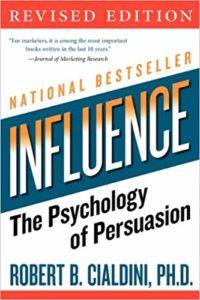
You know, Dr. Robert Cialdini, who was a guest on this podcast, wrote an amazing, seminal book on Persuasion and Influence. And the principle of unity is just one example of the principles that he has. That principle is a great opener. Like, “hey, just reaching out to invite you to my podcast. By the way, I also went to the University of Michigan, Go Blue. Right?” So that Unity principle, like, here’s another Wolverine fan. Okay, cool. So that kind of greases the wheels a little bit. Like, what are you doing to increase the hit rate for your outreach campaigns?
Yeah, it’s something, actually, very similar. We don’t necessarily say, by the way, I’ve also done this, or I’ve gone to the university, or I like this sports team. Because you’re not always able to do that. But what we found is that just by asking, “Hey, do you want to be on my podcast?” There’s an automatic; they’re adding value to me. They’re not trying to pitch me or sell me, which automatically stands out.
From other messages that are being sent, which, you know, I’d say let’s go, let’s go 98% instead of 99%. 98% of the messages they’re having on LinkedIn are probably just very similar in nature. Hey, I want to add you to my network. Hey, we’ve got this thing. Hey, would you like to jump on a call? Hey, we were doing this, this, and this. They can feel it’s a pitch of some sort. So by adding value straight away, this is different.
And they can see the value in being on the podcast, as we mentioned earlier. The other thing is not so much the unity piece you mentioned there, but rather recognizing their value and what they bring. So if you’re, we’ll talk about our client again, that does interviews, tech, sorry, not tech, yeah, tech professionals.
He’ll say, “I’ve got a podcast where I interview successful tech professionals like yourself to share the lessons you’ve learned, what you would do differently in your journey as a tech professional, and where you see the tech industry going.” It’s those sorts of things, because now they’re actually wanting to hear from me and share my experience and what I think about where I think tech, you know, the tech profession is going.
It creates this. I’d love to share my information. And the really interesting thing about most human beings is that we’re very happy to share information if we feel like it’s gonna be value added, as opposed to what you said earlier, where people reach out, “hey, can we pick your brain?” And it’s like, “Okay, now you’re actually wanting information from me for free. You’re trying to, you know, you’re trying to take advantage of my information. When you bring someone on a podcast, you still may ask those same questions, but you’re doing it in a way that positions them as the authority, the person who knows the information. And so that we see really, really good acceptance rates on LinkedIn. people coming onto the podcast. It’s really amazing what it can do. So it’s similar in nature to the Unity principle. It’s just I’m sure there’s probably another name for it. That’s it, but it’s acknowledging their experience and their expertise and wanting to learn from them in a value-driven way.
When you’re asking someone to be on a podcast, people automatically feel this is real
Right. And are you doing this outreach? Is your agency doing it, or are you doing it as the person who will be interviewing? Like, do you get their LinkedIn login details and then you’re doing the outreach as them? Or are you saying, Hey, we’re the publicist, or we’re the whatever, you know, podcast manager for such-and-such clients, and they’d love to have you on the podcast.
Sure. So we do use their LinkedIn profile because it needs to be them. You know, people need to know that that’s the person that they’re gonna be being interviewed by. And so yes, we do get access to their LinkedIn profile, which is just for anyone listening. You wanna make sure that if you do this with someone managing your LinkedIn profile, it’s done right. LinkedIn’s really finicky about how they grant access with IP addresses and all that sort of stuff. So we do it in a very secure way. In terms of how we communicate with them on that person’s profile, it kind of depends on the client.
If they are happy for us to cause any of the messaging that we send now, it’s all approved by them anyway. And so they know the messaging that’s going out, and we get to know their tone and all that. And so, oftentimes, if people have questions, there’s a process we go through. So it’s all very much done by them. But some clients are like, no, I don’t really feel comfortable like that. Can you just say, I’m your assistant, and you’re reaching out to have them on the podcast. And if they want us to do that, we can do that as well.
So it’s what the client feels more comfortable with. But the cool thing around that is this: when you talked about AI earlier, I think there’s a lot of skepticism in the marketplace right now about whether this is a real person or AI. And when you’re asking someone to be on a podcast, whether we message someone as them or whether we’re saying, hey, we’re so-and-so’s assistant, they’d like to have you on the podcast, whatever the case may be, what people automatically feel is, this is real. Because at some point, just like you and me, we’re on a podcast, I’m gonna get to speak to you. Like you’re not an AI person. Now, again, down the road, that may change.
Yet. Give it a few months.
Yeah, exactly. That it may hold may change completely. But people like knowing that I’m actually gonna be talking to a real person. And they like that human interaction, they like that. And you know, over the next several months, years, maybe people will feel a lot more comfortable speaking to AI. Maybe it’ll just be a normal thing. It’s like, yeah, I speak to the AI like they’re my best friend, or who knows, what might have robots like iRobot with Will Smith in it, you know, where all of a sudden they’re just part of your normal day life. You talk to them, they’re in your house. I mean, who knows? But right now, people like knowing this is an actual person, not just another message they don’t know.

Is this real? Is it spam? Am I dealing with some sort of bot? They just don’t know. And so, whether we message them, at the end of the day, they know they’re gonna be talking to a real human being on the podcast, and people love that.
Yeah. What if you don’t feel comfortable podcasting?
So, good question. The big difference between what we do and traditional thought leadership podcasts is that a thought leadership podcast typically requires you to come up with some big, massive 30-minute or one-hour talking points. You’re talking to yourself, basically, you know, you’re just talking to camera, or you might bring on a guest like what you’ve done here.
You’ve been doing this for so long, you’re really seasoned with it. But someone coming into, like, my God, I’ve got to do all this research. I’m gonna do this, I’m gonna do that, or they’ll look at these big, massive podcasts, you know, like Diary of a CEO and all that, and think, I’ve gotta have some big studio and all that. You don’t.
So what I always say to people is this: Do you do Zoom calls? The answer, of course, is yes. It’s like you’re qualified. That’s it. You’re literally just having a conversation, you know, what kind of makes people nervous is they go, “My God, I’m on camera doing a podcast.” Well, you’re on camera doing a Zoom call as well. And so you know, I still coach, and I consult with my clients on how to run it and how to do it. But if you can do a Zoom call, you can do a podcast because you’re literally just talking to someone, asking them questions about their experience, expertise and knowledge on a particular topic. And it’s so simple.
How do we begin to connect with people in a way that makes them feel the value is gonna be added to them?
Yeah. One thing that I think helps with the credibility angle is having a proper microphone. So if you’re just using your laptop’s internal microphone, that doesn’t look so credible, like podcasters have a fancy mic. You can’t see it with my virtual background, but I have a sure SM7B right here. Pretty fancy microphone plugged into I forget what it’s called, like a condenser type thing or whatever. It doesn’t go straight into the USB. So you can get a Fifine for $80 on Amazon, which is a weird brand. It’s from China, but it’s super cheap, and it comes with the arm and everything. So you’ve got the whole setup, and it plugs right into your USB for 80 bucks, and you’ll look the part then. I think that’s important because just having AirPods in your ear and using the internal mic on your laptop just doesn’t make you look like you’ve been doing this for very long.
Yeah, yeah. Like I’ve got a Yeti blue. You know, and I do recommend at least good audio quality. The cool thing about the editing process is that, a lot of times, when you edit, the editing software now has a studio filter type thing you can use. So you can actually run it through, and it does sound quite decent. But you’re right, you don’t need to spend hundreds and hundreds of dollars to try to get something done. I always have an earpiece in here like this because I don’t like hearing the sound directly from the laptop. because sometimes I just like having it here. But sometimes people have earphones on. I see, you know, podcasters do that as well.
Everyone’s a little bit different and unique in their own way, but audio quality, I think, is a big thing. And even if your laptop’s video quality is really poor, you can get a decent webcam for $30 or $40. Like it, it’s not expensive. So it doesn’t cost a lot to get started. You know, and you can always upgrade down the road with stuff. But yeah, if it doesn’t, it’s not a lot. It’s not as much as people think it is. It’s pretty easy to get started.
So you mentioned at the beginning of this episode how spam is just kind of taking over LinkedIn. Could you give some examples of the kind of spam that you’re talking about? Like, are these in direct messages, or are these in posts? Are these in the comments? all the above? Like, what does this look like, and how do you stand apart from all that noise? Because I’m sure our listener is active on LinkedIn for more than just outreach to book podcasts. So, you know, they’re investing time in their team to help them build their profile, reach, and reputation with the algorithm and their followers/connections. I’m sure you know we’ve gone into some detail in episode three two, but things have changed, and you probably have some additional strategies as well.
Yeah. Well, when I say ‘spamming,’ I’m primarily talking about connection requests and DMs. Posts, I don’t see too much spam per se on LinkedIn with that. However, posting on LinkedIn is usually very ineffective. People don’t go on LinkedIn and sit there scrolling through content.
People think there’s a deeper, deeper secret that the successful aren’t telling you. But that is the secret. Share on XI always tell people, you know, when’s the last time you heard someone say, “My God, I went on LinkedIn. I just got lost scrolling for the last hour and a half.” You just never hear that, you’re right. TikTok, Facebook, Instagram, YouTube, yes. It’s like, “My God, I went on and next thing I know, an hour and a half later I’m watching some weird cat video,” right? You don’t hear that on LinkedIn. That’s not what people go there for. And so content on LinkedIn is more of a supporting mechanism.
When you have a proactive outreach strategy, as you’re reaching out and as you’re building connections, as you’re having that direct relationship approach, the content then can help support that potentially. So everything on LinkedIn is backward around it. On other platforms, it’s content first.
On LinkedIn and its content second. And so, on LinkedIn, the direct outreach strategy comes first. But again, most people are doing it wrong, and they’re being spammy. So connection requests, right? I kind of mentioned this one earlier. People go, “Hey, I’d love to add you to my network.” It’s like, “okay, great. So what’s in it for me?” All right. You want to add me to your network for what? Like why? There’s no benefit. Or you know, we have a lot of common connections. It’d be great to connect.
“Okay, well, why?” You know? Or “Hey, I see that you’re in this industry, it’d be great to connect.” “Cool, I know I’m in the industry. Why do you want to connect?” It’s there: these really generic messages go out to people. And then what happens is, again, anyone who’s been on LinkedIn knows exactly what’s gonna happen with this. If you were to accept a connection request, what would you almost certainly receive? Like I’d bet money on it and win. Like I’d come out on top of this. What are you almost guaranteed to receive after you accept a connection request? A spammy message.

A pitch.
A pitch, yeah. You’re either gonna get that in the next five minutes because it’s automated, or within the next day. And oftentimes it’s still automated. But you know it’s coming, right? You’re just waiting for it. And so, what happens is you get this man. Hey, we do this, we do that, blah, blah, blah. So the approach really is: how do we begin to connect with people in a way that makes them feel the value is gonna be added to them? And so this is why we do the reverse podcast side of it, because there’s nothing in it that we’re pitching. We’re not trying to say, Hey, we do this, we do that. It’s all about how you would like to come on to the podcast, and we position you as an expert in authority. Yes, please. Like, it’s a completely left-field approach.
But it works because it’s 100% value driven. One of the things I find really funny, Stephan, is that sometimes one of my clients will say, “Can you review my messaging?” We send it out to people. And I was like, “Well, you’re just pitching. You need to add value.” It’s like, “no, we are adding value.” I was like, “How are you adding value? Because we’re telling them in the message that we’re gonna be able to help them do this, this and this if they have our product.” I said, “That’s a pitch.”
That’s not adding value. And so people have a really hard time flipping that switch of going, “well, how do I add value without pitching?” “Well, how do you add value in any other area of your life? You just start communication and conversation.” And so that’s the key thing around it. The challenge is then how do you get away from what I call the awkward high school dance? And the awkward high school dance in LinkedIn is when you send a message, “Hey, how are things going for you?” “Yeah, I’m fine, thanks.”Good. “How’s business going for you?” “Yeah, it’s going well.” “Great.” And what have you been up to?” Well, what, why, what are you messaging me on?” It’s like this weird kind of exchange. It’s like, what are we doing here? I don’t really know. It doesn’t really feel comfortable.
How do we take one step forward from where we were the day before?
So we have to make sure we’re not doing the awkward high school dance conversation, but we don’t want to just go in for a direct pitch either. It’s just how do we build a relationship conversation? I think the biggest challenge people have, a lot of people don’t like hearing this, is that they’re just lazy, right? They want to be able to communicate with someone and within the first.
In two to three conversations, someone goes, “Yes, I want to buy from you.” And there are a lot of people pitching courses around that as well, like how to get people to buy from your DMs within 2 DMs. It’s like, what? Like, if you’re selling something for $20, $30, maybe, because there’s a chance people can throw that money away. But if you’re actually looking to sell something, people are gonna buy from you within 2 DMs if they don’t know you. So, typically, you can sell someone within 1 to 2 DMs. But what the course actually ends up showing you is that you have to build all the relationships on the front end, and then you message them, and they might buy from you within one to two DMs. And so, but people like that, let’s just go in really quick, get a yes, and move on, and they forget about the relationships.
Yeah. Well, I think being transactional is really the root of the issue, not just with the different spamming techniques in DMs, but also with the posting and commenting strategies. You can totally tell, for example, if somebody is commenting using AI to write the comment.
You can tell if they wrote the post using AI, you can tell if they’re using some kind of scammy approach, comment such and such keyword, and I’ll send you the thing, right? So they’re baiting you, giving you all sorts of stuff about here’s the thing and then here’s how it works and whatever. And if you want the thing, you know, I’m not gonna link to it here. I’m gonna make you a comment and a keyword, and, as you know, get the engagement up on my post so it gets more views and visibility. And that feels kinda disingenuous.
Yeah, it’s interesting because I think sometimes those things, if people get to know you and trust you, they sometimes work really, really well. But it’s one of those elements where you’ve got to look at how we are. I’ll give an example. I won’t name the person. But they actually do a really good job of this. They put out so much free content. It’s so incredibly valuable. They’ll do one to two of our lives, going into incredible depth on what they do and how the strategy works. And they literally just talk about so much stuff. And because of that, they build up a lot of trust within their community.

And then sometimes they’ll do those drops where they say, “Hey, we’ve got this whole PDF or whatever. If you want it, DM me this.” And because they’ve given 90% value over and over and over again. When they do that, people are like, yeah, cool. Like I’d love to hear more about that. And so there are ways to do it, but do it right. Do it where it doesn’t feel transactional, where there’s an actual relationship. And it, I think that’s the key thing. It doesn’t feel, as you said, Stephan, transactional. People don’t want that.
So I know we’re getting close to time. I wanted to revisit a story that you shared in episode 302 that was really powerful. Really has nothing to do with marketing. I mean, maybe you can bring a marketing lesson to it, but I just wanted to resurface it because it was so memorable and so miraculous, and that is how you survived a plane crash. Do you mind sharing a bit more about that?
Yeah. sure. This was a long time ago now. I was in my early twenties and was on a twin-engine prop Cessna plane. And there were five of us on board, and we were flying, and the engines stopped working. The official ruling was that there was a mismanagement of fuel, and the engines got starved of fuel and just stopped, which, if anyone’s ever glided in the air, you know it’s very, very quiet after hearing prop engines, which are very, very loud. And yeah, so we ended up crashing into a neighborhood, into a house, and it ripped the whole right side of the plane off, and one other guy and I survived, and then the other three people that were on board ended up passing away.
The way we’re marketing right now may not be what takes us to the next level, but it will lead us to the next thing that does.
But yeah, that was really it, a long time ago. It was a challenging time in life. But I had some really good people around me, and they really helped me get through that time. And of course, you know everyone, all the families that were involved, we were all really close anyway. But it was just a very interesting time in life to have gone through that and experienced that. But yeah, it’s one of those things where I think we we we all we all go through stuff. We all go through challenging times, and while it may not feel as extreme, you know, it’s very rare to talk to someone who’s survived a plane crash, but we all go through our version of what feels like a plane crash in our lives. And you know, it can be very confusing. I can feel like our lives have been turned upside down.
Whether that’s in business or personal life, relationships, health, whatever the case may be. And it’s about just looking at how we do. How do I just take one step forward from where I was the day before? And that can be really challenging. And that’s one of the things I did, for whatever reason, whether it was the trauma or just loads of stuff, my mind was only able to see an hour ahead.
And while I was on the plane, I was actually writing a business plan for a business I wanted to start. And obviously, when you’re writing that, you’re thinking months and years ahead of what we could do? How would it shape? And I found it scary in a lot of ways because afterward I couldn’t explain it, but I couldn’t see an hour ahead.
The furthest I could see and like to plan was an hour after that; it’s like my whole brain went fuzzy. I couldn’t see anything. It was like the future was this blur. And so one day I just told myself, I was like, “Okay, I’m not gonna try to see tomorrow. I’m not gonna try to see n next week or plan. I’m just gonna plan a half hour into the half hour.”
So if I could see an hour ahead of time, what I’m gonna do 30 minutes after that. And then the next day is like, okay, let’s do two hours. And then three hours. And so over the next several weeks, it built up. And over the next several months, it became a lot more normal. I could see, you know, into the future again, so to speak. But it’s just one of those things. Sometimes you just have to take it day by day and learn from it.

And I think that’s a really important thing in, you know, if you say it tie it back to some sort of marketing lesson, it’s often in business, and what we’re doing marketing, we can’t always see the outcome of it. We don’t always know exactly how it’s going to play out. The key thing is the consistency with which we do it. And if we just stay consistent with it, and yes, we may have to evolve, we may have to do many, many, many iterations of it. And the way we’re marketing right now may not be what takes us to the next level, but it will lead us to the next thing that does. And so it’s just taking things day by day.
Yeah. And I also think that we have to trust that what we’re doing is making an impact. You know, there’s a ripple effect that we can’t see, maybe even our whole life, but when we have our life review after we, you know, go back to non-physical, we’ll see how the things that we did, the podcast episodes and the blog posts and all that we wrote. To help people, not just to sell our stuff, actually made people’s lives better, maybe even saved some lives. You know, so I’ve been doing this show and Get Yourself Optimized for ten years. And that’s a lot of episodes. And have I gotten an ROI in terms of, like, you know, more money out than I put in? No. It’s been a cost center, not a profit center.
That’s, you know, it is what it is. And I don’t feel like I wasted my time because I didn’t make a profit on this podcast, but I know and trust that this has impacted people’s lives.
Yeah. I hundred percent agree with you on that, Stephan, for sure.
Yeah. So if our listener wants to work with you, they want to hire your agency to help them get these ideal client conversations happening in the podcast interview format. What do you charge? How does it work? You mentioned there’s, you know, typically twenty to twenty-five episodes booked per month for an average client. Like, walk us through kind of the pitch.
Yeah. So we do a three-month upfront contract with that, which includes all your setup and just the setup for everything needed and then three months of implementation. It’s somewhere between, depending on what kind of work we’re doing and the clients we’re working with. It’s anywhere from five to seven and a half thousand setup.
Protect your attention. Don’t let it be pulled toward things that don’t move the needle or your life forward.
For those first three months, included as well. And then, if people carry on with that and they’re like, yeah, Jason, this is awesome, let’s keep going, then it’s just a normal run-of-the-monthly contract we have for that, usually around 2,000 a month. But we do everything literally. The only thing our guests or clients have to do is show up, do the fun bit on the podcast, and have conversations. And obviously, there’s ongoing consultation with me as needed, along with all those sorts of things to help them out. But it’s a very simple structure in what we do on that. So that’s what we do. And if people, you know, want to get in touch and learn a little bit more and have a conversation to see if it’s even a right fit for them, then just reach out to me on LinkedIn, and we can have a chat there and take it to the next step of having a conversation.
They should definitely mention me, who came through the Marketing Speak podcast, and Stephan Spencer. So, what would it be like to wrap up this conversation as a wisdom nugget that you want to leave our listeners with?
Ooh, gosh, good question. So many things I’ve been thinking about recently. I think the biggest thing, I’ll kind of reference back to what I was saying before, around the consistency piece. I read a post, it might have even been this morning, if not, it was last night. And people may have heard this before, probably have. Still, the thing that helps you in the context of business is that the post actually helps you make money by doing the thing consistently over a long period of time, and it just feels monotonous. That’s where actual success comes from.
People don’t like hearing that. They think there’s a deeper, deeper secret that you know the successful aren’t telling you. But that is the secret. It’s the people that just do the thing over and over and over and over and over again for years, and it builds up and grows and grows and grows.
The same principle applies to anything else in our lives. It makes a lot of sense when we think about health. If you just eat healthy, go to the gym, eat well, drink well, all of that stuff, you know that over a period of time, you’re going to look better, you’re gonna feel better. We naturally get that with our health, but for some reason, we don’t apply it to other areas of our lives. And so that’s the biggest piece of wisdom, particularly in business, is you just gotta keep sticking with the thing. The people who usually end up failing are the ones who keep jumping around, trying to find the magic thing, when really the magic is consistency over a long period of time.
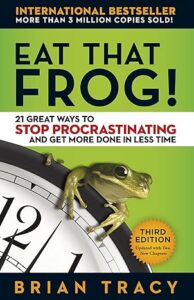
I think that boils down to something endemic and epidemic in this culture these days: distraction and distractedness. I interviewed Nir Eyal, the author of the book Indistractable. Great book, a great episode too. I think in this world of dopamine addiction with scrolling social media, reels and shorts and all that sort of stuff that sucks our attention away, and we fritter it away. We squander it. And then we don’t have the discipline left to do what really matters. There’s a book by Brian Tracy called Eat That Frog. So you do it the first thing, the thing you don’t want to do, the thing you’re procrastinating, the uncomfortable thing, the thing that will actually move the needle for your business and your life, do it first.
While you have the willpower and don’t fritter your precious attention away on stupid stuff, do you know, the cat videos and all that? It doesn’t feed your soul. It doesn’t contribute to your soul mission. And it certainly doesn’t move the needle for your business either.
Yeah. And I think it’s about finding that balance. Nothing wrong with watching a cat video. Nothing wrong with having downtime. Nothing wrong with that. But I think what you said is absolutely correct. It’s not allowing attention to be sucked away by things that actually don’t move the needle or move you forward. Have those times when you go, “Yeah, I’m just chilling right now,” but it’s structured in that way. And then you go, here’s my time where it’s pure focus, where I’m gonna build and do that, not get distracted. It’s becoming increasingly challenging with the amount of attention-distracting noise we have now. It’s crazy.
Yeah, for sure. All right. Well, Jason, it was a pleasure. Thanks for coming back on the show. Listener, go find a way to make a difference in people’s lives. I’m sure something intuitive will come to you, and we’ll catch you in the next episode. I’m your host, Stephan Spencer, signing off.
Important Links
Connect with Jason Osborn
Apps/Tools
Books
People
Previous Marketing Speak Episodes
Previous Get Yourself Optimized Episodes
YouTube Videos
Your Checklist of Actions to Take
- Adopt the LinkedIn Reverse Podcast Method by interviewing your ideal prospects instead of pitching them. The goal is not to sell during the interview but to build a genuine relationship, just like a real-world coffee meeting, and then move them to a second conversation afterward.
- Stop leading with pitches in your LinkedIn outreach and start leading with pure value. When you invite someone to be a guest on your podcast, you are giving them a platform, positioning them as an authority, and creating a marketing asset they can use, and that immediately sets you apart from the 98% of messages in their inbox that are pitches.
- Include a live intro and outro in every podcast episode where you sponsor your own show. This naturally seeds your product or service into the guest’s mind without a hard pitch, and by the end of the recording, they will often ask about it themselves.
- Prioritize direct outreach on LinkedIn above everything else, and treat content as a supporting mechanism. People do not go on LinkedIn to scroll; they go there for direct, professional interaction. On LinkedIn, the direct outreach strategy comes first, and content comes second.
- Avoid the awkward high school dance in your LinkedIn messaging. Do not send vague, meandering messages with no clear purpose, but also do not go straight into a pitch. The goal is to open a relationship conversation that feels natural, purposeful, and value-driven from the very first message.
- Do not let the fear of podcasting stop you from getting started. If you can do a Zoom call, you can do a podcast you are literally just talking to someone and asking them questions about their experience, expertise, and knowledge. You do not need a big studio or expensive equipment; decent audio quality and a basic webcam are more than enough to get started.
- Use AI to speed up your podcast production workflow. AI can handle podcast titles, descriptions, show notes, and related content, doing ninety to ninety-five percent of the heavy lifting. Just make sure to review the output before publishing, as it is not always 100% accurate.
- Focus on consistency above all else, because that is the real secret to success in business and marketing. The people who fail are usually the ones who keep jumping from strategy to strategy, looking for a magic shortcut. The ones who succeed are the ones who do the same thing over and over again for years and let it compound.
- Protect your focus and attention from distraction so you can stay consistent with what actually moves the needle. Structure your downtime intentionally so it does not bleed into your deep work time. Do the hard, uncomfortable, needle-moving work first — before you give your attention away to anything else.
- Reach out to Jason Osborn directly on LinkedIn to learn more about the LinkedIn Reverse Podcast Method and find out if his agency is the right fit for your business. Mention that you came through the Marketing Speak podcast and Stephan Spencer to start the conversation on the right foot.

About the Host
STEPHAN SPENCER
Since coming into his own power and having a life-changing spiritual awakening, Stephan is on a mission. He is devoted to curiosity, reason, wonder, and most importantly, a connection with God and the unseen world. He has one agenda: revealing light in everything he does. A self-proclaimed geek who went on to pioneer the world of SEO and make a name for himself in the top echelons of marketing circles, Stephan’s journey has taken him from one of career ambition to soul searching and spiritual awakening.
Stephan has created and sold businesses, gone on spiritual quests, and explored the world with Tony Robbins as a part of Tony’s “Platinum Partnership.” He went through a radical personal transformation – from an introverted outlier to a leader in business and personal development.

About the Guest
Jason Osborn
Jason Osborn, founder of Impact for Leads, has helped businesses with their online marketing for 20 years. He now focuses on running his agency providing the LinkedIn Reverse Podcast Method helping his clients acquire a reliable acquisition channel of conversation with their ideal prospects.






Leave a Reply