



Search engines are reinventing themselves, and what’s coming will fundamentally change how brands get discovered online. Mark Williams-Cook, my guest on today’s show, is the director at Candour and founder of AlsoAsked, an intent research tool. Mark has spent 22 years in SEO—from agency director to affiliate marketer to SaaS founder—which gives him an unusually clear view of where the industry is actually heading.
In our conversation, we explore how AI agents are replacing traditional search behavior and why companies like OpenAI and Perplexity are racing to launch new browsers. Mark explains what happens when the user interaction data that powers Google’s rankings simply disappears. He shares his agency’s pivot toward building multi-site brand presence rather than obsessing over keyword rankings.
We discuss why he’s skeptical of prompt-tracking tools and break down the difference between pre-training and post-training in language models. Mark cites MIT research showing ChatGPT users experiencing brain atrophy, the hidden costs of AI convenience, and why understanding what base models think about your brand matters more than chasing individual prompt results. So without any further ado, on with the show!

In This Episode
- [02:44] – Mark Williams-Cook explains the evolution of brand perception from company-driven messaging to user-generated reviews and now to AI-based systems.
- [10:07] – Mark elucidates how AI-driven browsers like Atlas and Comet aim to gather user interaction data to improve their AI models.
- [19:09] – Mark shares his observations on the inflated expectations and challenges of AI workflows, using Sam Altman’s announcement as an example.
- [21:24] – Mark discusses the importance of technical SEO in making websites usable by AI agents.
- [27:09] – Mark expounds on how his agency uses AI to improve content strategy and digital PR efforts.
- [56:16] – The conversation concludes with Mark’s thoughts on the future of SEO and the role of AI in shaping the industry.
Mark, it’s so great to have you on the show.
Really excited to be here, Stephan. Thanks for inviting me.
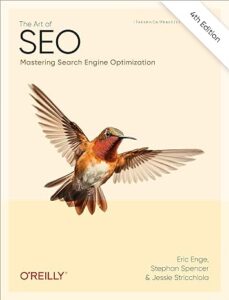
Yeah, so I’m a fan of your AlsoAsked tool. I’ve, as you know, written about it in The Art of SEO, and I’m just a really happy user of the tool. I love what you post on LinkedIn about SEO, AEO (GEO, whatever you want to call it), AI, and where the industry is heading.
So I’d love to start with maybe a little bit on your take of where the world is heading, the industry and user behavior.
Wow, start with the small stuff, huh? Start with the easy questions. Okay. So I think it’s helpful to define changes in terms of both technology and how they impact and shift user behavior, because the two lean into each other, right? And we have to be aware of both of them. The thing you mentioned about this discussion is, is it SEO, is it GEO, is it AEO?
So this is an interesting conversation. My viewpoint on that is that a lot has changed. And there are a lot of new and different things we need to think about as marketers in terms of a lot of the practical, pragmatic things that we are doing. If you were doing SEO in a way I consider good and correct, I don’t think much has changed in marketing for brands. The evolution that I think is the most interesting is this.
So, maybe in the 1950s, if you ask someone what brand they were, I think a reasonable definition would be it’s what the company tells you they are about, right? They run TV ads, they put billboards up everywhere. And it’s just this game where you get seen everywhere with this phrase and this tagline that associates you with that.
And then we slowly moved into the internet, and people became hyper-connected. Brands shifted from being less about what you told people and more about what, on mass, they posted reviews on Trustpilot or discussed in forums, like, ‘this brand, quality is great,’ or ‘the quality is terrible.’ So it became harder for you to control that as a brand. That’s where the traditional kind of SEO, if you like, has sat. Where I think we’re going is the definition of brand will essentially be what these AI LLM likely based systems think to use the word usefully for one of the better words, think about your brand, how they understand it. One clear thing we’ve seen over the years with technology is if people can get a similar result, a similar output for less effort, they will do it always. It just wins.
I selected this year the conveyancer to help me with my house move by using Perplexity to gather loads of user reviews and give me summaries of pros and cons of different companies that might help me, and made my shortlist from that. Because it was a lot less effort than what I’d previously done, Googling loads of things and bringing it all together manually, and kind of checking it. So I think that’s something SEO marketers have to consider in general: the paradigm shift where people will be having conversations with agents who perform these tasks on their behalf.
One analogy I really like, forget where I heard this from first, search is like a mall, and AI is like a concierge. So if you go shopping in a mall, it’s kind of on you to go from store to store until you figure out who has what and what you’re going to buy.
With a concierge, you can make a set of instructions, and they can even order something to be delivered to your room.
Exactly. I think that’s a really good analogy. I’d use one about a similar one, like a supermarket, whether you go in yourself, because supermarkets are designed in a specific way, right? Whereby all the essentials like bread, milk, and other things are normally at the back. So you have to walk past everything else. And then when you get to the queue, you have all the normal stuff, like in the UK at least, all the high sugar impulse stuff. They’re designed to get you to see more and spend more. And that’s what we do with our websites, right? You know, they’re designed for conversion. They’re designed for action.
Search is like a mall; AI is like a concierge. One makes you browse—one gets it delivered to your room.
And you could argue that in some ways, that’s anti-user in terms of that system’s rigged to benefit the company, not the user, right? And it’s especially prevalent when you do things as you try to book flights, and then all these extra charges creep in, and they’re trying to give you dark patterns. So you upgrade and things like that. So I think.
In that way, an agent solves some of these pain points for a user. They reduce friction by putting, as you say, like that concierge effect in, which I think is super interesting in terms of the strategy, if you like, of how do we market ourselves and how do we want to be seen? Because you can’t rely on those, I think it’s better to call them all tricks to get that extra conversion.
The other side, I think, is interesting: how technology is changing. That’s just fascinating to watch for me. Companies like OpenAI, who at the moment are just burning through money, you know, at a terrifying rate. I think it was like $6 billion last year. Lost this year. It’s on track for around 12 to 15 billion. They’re looking to lose. Then there are just some astronomical amounts in the future. They’ve just said, “Yeah, we’re going to burn through this.”
Yeah, like a trillion dollars or something insane on what, 15 billion in revenue? That’s just, and some podcaster and VC guy interviewed Sam Altman recently and called him out on that. And Sam got really ticked off and said, “Well, if you want to sell your shares, I could help you find a place to dump them”. Really rude and reactive.
Yeah what I think will happen there is from a technology point of view, when I was thinking about this, it’s clear to me that the LLM based, if we call them that LLM based searches have moved, towards doing more kind of web searches in the background than previous iterations, because there are some pretty sharp edges to using LLMs with, you know, knowledge cutoffs, hallucinations, that kind of thing.
If users stop clicking on websites, the wellspring of data modern search relies on begins to dry up.
Now they don’t have their own ranked index of the web. They know they’re doing searches in the background with Bing or Google, or scraping the Google or Bing APIs, and so on, because these companies have been around for a few decades. They’ve got a lot of experience in ranking web documents for queries and battling spam, all this kind of stuff. And none of these platforms can do that effectively now, that’s easily demonstrated, right?
What I find particularly interesting is that, if we use Google as an example, it uses a lot of user interaction data, especially on its SERP, to determine whether a result is good, relevant, and more. That’s like a feedback loop for Google to understand the query, right?
And we’ve seen from their internal presentations that came out in the DOJ when Google was like, “Yeah, we’re really bad at understanding if the content’s good. We just rely on user signal feedback.” So my question is this. What happens if the majority, for argument’s sake, people start using this LLM-based search, which is in the background doing that web search for them? And they’re not going, they’re not clicking on Reddit or any other sites. So that means that the Wellspring of data that’s vital for modern search to perform well just dries up.
Right, because the financial incentives for companies like Reddit go away when no users are visiting the site and clicking on the ads.
Yeah. And I mean, for Google as well, to understand people, there’ll be way fewer people clicking on their sub because ChatGPT is kind of doing it for them. So they don’t know anymore. The result was three better than four, and five better than four. So it wouldn’t surprise me if we start to see a degradation in quality, but that’s what powers those LLM systems. That stumped me for a while. What’s the long-term game plan here? And then you see Perplexity Open AI quite aggressively start pushing Atlas and Comet, their own browsers.
And it became quite clear to me that for two reasons. One, that’s the best place to get user interaction data from the browser because it gets around a whole bunch of privacy issues. And secondly, we’ve seen that Chrome now has a bunch of little AI models inside it, LLM stuff inside it.
If some of this inference can be run locally in the browser, it could be a huge cost-saving for these companies. We can run some of this stuff locally, using the machine’s power rather than billing it to OpenAI. Also, it solves a whole bunch of problems on the agentic side. You’ve seen now there’s a lot of talk about, well, OpenAI really struggles with stuff like rendering JavaScript. It just doesn’t seem to do it very often.
If you’re using their browser, it’s going to do all the rendering locally, so you don’t have to pass bot checks. That’s where we’re heading, into like new browser wars territory. I think that’s going to be the new big kind of thing they’re going to be pushing for us.
Yeah, I don’t know. Google has such a big head start. Comet and Atlas are terrible browsers.
Well, someone would describe me there as bad as they’re ever going to be right now. And you’re like me, right? You saw, you remember how dominant Internet Explorer was back in the day, right? It was just, it was like Internet Explorer, right? And then a tiny bit of Netscape and Opera. And that looked on top, you know, like you couldn’t topple it. It was like 90 % market share, right? Back in the day, it came with Windows, and then Firefox came, and Chrome came.
And they really took that lunch away. So I’d never say never, but yeah, Google, I mean, I think they just posted there. It was their first quarter, wasn’t it? It’s something like their first quarter of a trillion in financial terms. It was just a gross amount of money they were making. Right. And when you think about that, the infrastructure, the technology they’ve got, versus companies that are just burning through investment. Think Google.
You know, it has such an advantage, like you say, apart from the market share dominance, the technology dominance, the money to keep going, they can just hold their breath longer, and I think Atlas had a lot of chromium. Atlas was chromium, right? And it had Gemini models inside it as well. They’re building on Google tech.
The definition of your brand will essentially be what these LLM-based systems think of it and how they understand it. Share on XYeah, but then there are security and privacy issues because it’s like both browsers are open to getting hacked or injected and things like that. So you’re taking a risk. You might get your identity stolen. Might get, you know, you’re you might get doxxed or who knows what if you’re not careful. I just don’t want to take the risk.
Yeah, I think so. For the other thing I’d discussed previously with some people, it was about agentic to be a thing and for it to happen. I think it needs quite a lot of information about you because I want to be able to say, “find me some new running shoes.” I don’t want to have to say, “Find me some new running shoes that are size 11, for men, in these colors,, that will ship to here.”
You know, it’d be tiresome for me to have to manually prompt all of these things all the time. To the point where it’d be quicker just for me to Google the few companies I like and do that. So I think that’s going, I think it’s going to happen. And I agree with you on the security front. And I think that’s if anything, the direction we’ve been heading in for, for, many years, that more of our identity is online and potentially stealable. I wonder how the younger generation, makes myself feel really old here now, but how much of the younger generation cares or thinks about that because wherever they join in, that’s like the new norm, right?

For me, even things that took me a while to warm up to, like password managers, you know, until I really thought about it. Like, so you’re telling me I put all my passwords in one place? Like, that’s how it would, and someone else looks after them. As this sounds really, I don’t know about this.
You know, it’s happened to a few, password comes after, the password keeper companies, right? That they’ve had data breaches. So yeah. I agree with you, but I don’t necessarily think that will stop anything.
Yeah. One of my clients just released a book on privacy and how to protect it. And the book’s called Privacy Crisis, by Chris Parker. He’s the founder of whatismyipaddress.com, which is an SEO client of ours. They’ve been going strong for 20 years now, 26 almost.
Definitely used their website before.
Yeah, I’m sure because they’ve got tens of millions of users. It’s like 16 million or 14 million unique visits a month.
Wow. I had no idea so many people were that interested in their IP.
It’s not just, it’s like things like look-up tools for all sorts of things relating to your internet connection, VPNs and all sorts of things. Anyway, this book, Privacy Crisis, is about protecting your privacy without being a hermit.
I think this is gonna be a big issue for everybody. Like, how much privacy and autonomy are you willing to give away? And also brain power. I don’t know if you saw this, but MIT did a study comparing ChatGPT users to a control group and found that their brains were atrophying. So you don’t use it, you lose it.
And so the less critical thinking skills, the lower the brain flow to certain parts of the brain, the more you use ChatGPT.
I think privacy versus convenience is the age-old thing, right? And unfortunately, that would likely be driven again by workplace-type pressures: if you don’t do these things, use these tools, you can be as sick as it sounds, as competitive as other people are with your time.
And that’s the brain atrophy thing. So again, to make myself feel old, when I first started driving, it was the paper Atlas, like work out where I’m going ahead of time, plan some roads, kind of memorize them and then work out, look around where I am. And that was fine. I didn’t think much of it. And now I use Google Maps on my phone everywhere. Like if I’m just going somewhere.
Content producers are in the toughest market. After a year of AI workflows and multi-stage LLM business flows, we're hopefully now coming over the peak of inflated expectations about what AI can actually do. Share on XEven the same place you always go, right?
Yeah, because it does the traffic stuff as well, right? It tells me if it’s roadblocks, like all this. But as a result, I have noticed my sense of direction has massively deteriorated, in terms of my awareness of where I am and how to get to places. And I only figured this out when I moved house recently, and I’ve been living there. This is really embarrassing. I’ve been living there for about a month.
And I realized, because it was quite a bit further out from where I was, I didn’t know the way without Google maps. Cause I was so subconsciously following that thinking about other things, just on, you know, on the road, what’s around me, not thinking about the direction I was going, which roads I took. So I actually had to consciously think, right, I need to pay attention to where I’m going now and map this out in my mind. So it doesn’t surprise me at all if we start using LLMs for cognitive tasks that will atrophy. Use it or lose it, I think is super good wisdom for anything in life, right?

Yeah, yeah, just being aware of what direction you’re going. Am I going north, east, west, or what? You should know this stuff. You should be able to add stuff up in your head without getting your phone out to start up the calculator.
So let’s talk a bit about where your agency is directing its efforts and how you’re future-proofing it, since some accounts, agencies, and freelancers are struggling and having to pivot, take a job, or do something not ideal. Like, what are you doing, and how do you see this working out over the next, say, 2 to 3 years?
The moment I speak to other agencies, freelancers, et cetera, the impression I’m getting is that, at the moment, it’s people who produce content who are in the toughest market. So the people I’ve been helping to find other opportunities are almost invariably in those kinds of roles, and I can see why, right? We’re really in this, you know, this Gartner hype cycle of kind of inflated expectations. Feel we’re hopefully now just coming over the peak of what AI can do. And this was really crystallized, actually, for me this week, I think it was. We’ve seen, for over a year or so, all these kinds of AI workflows and multi-stage processes using LLMs, these business kinds of flows.
Content strategy will be around for a long time, but how we produce it has changed dramatically with AI.
But then this week, Sam Altman’s like really proudly announcing that their flagship GPT-5 model can finally not use em dashes reliably if you tell it. To me, I’m like, you know, a few months ago, he was saying you can talk to it. It’s like a PhD-level expert on any subject you want to talk about, but at the same time, you can’t make it without using an em dash. So my question is, you know, if it’s involved in five pieces of this chain of critical business stuff that needs to be corrected. How is that going to work?
So for me, that’s what I’m talking about in relation to this, this hype cycle. I think more people are realizing it now, and it’s certainly been my experience when I’ve gone around to other companies who are like, We’ve set up this AI workflow to do this. Yet it kind of looked great. But then, actually, when we got down to it, it was making these errors, and it didn’t work, so we had to take it offline. Our other competitors are doing this and this, and then I go and speak to them, and basically, they’re the same. Everyone’s kind of peering into each other’s gardens, being like, they’re doing something amazing. So that reality, I think, is still appearing for some people. In terms of our agency, in terms of Candour, we’ve never really done much in the way of content production.
We’ve always been on the content side of things we do. So we’re doing it from a marketing point of view, basically only SEO. So, organic SEO, that’s all we do from that point of view. And the tenets to that are still similar to what they have been for many years: having a very strong technical team. I think that’s more important than ever, for a variety of reasons. So again, looking into the future, think about making sure websites are usable by agents, by that, I mean, agentic agents, not kind of browser agents or whatever. So there’s a whole bunch of tests that you can already start doing on e-commerce sites.
As you said, at the moment, Atlas, et cetera, they’re very bad. But you can start to get an idea of, think that’s going to change quickly, where that’s going. And again, the absolute basics: does the main content and links work without JavaScript? All these things are still important. My prediction that I got horribly wrong 10 years ago. When I was having similar conversations, I thought technical SEO would become less important as search engines improved. Right. What I didn’t bank on is that, as an industry, we just made things so massively overcomplicated, normally with client-side, massive JavaScript frameworks to do the most simple things that tech SEO has flourished.

We do a lot of content strategy work with clients. And I think that’s going to be around for a long time still. The actual content production has changed significantly in how we use AI. Historically, if there was an expert in a client’s organization we wanted to get something from, we might provide them with a brief to collect information, right?
And it’s very difficult to get people who aren’t writers to do this kind of thing. They might just want to answer the questions verbatim. What we’ve been able to do now is this: have more casual conversations with them and let them naturally lead. And we get some really interesting stuff. Then you can use AI to do a single pass of basically, can you put this into a document, into an article, and then we can edit it from there, which massively improves the output in terms of the actual quality, let alone the speed. Digital PR is probably the largest portion of our billing. It has, again, been for a long time because links are still 20 years old, really important. But from an LLM AI search point of view, to me, that’s a multi-site problem. We’ve, you know, changed things like our keyword research process now.
So we, you know, take traditional keywords, personalize them with persona descriptions, feed them into LLMs to get related results and the kind of prompts people might use, and combine that with other search data. And then we can predict whether grounding is occurring within those LLMs. And then we can see what grounding searches are being done. And then those grounding searches tell us, okay, these are the 20 sites.
With ChatGPT, you can shape what people see about your brand in days, unlike traditional search where results take months to reflect your work.
Or the target we want is mentioned. And we want to say these things about us, though, how we’re actually doing the same things has changed quite significantly. But that’s what demonstrably works. You know, we got on those sites. You can change what ChatGPT shows about you, in days sometimes, which is very satisfying compared to traditional search results, where you do the work, you build the links, and then you crush your fingers for three, four months to hope when the tide comes back around, that it’s worked.
Yeah. But what if it’s Reddit or Wikipedia that you need a link and a mention from? You’ve got terms of service and conflict of interest guidelines that you have to navigate and all sorts of stuff. So how do you handle that?
So the Reddit thing is a really good question, right? So I don’t believe the right thing to do is what I’ve seen many people saying, which is, “oh, you know, your company needs to be on Reddit and you need to be posting here” because with the idea that your community is there, which seems obvious, but I’ve got a Reddit account now that’s old enough to drink. And so I’ve been around there for quite a while. And I know what happens when a lot of companies try to come onto Reddit, because there is a certain etiquette and culture there that, again, doesn’t blend well with what we were talking about earlier from the website point of view, which is like an anti-consumer-interest kind of thing.
So for our clients, if they have an audience on Reddit that is strong, then the advice I give to them is, you know, outside of SEO, let’s not be the person that’s climbing through the window at the dinner party to try and come into the table and talk about us. Let’s give them the spark, let’s be the thing they talk about. So what are they interested in? How can we make a story? How can we publish data? How can we showcase the product? How can we tell a story that will make this community talk, and where else can we put it?
So we don’t even need to post it. That to me is the scalable way to do this because the LLM kind of stuff is, you need to work with social teams. Need to work with CRM teams, with sales teams, because what I said to begin with about the brand being the impression left in AI, this is going to be across all channels it has access to. It’s going to be multimodal as well.
Privacy versus convenience will be driven by workplace pressures. If you don't use these AI tools, you might not stay competitive. That's where the risk of brain atrophy comes in. Share on XSo this isn’t anymore an SEO discussion about, you know, we need links from this website. So I think there’s a much stronger case for bringing together different teams now and working on being the source, the thing people want to talk about, which is a different strategic direction because it’s not easy and sometimes requires companies to do things they haven’t done before. But I think it’s more sustainable than going on Reddit and trying to force-start those conversations, even if you’re being open about it.
Yeah, are you doing link building, citation building, and digital PR for your own agency?
For Candour?
Yeah.
We occasionally do, like, we get requests to comment on things. I do a lot of podcasts. I do a lot of events now, but in general, we don’t do much outbound digital PR. If opportunities arise, we already have a digital PR team working for clients regularly.
To win in an LLM-driven world, brands must become the spark that communities talk about, not force their way into the conversation.
We naturally see opportunities, and I might get a Slack message like, “Do you want to give your comment on this?” Cause someone’s asking for this, which I’ll do. We have time. But in fairness, when I ran the previous SEO agency, we ranked number one for SEO agency when it was a more national search term. And the leads I got from that agency were very poor. Yeah, I think.
Yeah, there are certain markets where, you know, I don’t want to do SEO for someone who is figuring out whether they need it or how it works. That’s not where we are as an agency. I want to work with organizations and clients who are like, “Okay, we know we need SEO.” We understand what it is. We’re brought into it. We just want to find someone who’s a good fit for us. And, you know, we’ll align with what we’re doing. That’s who I want to work with. Um, and it’s fairly rare in my experience that those people are going on Google and searching for, you know, an SEO agency or similar.
But what about ChatGPT? What if they’re going on to ChatGPT and saying, I need to hire an SEO agency, and I have a $20K a month budget. And here are the areas of focus, the business case, and so forth. Find me an agency.
So I think this is a more interesting question, right? And actually, it aligns more with what we’ve naturally been doing anyway. Because, for instance, you know, I’m mostly known through stuff like the stuff I do on LinkedIn, right? I can see that ChatGPT has picked up all that kind of activity. So if you ask, like in the UK, about top SEO experts and stuff, a bunch of the time I’m on those lists without really having to try and do anything, because it’s been more of a multi-site focus. Whereas I think, as a website, our domain name with candor is fairly weak in terms of rankings. Haven’t tried to rank for anything for the reasons I’ve come up with.
So this is, as I said, more for the AI side of things: a multi-channel strategy of just being in different places. And that’s what we get through podcasts. Do a lot of conference speaking, and I publish on my social media, like data from AlsoAsked that gets covered on Search Engine Land, that kind of thing. So you’re kind enough to put me in a chapter of your book. So all these different things, all these different touch points, I think of what rises the tide.
Let’s actually talk about AlsoAsked. How did that come about? And what are some of the use cases for our listener or viewer in this day of AI search and so forth? What do we want to use it for? How does it get used with AEO?
Okay, so the idea, so I’ve been using People Also Ask data, which is when you do a Google search, now most of the time you’ll get a kind Constantine a box of normally four questions or so, which says people also ask and gives you some questions that if you click on the expand, you get more questions than an answer. I’ve been using that data for SEO for over a decade.
And I gave an SEO talk in 2016 where I was just doing a normal SEO talk, talking about how we use this data. And at the time, we used just some command-line Python to scrape it and do some stuff with it. And I assumed most people were doing something similar. And after the conference, I had a bunch of people come up and say, “Oh, can I have the script to do that? It’s really great”. And I was like, “Sure.” So I shared that much to my folly, as then I was getting support requests saying, “It says I’m missing this package, or this version of Python isn’t right.” And then that made me realize there’s obviously a barrier to entry there, right? Of people that aren’t comfortable coding.
So I said to the team,” Okay, well, maybe their space will be like, don’t know, do an online version that does the same thing in the background.” So we made the alpha version of AlsoAsked, which was wildly popular. Um, like, we were doing hundreds of thousands of searches in a few weeks, which was problematic because we had to use proxies and it cost money.
So in the end, after a few months, I just had to turn the kind of alpha off and say thanks for the feedback data because it was costing literally over a thousand pounds a month to just do the basics. And I thought this would be nice and quick. We built this in like three months.

In another three months, we’ll have the paid version running. Oh my sweet summer child, my first foray into SAS. It was pretty much two years before we had the kind of final one that had passed, you know, things like scalable security checks. All the things I didn’t know about, like if you sell a digital service product globally, you’re liable to charge the correct amount of tax locally, whether it be by state or country, all these things had to be thought out, so we got that launched, which was great.
So now we have a way for you to put in any search query you might use in Google, and specify a country and a language. And now you can actually specify even a city level because there is city-level personalization quite prominent for a lot of searches in Google And AlsoAsked for return a map of, okay, for this query, these are the four or five most closely related in terms of what I call intent proximity Meaning if someone asks this question, these are the other questions they are very likely to ask. And then that spirals out to another two or three levels. And we can also return things like, um, now, which websites are actually selected for those answers, what title they have, if it’s an AI, if it’s an AI overview, because they’re quite common now in PAAs. And then, if it is an AI overview, um, in the data export you can see which sites have been cited and such. So it’s like an intelligence tool from that point of view. And it answered your question about what the use case is for this.
The original primary use case was, I know, one of the things Google looks at in its own measurement of having done a good job is time to result, which is essentially the time between when a user starts a kind of exploration journey. Suppose I have this intent when it is satisfied. Paul Haahr did a brilliant talk about that at SMX West.
Again, probably like 10 years ago, talking about them, how they do this. And to me, it’s obvious, like, if you have this list of questions from Google saying, “Well, when someone asks this, normally their next query is this,” that a lot of the time it makes sense to have those things answered in the same document, in the same piece of content you’re, you’re writing for. To reduce the user’s time.
It’s almost kind of what AIOs or feature snippets are doing in a way, for saying, you know, well, I know you’re going to ask this. I’m going to find all the answers and cobble them together for you. And I had someone literally last week at ISS in Barcelona come up to me and say, “We started using AlsoAsked, and I was applying this for all of my content, and we saw results within months.” And it’s so obvious now that, you know, we didn’t think about it that way, which, you know, really makes me happy to hear that.
The primary mistake I think people make is trying to just answer the questions like they’re FAQs. That’s not the way I approach this data. It’s about just saying, these are the kinds of things people are worried about. For instance, that can be used from a brand perspective. A common example I give is if you search for something like Revolut, which is one of the challenger new online banks, common questions are around, like, “Is it safe in the UK? Like, how much money can I put in there? How much is protected?”
People’s questions reveal what they’re worried about, and that’s incredibly valuable for brand positioning.
So people are really worried about security. And that’s super important for a brand to know. So on our homepage, you know, we need to give people some reassurance that their money is safe, how that works, where we’re governed, et cetera. To answer the last part of your question, how is it useful in an AI world? We specifically use the People Also Ask data to map out the rest of a conversation. So I spoke earlier about how we can synthesize, and it’s a really neat way to use LLM data and the conversational prompts people might use. Because that’s exactly the data that LLMs have been trained on.
They’re trained on specific forums of someone saying, “Oh, I’m a 38-year-old man, and I’m interested in running. What trainers should I buy? Also, I’m a vegan,” or something like that. So it’s a good way to get those initial prompts. However, we know that people don’t use LLMs like search, because they’re doing all these one-shot type queries. It’s an ongoing conversation. So once we have those initial prompts, we use the AlsoAsked API to say, “Okay, if someone’s asked this, what’s likely going to be the next questions that they ask?” And then we include that in our map of these are the things we need to be visible for to appear in these AI searches.
It’s always funny and predictable to me when I see it, so I always use running shoes as an example. And you know, the question I know off the top of my head is, you know, people are asking how much they should spend on running shoes. And then it’s obvious to me that for a lot of people running shoes, like actual running shoes, are a bit more expensive than people realize, because then there’s a whole other branch of queries around basically how much faster will expensive running shoes make me, because people are interested in like their 5k time.
They’re like, “well, if I spend 200 euros instead of 50, like, will it make me run faster?” It’s just cute to understand all those things, but that’s what’s on people’s minds. It sounds silly, right? But that’s the information people want. So understanding that is critical. And there’s all other ways to finish up. Like we’ve got a built-in script with Screaming Frog. So if you use the Screaming Frog spider tool in their custom JavaScript library, they send it out now with an AlsoAsked script. And what you can do with that is crawl all the content on your site, and it will do things like scrape the header tag or the page title and send that off to AlsoAsked in the background. And then it will use the ChatGPT API to say, “Does the content on this page answer all of these questions? If it doesn’t, then let me know which questions are potentially unfulfilled.” So you can just press crawl on a site, come back, and you have a thousand pages of content, and then you can see immediately which questions might have content gaps.
And that’s particularly useful because these PAA results change so quickly. Like when we have an election in the UK, it’s a really good example. They sometimes change every 5 or 6 hours, depending on what people are searching for. That’s another thing we use them for: looking for intent shifts, because intent is not static.
Yeah. Well, also when you are using, say, ChatGPT or Google for that matter, and any of the LLMs, you get these query fan outs that will vary on each search or each prompt. Like every time you prompt with the exact same prompt, you’ll get a different set of subqueries. Most people don’t realize that’s happening behind the scenes, but you can actually see the subqueries. There might be some sort of analogy between query fan-out and the People Also Ask and the AlsoAsked tools.
Yeah, absolutely. So that’s a really interesting point. And I think you’re right that most people don’t realize the query fanouts aren’t stable either. If you do three searches, I believe it’s Gemini that’s generating the query fanout. But it’s not quite that simple, because I know they use a custom Gemini for AI mode, and they’ve talked about how it leans on, like, their knowledge graph. And you know, Google is just a collection of different microservices that talk to each other, right?
But certainly that kind of data I feel is some of the best we have in terms of when people search for this This is likely what they’re going to to do search for next in combination with you know Trying to ask we’ve got a Gemini grounding API we can use where we can do things like give it questions. It will tell you if it’s going to use grounding and it will tell you the web searches it will try and use. They’re all good things to do.
And just for our listeners who are not familiar with grounding and what that means, just a quick explanation of that and RAG.
Grounding is when an LLM checks its answer against the web, depending on the confidence of its internal prediction.
Sure. So when you search an LLM-based system for a prompt, a decision is made about whether it needs grounding. And what grounding essentially is, I’m going to check the answer against the web, doing a web search. The reason it does this is that it’s got to do with the kind of bell curve of
Probabilities of the things it thinks it should say next. So, to make that clear with an example: if you gave it a simple query, like “Is the Earth round?” Okay. There’s going to be a very steep bell curve in the training data, like, yes, the Earth is roughly a sphere. It’s roughly a globe. So it’s highly unlikely that it’s going to spend the money and resources on grounding or a background web search. It’s like, no, I got this. And it will just tell you.
At the other end of the scale, if you say what happened in the news today. So the LLM is going to look through its kind of training data and be like, “Okay, if I’ve got this prompt, what’s likely to come next?” And there will be a very flat kind of bell curve. And it’s like, “Oh, I don’t know. This could be anything that increases the likelihood that it will need to do a web search.” And when it exceeds a certain threshold, which varies by LMS, it will run these web searches in the background to find the information it thinks it needs.
And it will quickly review the content of documents retrieved from an information retrieval system such as Bing or Google. And from that, it will try, and it does RAG, which is retrieval augmented generation. Its model is still generating it, but it’s leaning heavily on the data it’s retrieved to produce an answer. And it’s looking for some kind of consensus, if possible.
Hallucinations are still possible. And again, especially where you’ve got, particularly novel searches where there’s very low training data, they’re still quite likely. I did a webinar last week where, just to give you an insight, I got asked by, I think, a school. How can we write our content to prevent hallucinations? Students have been using ChatGPT to find out when various deadlines are for submitting work, and it regularly gets them wrong because, obviously, there’s nothing really in the model about that specific school’s academic year and these deadlines. So it’s just, it can’t find a consensus. Maybe it can’t find what it needs on the web. So it’s just making stuff up. And again, many people aren’t aware.
Yeah, well, hopefully that becomes less of an issue over time. I think the hallucination rate is somewhere around 15 % at this point. Is that right?
Yeah. So there’s a standardized test for ChatGPT called the simple QA test, which they publish on their technical card, which gives hallucination rates. And there was a paper recently done by OpenAI that essentially said, “yeah, then they’re never going to go away completely from hallucinations, at least from the base model, because it is kind of a feature or a bug.” Cause that’s the generation part, right? The spice means it’s not the same thing every time. But again, I would be humble about that, you know, this isn’t my area of expertise in terms of you. If we tried to spend an hour explaining how transformer architecture works, I’d very quickly be out of my depth. So maybe, maybe there is a solution in the future, and it’s just my shortcoming that I don’t see, technically, how it would be possible.
Yeah, one more question before we move on to other topics in this area of AI. So, can you differentiate for our listener pre-training versus post-training?
Sure. So when we’re dealing with LLMs, we have what’s called the base model, which is essentially most of the documents on the internet that they can beg, steal or borrow, depending on who you speak to. Yeah. And there is a phase called pre-training, which involves a bunch of steps to clean up the data. So, this isn’t as well published; specifically, as far as I’m aware, OpenAI hasn’t said, “This is how we do our pre-training. This is what we look at. This is what we don’t look at.” So, this is actually based on a lot of my knowledge of a chap called Andrej Karpathy, who’s posted some really, like, three, four-hour-long explainers on LLMs, cause that’s his expert area.
LLMs predict tokens, not meaning; they generate the next most likely chunk of text, which is why hallucinations happen.
But this training phase is essentially where they’ll do stuff like try to filter out personally identifiable information, they’ll categorize by language, for instance. And what I found particularly interesting is that from the sources I’ve looked at, they will tend to strip out things like code. So the HTML code around the content: what we’re doing, based on the LLM, is token prediction. So, tokens are chunks of characters, basically, that commonly occur.
I think GPT4 has around 190,000 different tokens, which are again strings of characters. They’re basically saying that this whole architecture is designed to work out the probability that, if you have this set of tokens, the next most likely set of tokens is. It’s essentially super, super, super clever predictive text, which is why, again, it doesn’t know whether it’s right or wrong. And it doesn’t make sense to me if you’re trying to, and this is the, I think the beautiful thing for me from a maths point of view about LLMs, which is that by mapping out, by breaking our actual language down into these chunks of characters and just mapping out all of the billions, probably trillions of probabilities between these chunks of language, there is somehow knowledge encoded in that, which I think is a fantastically beautiful thing from a maths point of view that we can have all these probabilities and just kind of pull the string. You’ve encapsulated a lot of human knowledge there.
So it doesn’t make sense to me why we would include stuff like HTML code if what we’re trying to do is to encapsulate people’s knowledge in the LLM. So we go through a pre-training phase that involves reading all the documents online and filtering them. So essentially, we’ve got one Bayeux Tapestry style, an endless document of the internet. And that goes through this process of tokenization and working out the relationships between those tokens. What you end up with in the base model is essentially an internet document simulator. It’s not a chat box.
So if you said to it, “tell me some good places to go in France”, it would just continue writing what it thinks the next most likely thing would be, which would probably be like a forum post. Wouldn’t answer you like the conversational, kind of things we have now. Then, to get these models to behave the way we want, we essentially hammer them with additional training after this pre-training.
So they will hammer them with conversational-type data to get responses that try to predict the token in a back-and-forth way. And one of the ways they can do that is by introducing these tags in the training data. That’s kind of like an agent user. It doesn’t understand, cause I don’t want to anthropomorphize it, but it sees this pattern of this, this kind of back-and-forth, which is then when we get a model that’s like a chatbot where you can say, “Where should I go in France?” And it understands, it kind of needs to jump down in the token prediction to the answer part, if you like. It’s also how some safeguards are built in. So things like why it’s more tricky than it used to be, but it’s still not impossible to, for instance, get a ChatGPT to tell you how to build illegal stuff that you shouldn’t know, that’s information that’s normally protected.
LLMs aren’t linear like search results; they’re more like a soup of probabilities and associations.
But then there have been cases where people have asked it using LeetSpeak. So for the younger people, it doesn’t really exist. So now that’s like replacing some of your characters with numbers, like you would be J00. And because the training data doesn’t account for that, the chatbot immediately gave all these instructions, like how to construct bombs and stuff, just in LeetSpeak, because it was given the guidelines, it was very soft there.
Again, it’s about token prediction. It’s not understanding. You can’t talk about this subject. So that’s the pre-training, and then the post-training, which comes in again in various flavors. A lot of it, as well, is kind of manually curated in terms of human conversation. There’s a lot of effort that goes into that last bit, but the actual LLM that we, we see as well that you actually use, there’s also a, like a system prompt, which is fired when, when you begin those chats, which the analogy for that I use is it’s like, say you’ve trained to play a football game, right? So all the training you’ve done is kind of like your pre-training, if you’d like, and then you’ve maybe done some training that’s specific to scoring goals. That’s your kind of post-training bit. And the system prompt is what the coach tells you as you go onto the pitch, you know, don’t forget to do this.
So it’s in the front of your memory. So the system prompts are kind of fascinating because you realize how dumb LLMs are. So it will say something like, today is the 18th of November. If anyone asks you about this date, referring to it as ‘today’ would be the kind of thing that goes into the system prompt. So it seems more natural. And they can be quite big. Again, they’ll give instructions on how to answer tone of voice and what not to answer.
And I think this is what they were tweaking with GPT-5, because famously they made it a little bit less sycophantic, which some people were sad about, because GPT-4 was obviously kind of their friend, and then GPT-5 was a bit harsh. There’s that system prompt, and a few of them have been leaked before, which is again, like really, really interesting. And then, lastly, you’ve got the context window, which is really a short-term memory for the conversation you’ve been having and will affect further token generation.
So, for example, if you ask ChatGPT for a vegan recipe, it will give you one. If you then say, Can you recommend some running shoes? It will say, Sure. And I know you’re a vegan. So here are leather-free, cruelty-free running shoes and brands because that context window has affected the answer. It’s layer upon layer upon layer.
Right, yeah, really, really great explanation. Thank you for that. And I know we’re out of time, but I have one quick last question where you could do this as like a lightning round. Like, what are your favorite tools for SEO and for AEO?
So, my favorite SEO tools, I’ve always been using Sitebulb Cloud for my auditing for a long time. I loved using that. Keyword Insights as well for kind of clustering. It’s a tool I’m using regularly. From AI, AEO, LMO, Disco, what we’re calling it, my favorite approach is a tool called WAIKAY (What AI Knows About You) by Dixon Jones, who’s in the link.
Yep, yeah, I’ve had Dixon on recently to talk about it.
Okay. So yeah. And I just like the approach they’ve taken in terms of it’s more focused on understanding what the base model thinks about your brand, which I think is much more helpful strategically than coming from the top down, looking at prompts for a whole host of reasons. I know Dixon’s recently put prompt tracking in cause it’s what everyone wants. But I’m like, to me this is, if you understand what the AI knows about you, that’s what’s going to generate the answers to these prompts. So that’s my focus. That’s the main tool I’ve been using for that. In terms of other kinds of AI tools, it’s mostly the standard SEO tool set I’ve been using, and I’m not a fan of myself, like wide-scale prompt tracking. I just think, for the amount of time, energy and money it costs, how quickly the AR results shift. I just don’t see the value in it myself yet. That may change.
So when you’re talking about that, you’re referring to Brand Radar from Ahrefs and profound and so forth.
It’s just, yeah, the way of saying, “Well, where do we, does AI cite us for” like these 2000 queries, right? There’s so many, I think, issues around that point of view, in terms of, you know, things we mentioned like personalization, the fact that the answers are non-deterministic. So we have to really run them multiple times, which is fine for understanding what kind of bell we’re on and where we sit on that bell curve.
Instead of spending endless effort tracking, we should focus on making our product and marketing better for customers.
And that the answers, the citations do change over time. I think that kind of thinking, to me, is of the age, the paradigm we’re very used to doing a search and having a search engine say, “this is a linear list of documents that are most relevant to this query.” And it makes sense to track the rank of those things in a way, even though, you know, again, it’s not a perfect science for me, how I at least try and conceptualize what LLMs are and how they’re working. It’s more of this kind of soup. It’s not this linear; these are the most relevant things.
I would compare it to this: if I asked someone about their favorite running shoe brand, they wouldn’t just give me a list of brands they like. They would talk about it differently.
The metrics that we’re starting to use are things like, if you understand what your brand is about, what you want to be known for, how you want people to understand your products, and you can describe that. And then you have a conversation with an LLM, and you can gauge how well they are married. I think things like that are more important. Cause I think there’s actually a really exciting future for, especially, smaller, more specialist companies. I think.
There’s a discovery problem with search at the moment because the biggest players dominate it. But I think for all the people that have, like, very, you know, I want vegan running shoes and I want them to be green, that these kinds of systems have the opportunity to say, “well, I know about this very small company. It’s actually only 22 miles away from you. And I very clearly understand that’s all they do. You know, they’re this company, they’re completely aligned with you. Why don’t you buy from them?” As opposed to now, it’s like, that’s difficult to find. I’ll just do a search on Amazon.
So yeah, that’s where I’m at with that. And I’m open-minded about it. This isn’t like a dogmatic stance, I’ve got it on it. It’s just that the amount of effort sometimes that goes into tracking seems to take up too much of the resource, versus, let’s make our product better. Let’s make our marketing better. Let’s spend some money on improving things for customers.
Yeah, awesome. All right, well, I know we’ve got to wrap this up. So if our listener/viewer wants to work with your agency, learn from you, and follow you, where should we send them?
So I’m most active on LinkedIn. If you just search for Mark Williams-Cook, I think I’m the only one on the internet, which is scary in a way. It’s very easy to find me.
You’re canonical then.
Yeah, the canonical one for now. So I run core updates as well, which is coreupdates.com, which is a newsletter every Monday I send out, which is just what I think is the important stuff that’s changing in SEO. So if Google tweaks the font they use on the SERP, like you won’t find that in my newsletter, it’ll just boil down. These things might affect how I think. And we also run a podcast called Search with Candour, which is weekly if you want to learn more. We interview people, a bit like this, and go into subjects in more depth. But yeah, I’m always open if people want to just chat to me about SEO, say, don’t be afraid. It’s not like you’re going to get an invoice. You know, I like talking about it.
And yeah, always, if you think we might be able to help, you can certainly have a conversation about that.
Awesome. Mark, it was a pleasure and thank you for sharing your wisdom, insights and prognostications.
Thank you, family. The pleasure was all mine.
Yeah, awesome. And thank you, listener. So go out there and make the world a better place. We’ll catch you in the next episode. I’m your host, Stephan Spencer, signing off.
Important Links
Connect with Mark Williams-Cook
Apps/Tools
Books
Businesses/Organizations
People
Previous Marketing Speak Episodes
YouTube Videos
Your Checklist of Actions to Take
- Build multi-site brand presence over rankings. Shift from tracking keyword rankings to building presence across multiple authoritative sites. Identify 20 target sites where I want mentions, then create newsworthy stories and data that make communities naturally discuss my brand.
- Understand what AI-based models know about my brand. Use tools like Waikay to understand what AI-based models think about my brand before worrying about prompt tracking.
- Map full conversational journeys. Use AlsoAsked to map complete conversation paths beyond initial prompts. For each likely user question, I’ll identify follow-up questions to create comprehensive visibility maps.
- Extract expert knowledge using AI. Have natural conversations with my organization’s experts and let them lead discussions. Then I’ll use AI to organize their insights into structured documents that I can refine.
- Test my site for AI agent accessibility. Ensure my main content and links work without JavaScript so AI agents can properly navigate and extract information, especially on e-commerce pages.
- Find content gaps with AlsoAsked plus Screaming Frog. Install the AlsoAsked script in Screaming Frog to crawl my site and identify which common questions my content doesn’t answer across thousands of pages.
- Monitor intent shifts through AlsoAsked. I’ll track how results change, especially during major events, as they shift every 5-6 hours and reveal evolving user concerns.
- Address user anxieties on my homepage. Analyze questions about my brand to identify user concerns, then prominently address these anxieties (e.g., security or safety) on my homepage.
- Skip wide-scale prompt tracking. Avoid investing heavily in tools that track thousands of prompts; instead, allocate that budget to improving my product, marketing, and customer experience.
- Find Mark Williams-Cook on LinkedIn, subscribe to his Monday newsletter “Core Updates” at coreupdates.com, and listen to the Search with Candour podcast. He’s open to SEO conversations with no strings attached.

About the Host
STEPHAN SPENCER
Since coming into his own power and having a life-changing spiritual awakening, Stephan is on a mission. He is devoted to curiosity, reason, wonder, and most importantly, a connection with God and the unseen world. He has one agenda: revealing light in everything he does. A self-proclaimed geek who went on to pioneer the world of SEO and make a name for himself in the top echelons of marketing circles, Stephan’s journey has taken him from one of career ambition to soul searching and spiritual awakening.
Stephan has created and sold businesses, gone on spiritual quests, and explored the world with Tony Robbins as a part of Tony’s “Platinum Partnership.” He went through a radical personal transformation – from an introverted outlier to a leader in business and personal development.

About the Guest
Mark Williams-Cook
Mark Williams-Cook is the director at SEO agency Candour and Founder of the intent research SaaS tool AlsoAsked. He has 22 years of experience in SEO, working in agency, as an solo affiliate and tools developer.







Leave a Reply