



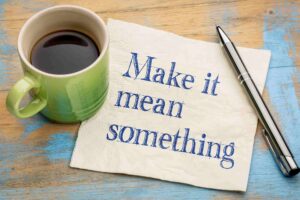
Sustainable growth doesn’t come from chasing attention. It comes from becoming something people can’t help but talk about.
My guest on today’s show is Scott Martin, founder of Groundswell Origins and author of Groundswell: The Unseen Wave of Business Growth. He has spent over twenty-five years building brands as an agency owner and strategist for national companies. He now hosts the Groundswell Origins podcast, where he digs into how businesses create growth that feeds itself.
In our conversation, we explore what it takes to build a brand people remark on rather than one they simply scroll past. Scott shares his shift away from selling customers and toward giving them something worth sharing. He explains why meaning matters more than attention when it comes to earning trust, and why founders often already know their best direction if they learn to trust their gut instead of copying competitors. Scott also breaks down his idea of brand coherence: the belief that a brand only builds real trust when its culture and its message actually line up.
Word of mouth remains one of the most durable ways to grow. When you learn to build meaning instead of chasing more eyeballs, you create something people want to pass along themselves. So without any further ado, on with the show!
- [03:01] – Scott shares what inspired him to write Groundswell and reflects on the book’s journey since its 2022 release.
- [09:05] – Scott explains why writing a book without over-relying on AI creates deeper clarity and why brands may increasingly differentiate themselves by emphasizing authentic human connection.
- [12:51] – Stephan and Scott discuss AI’s growing power to persuade and manipulate, predicting a shift from the age of attention to an age of trust where people seek authentic human recommendations and communities.
- [18:03] – Stephan and Scott explore soulful branding, emphasizing how authentic intentions, meaningful stories, and embracing what makes a brand unique can create genuine differentiation and lasting impact.
- [23:14] – Stephan and Scott unpack what it means to be “remarkable,” showing how uniqueness and word-of-mouth can help brands rise above the AI-driven attention race.
- [27:47] – Scott explains that growing an audience starts with creating genuine meaning through brand intention, origin stories, human effort, identity, and memorable customer experiences rather than simply chasing attention.
- [33:00] – Stephan and Scott discuss the power of intentional language, explaining how words shape reality and how brands can build coherence through shared cultural language and conscious communication.
- [39:39] – Scott explains how leading with generosity, offering genuine value, and focusing on what you can give rather than get can disarm people, build trust, and create unexpected opportunities.
- [44:05] – Scott explains how he shifted from being the “hero” who creates brands to a facilitator who helps founders uncover their own values, intuition, and gut intelligence to co-create more authentic and differentiated brands.
- [48:30] – Scott clarifies that his role is to help founders uncover and articulate what they already intuitively know, creating brand coherence across their values, identity, culture, and customer touchpoints to build trust.
- [50:29] – Scott’s final advice is to design experiences that transform people, working backward from the desired impact so the experience becomes memorable, shareable, and capable of generating word-of-mouth growth.
Scott, it’s so great to have you on the show.
Great to be here. Thanks for having me.
Yeah. So first of all, I’d love to hear what inspired you to write a book. You know, not everybody’s written a book. That’s a pretty cool claim to fame. Your book Groundswell has been out for three years now?
Yeah, it’s been out for three years? I guess it came out in 2022.
Almost four years.
Four years, I think it has been. But yeah, I mean, it’s the- and this is what took me four years to write the book. So, and this is pre-AI stuff, right? So, when I started writing the book, when I thought I had the manuscript, I remember bringing it to Jay Baer, another author, marketing author, and he’s he’s he he challenged me, and so did a couple other people. So I had to go back to work. It took me two more years. So it was a long effort. You want to know the origin story? Is that what you are asking?
Yeah. But first, I want to mention that I’m a fan of Jay Bear. He’s been a podcast guest here, and I love his book, “Hug Your Haters. I mean, I love the title. I mean, what a great way to live life-to just be unconditionally loving like that-and he makes a good business case for it too. So that’s awesome.
He is hilarious. I love the way he thinks, and he just cracks me up. The way he writes is totally him. He’s like the way he talks, the way he presents, and the way that he writes. He’s a very coherent individual for sure.
Yeah, he’s awesome. Yeah, so let’s hear the origin story of the book, and then also a great thing to go through would be your origin story, your superhero origin story, because how you ended up owning an agency and becoming an entrepreneur, and everything-I’m sure had some pretty awesome storied beginnings.
Yeah, I think it’ll be easy to weave it because it really intersects with the book. So, the origin story of the impetus, if you want to think of it as that, is I saw Tony Robbins at a Tony Robbins event. I saw. Peter Diamandis spoke, and he said, “You know, if you want something really meaningful in life and make such a big impact,” he does these big moonshot, vision things. He said, “solve an unsolvable problem,” and I’m like in the crowd, and I’m going, what is it like? “What would that be for marketing?” And what struck me was, what if you could market without marketing? Like, is that possible? It seemed like a myth, you know.
And so that started my journey of looking at patterns of businesses that seemingly, maybe not completely, market without marketing, but they get pretty close. Like things like brands like Patagonia. Why do people buy? And I realized the undercurrent is a groundswell of people who buy based on values; they buy for different reasons: emotional connection, community, and galvanizing. Sort of like they grow on themselves. It’s a growth loop because I’m a recovering growth hacker, and I started this book with the premise of whether you can create sustainable growth. It’s not that you can market without marketing; marketing has to exist if you want to keep growing. Tony says, “If you aren’t growing, you’re dying.”
So you need to create sustainable and hopefully exponential growth; predictable revenue is what most owners usually want. So I’m looking at all the different factors, and I found a pattern of brands that create sustainable growth and a growth loop. And so that’s what the book is about. Before that, I had a really diversified background: I started in sales, sold websites, and did well. I actually found some founders, or sorry, some venture capitalists, who funded me to start basically a startup around personalization technologies, and that was really becoming on board. I started a nonprofit industry group called the Personalization Consortium with Don Peppers and Martha Rogers. I’m not sure if you’re familiar with their one-to-one marketing. Yeah.
I saw him speaking one day, and I was like, that one-to-one is the ultimate customer experience. I’m like that to me. I was just so blown away by it. I just became immersed in the personalization industry, and the problem I was trying to solve then was privacy. All that’s all out the window now. It was about personally identifiable information. It was about bringing the industry together for self-regulation and ethical information management. No, it’s a mouthful, but that laid the groundwork for my vision for the future: ethics meeting growth and marketing, and making it personalized. So you know, I moved on, worked at large agencies, and was working out of Chicago and New York with a brand called Critical Mass. It’s an agency, and I went on my own.
Eventually, I did a couple of stints with other agencies. Still, ultimately it was born out of frustration with marketing in the industry, which at the time was a lot of overbilling. It was during the “.com” era, if you will. After that, I started my own company with a partner called SDMG. We built that over 10 years. It was totally focused on one thing: can anything that we can measure for direct response be a direct response agency? We had large brands, and we sold after 10 years. And we built a loyalty company that now runs Kenneth Hotels, and we sold that as well. So I had experience building and selling a business, and I ended up going back to it after I sold that business. I actually was going to leave the marketing industry. I didn’t think I wanted to do it anymore, and I had been dabbling in creating content. I had my own film, a little film production company filming heli skiing and cat skiing, which was really just a gig to get more powder, right?
So I was like, I’d like to do 35 days of backcountry. I had hundreds of 1000s of dollars of heli and cat skiing over the years. My crew and I filmed, but it was like I learned how to film and do film production, and this is when the social media industry started to emerge. So I really blended the two and became one of the most followed individuals in heli skiing in the world, and learned how to build an audience and so forth, and ultimately landed on starting my own consulting firm, which is kind of blending branding, marketing, and strategy with the single focus of sustainable growth marketing. And so that’s where I’ve kind of written the book. It’s sort of my playbook for branding, and I’m in the middle of writing my second book now, called Brand Coherence.
And when’s that coming out?
Well, that’s a good question. You know, I was planning on doing it this spring. I’ve kind of had some personal things going on in my life, and I’m not going to announce exactly when. I feel like I’ll probably announce it once it’s done. But if I had to guess, I’m kind of aiming for spring next year.
Okay, cool. Well, in AI years, that’s like a century away.
I know, and I probably could get it out sooner with AI in the after. But I just really need to focus. I just like it; it’s like AI. I use it as a bit of a companion, but I still feel like a purist. Like when I write the book, I want people to know that that is truly not written by AI. You know what I mean? And so I feel like the journey- that’s something I feel sort of missing is the journey of writing, like that book. It wasn’t getting the book done. It was what happened to me in getting my ideas clear in my mind and forming them. That was the bigger breakthrough. I mean, honestly, I don’t care. The book is a book. What I learned by writing that book was far more valuable. With AI, if people overuse it, they’re missing the actual unbelievable clarity you can get by helping people with your own thoughts and ideas by galvanizing.
Word of mouth is one of the most sustainable ways to build your brand. Share on XYeah, because if you delegate your thinking to AI, you will atrophy your brain, and then you know it’s just you; you lose it if you don’t use it. A great example I just read about was a teacher or lecturer. He he had his students do an essay, and to catch them cheating, he put in the text in a white colored font on the white colored background that you know somehow work in the word Madagascar into the essay and make it and and do it in a nonsensical way and 90 plus percent of his students turned in the essay with a sentence about Madagascar that made no sense. Hence, they copied and pasted the entire instructions, including the invisible text, into AI and didn’t even bother to read the output before submitting it as their own work.
How does that make people feel? I believe this is the welling that’s happening. That’s part of what my new book is about. It’s this whole thing about our entitled shift of you don’t trust. Like, it’s no longer like our senses are tangling. We’re looking for authenticity. We’re looking for true source information. There’s still, like, I actually say that. And here’s something where I’m actually going to be a hypocrite. I just found out a couple of days ago. There’s a song I’ve been loving. I’ve been like, “Oh my god, love the song.” AI made it, and I thought no way that I would love something that’s AI. So I kind of have to reel it in a little bit: there’s a reality where a large portion of people will think these things don’t matter. But I do think we’re craving, truthfully, authentic things that have, I believe, a human connection, you know, to some level. I think we’re going to be craving it. I think brands. Have you heard of Gardner around analog brands?
It’s really cool. I love the name too. Chris, who’s the researcher, published on it, and he’s predicting that 25% of brands are going to create a new category that never existed, and this category is going to market in the absence of AI. And I’m thinking this is brilliant because it’s totally in my wheelhouse. Because I always believe that this can be commanded. It’s not so much about being a purist that everything’s wrong. It’s that you can command a different positioning and create a different texture that you just can’t create that can’t be replicated like culture. So to me, it’s like these brands that are going, “Hey, you’re never going to call an agent or an AI in our call center. You’re going to call a real person. I’m probably willing to pay a premium for it. So I think this is going to create a really interesting category.
Well, you know, I would love that to be true. I’m skeptical, though. One thing I think it might have been the CEO of OpenAI who said this, but maybe not. But basically, one of the things that will come first with superintelligence is super powerful, super intelligent persuasion. So if AI can already persuade people to give out very personal information in just regular chat conversations, and studies have shown that, you know, it’s like nine times more than they were wanting to give out, or than they were comfortable giving out, in terms of personal information.
Were they giving out in chat sessions in this study, it’s very likely to happen that these super intelligent AIs, which will be just a year away, maybe, maybe a year and a half, but they’ll be so good at persuasion that not only will we hand over the keys to the kingdom in terms of all of our personal data, but we’ll let them make decisions for us or steer us in directions that are not for our highest good, because we’ll be so enwrapped and enthralled by their their smooth talk and and persuasive persuasion skills. Pretty frightening.
I don’t doubt that that’ll exist. I just believe it’s just like today. There’s a counterculture of individuals that will demand a different way of living, and it may be difficult because that’s the mainstream. But I still think that there’ll be a fringe group of people that are going to go. I only want to deal with humans for all the reasons you just described. Mistrust. I don’t trust it. I only care about fact recommendations. So this is what I actually believe. This is part of this title shift: we’re leaving the age of attention and moving to this age of trust. We will no longer trust AI because we won’t know its intentions or other things.
The only recommendation that I’ll believe is you. I’m talking. Is this? What do you think? I think these communities will be groups of people you can trust. So you think of it like Tony Robbins’ Platinum Partnership. It’s a community of trust. You think of your local chamber. It’s like a community of trust. I believe we’re going to create a family. So you might actually have a personal network on WhatsApp or something, and verify it, because we know we’re being so manipulated and oversaturated with seemingly massively pervasive things, and we want to do a gut check. Like we kind of, I think people are going to want to, but I don’t think that’s going to be the norm. I think everyone is going to do what you’re talking about, which is advocate.
Meaning can only be done if it’s soulful, because otherwise it’s just a parlor trick.
Yeah. So I hope that people will be skeptical or dubious about AI and about things that appear to be human but are actually AI, deep fakes, and you know all that sort of stuff. But who knows how it’s going to all play out? But yeah, I’m an optimist. I have a lot of faith that everything is ultimately for our highest good, even if it’s a bumpy ride. So, well, yeah, we’ll see what happens.
Well, I’m a little bit of a pessimist in the sense that, just like I was so optimistic when I started this, the industry can self-regulate. No one’s going to give away their personally identifiable information. Now people are giving away their thoughts, not just their information, to AI, right? So, you know, I said that back then I was like, “There’s no way people are actually going to allow this, and I just have seen in my long career, just seeing, yeah, they will. When it comes to something, if it’s easier, it’s faster. It’s about access. People are inherently lazy. I think that those factors just move everybody in that direction, and so we accept it. Unfortunately.
So it’s sadly our 24-7, basically free therapist and boy, it could steer you in such wrong directions. Plenty of people have been convinced or persuaded by AI to take their own lives or to do something illegal or dangerous or harmful to others-crazy stuff.
Well, and people are using it right now. They’re hailing that. Oh, I can build a brand in an hour using AI, and I would argue it’s a little like the book argument: you’re not really connected to it. And is that really what you are creating from the origin of sourcing? Like it’s like good ingredients. Like good intention is an ingredient in my mind, even energetically. Or like when somebody’s in the boardroom, I try to tell them to change the language. Like you’re not trying to get customers. What are we giving them? That’s the second chapter. My book. My section is about giving as a new get. It’s like changing the language, no longer selling, doing an invitation, and so on in the boardrooms, and it’s a little more mindful to do it. And I think that the origin of the way that marketing is done is not to be overlooked for the soul of brands. I think if you’re just trying to create a rapid brand, but I think there’s no competitive landscape where that’s going to be differentiated, in my mind.
Yeah, I like that term, soulful brand. I think of my brand as a soulful brand that I’m working to make the world a better place through the agency work that that me and my team executes for our clients that they’re amplifying their reach and their impact in in the world, and so we’re very careful about who we take on as clients because we want only clients that are doing good in the world and and have high intentions for people on the planet.
You can market without marketing. Just transform the experience. Share on XThat’s why you and I resonate. It’s like we both share that common value, you know, and that soulful. Like, I mean, to me, that’s exactly who I, I, soulpreneurs, you know, ones that want to put they they they want to brag about the brand. They want to like that as they like literally, you know, they feel so proud of what they’re creating, and this is creating fulfillment for them, not just revenue, but it’s also meaning. I think it’s that people are craving meaning in everyday life, and we’re chasing it. You know what I mean, like that meal, the sunset. But in brand, I think brands that really lean into meaning create differentiation, and meaning can only be done if it’s soulful, because otherwise it’s just a parlor trick.
And I think that’s where you know it’s like the origin story of how things came about, why you thought of it. I had this great insight. I went on vacation. I ate this bagel, and I wanted to recreate this, like my childhood cookies. You know, like I created a company, right? Like those things. I think we are craving meaning, and the more artificial it gets. And I think there’s a real opportunity for people to be counterintuitive in their marketing and branding,
Yeah, and I agree with you that the words matter. Making an invitation instead of selling all those things is because words carry energy, and intention is part of that. So I would say intention’s everything. So now I know you have a TEDx talk. And if you intended to expand your reach and you know how to uplevel your brand and so forth, that’s all fine and good. But if you intend to actually help people, make the world a bit better, and spread your light in the world. Then that intention makes a huge difference in what comes out of that TEDx talk. I think, in terms of like the impact that you get as a business owner from your TEDx talk, and also you know, pretty obvious kind of physical manifestations of it, like the views and the shares and watch time and all that sort of stuff, I think it is directly applicable to or directly related to the intention that you had when you pitched that TEDx talk. You got a yes, you prepared it, and you went on stage.
Absolutely. In fact, you know, when I think about my own TED talk, it was intentionally trying to inspire anybody to become remarkable, and by being just being remarkable and simple, and just give a story at the very end about a potato that I ate in Italy, that was like, as someone goes, you got to try this potato. Someone who I trusted because she was already giving me an incredible experience at a Michelin-recommended bed and breakfast, and I was like, “Anything you say, I’m like, it was already incredible, right? And I went, and when was it even pronounced? It was a hidden menu item.
It said, “You know, the potato. I just barely remembered. But when it came out, I was underwhelmed. It was just a white plate with four slices of potato, and I’m literally just going, “Huh? But then when I ate it, it just was so perfect. It was better than a T-bone. It was so good, and I just like my mind. It just tripped a wire in me because I’m going. This is it. Like, the essence of people who are trying to do something in the world is that they’re gifts to the world. Let alone a brand.
It doesn’t have to be complicated. Don’t have to be the greatest thing. It’s just remarkable with whatever little gift you have or whatever product you produce, and just make it remarkable because that is remarkable, aka a groundswell. So I was leaning into what I do in life: creating these groundswells, and inspiring people to be remarkable. As weird as you are, that’s remarkable. The better the weirder, the better. And I give an example of one of the largest. Well, just explain. It’s like there are two things, right? Like you can think of things that don’t really go together. It’s like peanut butter and jelly. You know, maybe at one time it didn’t make sense, right? Or you know, chocolate and salt or whatever. But there are heavy metal enthusiasts and people that knit.
They’re two people on a spectrum that you would think would never go together. And I give the example of 30,000 paying members in Europe and stuff; they’re heavy metal knitters, and I’m like, that is weird as can be, but that’s remarkable. It’s like, and so I’m really just letting people be as weird as you want to be. It’s about being authentically yourself to be remarkable. I hope that’s the message. So the intention of my TED talk is what you’re describing: really inspiring others, and I think that when they see you as a person speaking, your personal brand, how you show up with intention when you could have gone for getting more attention and selling, really, maybe having a different intention versus a good intention. I think that that matters in the realm of personal brand. You know, by a big margin.
If someone’s remarking about it, you’re remarkable.
Yeah. And I love the word remarkable, and I love Seth Godin‘s definition of it, which is worthy of remark. It’s so simple, but it’s a powerful differentiator because most people think of it as remarkable as if it’s got to be the best, but it doesn’t. It just has to have something quirky, different, memorable or buzzworthy about it, and that’s achievable. Being the best in your market may not be, but having something quirky or different enough that people want to talk about it-that is possible.
Well, I’d even go a little deeper. On the surface, a remark sounds like okay, sure, it’s being shared, but usually when someone’s remarking about it, it’s word of mouth. Word of mouth is one of the most sustainable ways to build your brand. I believe that if someone’s remarking about it, you’re remarkable. It’s shareable, and using word of mouth, you’re at a foundational level of outwitting the world of AI and the competitive landscape of pandas going down slides, turning into a pizza commercial, and we’re like, “Oh, you got me again. Where it’s like, there’s competition. It’s just crazy. It’s like an attention arms race. It’s a race to the bottom. But this allows you to kind of circumvent that. I think in a way, when people are talking about you, there is something harder. You’ve got to show up differently, rather than just grabbing their attention. And I think that that’s a worthy enterprise of being a soulful brand or being a brand of purpose, a brand of intention, and a brand of impact.
Yeah. By the way, I interviewed, and actually we had a conversation, I think, about this offline previously. But I interviewed Seth Godin on Marketing Speak here, and that was an. Amazing conversation, episode 159, listener. If you want to check that out, yeah, profound. I mean, he’s a brilliant guy.
He is one person I haven’t even tried to because I’m like, I feel like, am I ready to interview him? So I haven’t even reached out to him ever once, but I’d love to get him on the show. I reached out to Simon Sinek’s team, and they’re like, ” We’ve been bugging him for six years to be on my podcast, and I’ve worn down other guests. Eventually, they’re like, okay, fine. So I’m hoping that I’ll get it, but maybe I need to go on to Seth because he is so brilliant. I actually used that remark in my TED talk. It was a hat tip to the legend himself, and I just took it differently. But yeah, he’s amazing.
Yeah, cool. So, what would be some of the wisest or most useful nuggets that you have gotten from the legends of people like Seth Godin, Jay Abraham, Dan Kennedy, et cetera, Dan Sullivan, like what would be Tony Robbins? What would be the top few that would come to mind?
You know, there’s one that’s going to be from someone that, unless you’re in the know, you wouldn’t know who he is usually. But if you’re in the know, you know who he is. His name’s Jay Acunzo.
We're leaving the age of attention and moving to this age of trust. Share on XI recently interviewed him.
Yeah, his work on premise is powerful because the premise is what I’m trying to build on what we just talked about: intention. Talking about the origin story of how something begins, the seed of it, and he really galvanizes this concept of premise. What’s your premise in your brand? The essence of it. It’s so hard, you know that quote. You know, if I have more time, I will write you a short letter. It’s like it’s really hard to get very edited, very succinct, and his one premise of many is that he has landed the plane perfectly. I won’t even try to remake it, so I have my own quote. I just give him the credit because it’s that powerful, and it’s this: don’t market more, matter more. Look at that. That’s everything we just talked about, right? It’s like creating meaning. To me, it’s like he just synthesized my book, my work, and everything.
It’s his premise. It’s the way he describes many of his. But that one is just like it is, like it just. When I say it, I feel it. When people hear it, they kind of like it. Patterns erupt because they go, “Oh, that’s now count. This is the opposite of what we’re being sold in this cultural field of business to spend more, get more, attract. It’s an arms race of more, more, more, not concentrated, which will be less, but be more here. You know what I mean? Because that’s going to create that. It’s hard for people to wrap their heads around, but I think if people really believe in what they have, what they’re creating, the intention of it, it galvanizes them. People who are just interested in transactional scale and speed probably don’t.
Yeah. So how did you do it? How would you apply the principle of mattering more to let’s say 10xing your subscribers on YouTube or 10xing your email list or whatever?
We shifted the conversation from why we market, like why people buy, to why people care.
Yeah. I was just writing this quote in. I guess I lost it. But it’s like we shifted the conversation from why we market, like why people buy, to why people care. And I think that’s such an insightful thing because it gets people’s attention. It’s no longer like manipulation. It’s like, why do they even care about something? Does that make sense? So, to me, it’s like that’s where I believe everything begins. Is it like, how do you create something from the beginning that’s meaningful? And so if it’s not meaningful to you, it will not be meaningful to them. So let’s just start with brand development. Colors. A lot of times people go, what would be the color that would make people perceive it as buying, like McDonald’s, red and yellow or something, right? I would argue, what if each color meant something? It started with your anchor color. Like, I know one gentleman; his brand is creating. He’s got an Easter egg. His color is the color that represents his son who passed away, and he’s not really he’s not really going to share that. But they created meaning for him.
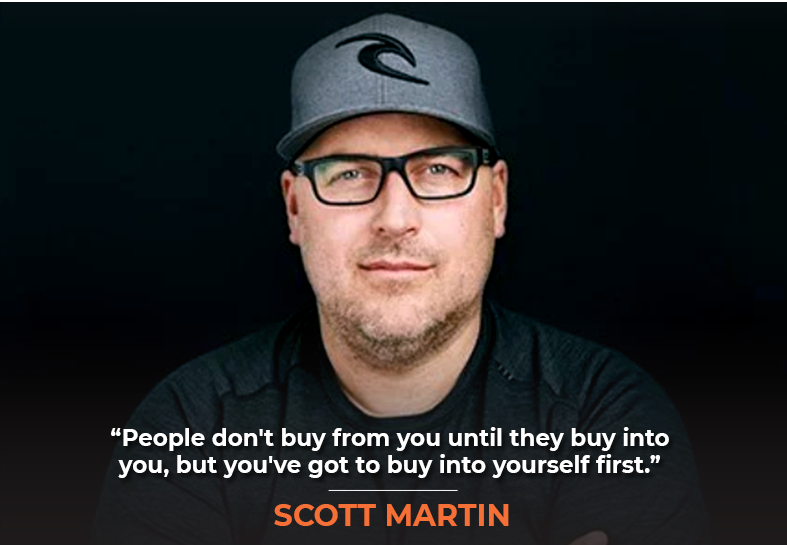
See, meaning comes from two sides. Everybody thinks they’re always trying to create meaning externally. There’s internal and external meaning, internally to culture. I think that a lot of people don’t understand that marketing begins with culture internally. If you’re not buying into your own company, that’s where buying comes in.People don’t buy from you until they buy into you, but you’ve got to buy into yourself first. So to me, it’s like having meaning. Like going, that meant something to me for him. That creates a different energy in how he shows up, even with just that color.
Nobody knows that, but I believe there’s an energetic sort of essence that you can have. Another is like creating what the origin story of the ingredients or the process or what that is is. That creates meaning because the origin of how things are sometimes adds a different weight to what we’re purchasing, right? You know, like, that’s why you think Michelin-star chefs go. This reminds me of my grandma when I lived in Italy, and she made meatballs, and you’re like, oh my gosh, I get the taste. You’re transcending generational food, flavor and recipe for me, like. You know what I mean? It creates this feeling. Does that make sense?
Like, to me, it’s like when you think of a step, as an example, they’re trying to when they show up, they don’t go. Here’s your cheese and and, and, you know, dates or whatever. They’re going. These dates were brought across the desert by camel, and this, you know, this goat came down the mountain, and so we had to ship it in. Like we’re romancing that because the origin matters and that creates meaning and tells a story-the story of how we interact with it, what we do with the brand, what it means to us, and our identity.
Identity matters because when there’s meaning, when you buy something, and it doesn’t have a feeling that someone gives you, like, you know, how I was in Hawaii versus someone that handcrafted something that went. I got this made for you personally, and it’s a gift from you. The difference is that there was intention in this human effort. I wrote this article called “Human Effort is a New New Value in Business.” It kind of went away because when something was handcrafted, it felt it was, in some ways, cheap, or it was, you know what I mean. Like, the quality was different. I believe when they see the essence of human effort- meaning I wrote that book and took four years- it is different than if I said it took me four minutes.

Right.
I will value something more. So it’s like it goes back to this essence of meaning. I believe effort is another one. So there’s a new book out by Joe Pine. Do you know Joe Pine by chance? If you’ve interviewed him, if you didn’t introduce yourself, you should get him on his. He wrote a new book called The Transformation Economy. It’s totally this incredible category that I believe is happening, which we all do- you and I both do that transformation. Anyways, he talks about this. The time continuum is like one is time spent, time no, sorry, time wasted. See, when you’re dealing with your customer experience or your brand, this is another way of creating meaning. Is it time wasted? Is it time spent? Well spent or well invested? Totally different uses of time. You know, if you think, if you’re in line in Disneyland, you don’t want that to be. You want to get into Disneyland as quickly as possible. That’s time. It’s time wasted.
But once you’re in Disneyland, you want time to stand still. Playing with time can create a different level of meaning, in my opinion, because so many people think fast is better. There’s a great book out by Robert Rose talking about the race to the bottom when everybody’s just going for speed. That maybe slowing down is a new marketing innovation, you know. Well, what does that mean? It means it’s meaningful. If I just try to rush you out the door, going, “hey, thank you,” like a restaurant that talks to you quickly and says, “here’s your receipt,” and you sit you down, versus “hey, can I get you anything else?” That feeling of not rushing can create meaning. I believe this game of time, feeling, intention, source, ingredients, process and story creates a different brand identity that connects with people on a level that identifies with them. I believe this is the new competitive market space.
If it’s not meaningful to you, it will not be meaningful to them.
It’s great. That’s great. Yeah, we’re very aligned on all this, and it goes back to what we were saying earlier about the words matter, and the words convey intention. And if you are unintentional or flippant or just unconscious about the words that you use, you create a reality that you probably don’t want. For example, I hear people all the time say, “Time flies.” You know, they’ll say it in response to, like, I’ll say that my son is, you know, such and such years old, and they’re like, “Whoa, time flies.” I don’t ever say that. I don’t want time to fly. I want it to be savored, and I know that my words are powerful. And if I believe it flies, then time is going to fly. But if I believe it, it is malleable. That it’s an illusion that I can be in the present moment for as long as I want. In fact, that’s really all we have: the present moment. Everything else is a dream or fiction. That’s, you know, it’s essentially a self-fulfilling prophecy.
That whole quote you just gave. You should keep that clip because your background makes you look like a time traveler. Like I’m looking at your little telescope and your. It’s like the ultimate perfect clip for talking about time. You know, words matter, and to me, I couldn’t agree more. The new book I’m writing about brand coherence is about brands that can actually detect coherence across the brand when the culture is so forward in the brand. Where it used to be the creative director or copywriter created something with structure that was the brand bible. Like, it doesn’t have rules. It’s all about rules. And then Brand Guide was.com, which changed from just being a copywriter and creative director. It was more like an agency model, because you had to have an agency do digital stuff. It had to be flexible, but I had guidelines.
But what do you do now when there are no guidelines? When you have the CEO verbalizing on YouTube, you’ve got your engineers doing TikToks, and you’ve got these distributed conversations. Words matter. And so, how do you actually tie it together to create something coherent across the board? Well, I think it’s like cultural language, and feeling is what it’s going to come down to. And so, I call it zombie language when you’re kind of going to that go, “hey, have a good day.” Like, people do it unconsciously. You have to be aware of the pattern and the power of words. Like I don’t know if you’ve seen that that study, the Japanese study when they talk to plants and they go, “I love you, I love you, love you, I hate you, hate you, hate you, and they do nothing, and the the plant that they say I love you grows crazy, and the other one you know dies and does nothing, right?
Yeah, those are related to the experiments from Dr. Emoto with crystallized water, right?
Yeah, absolutely. There are many different examples. I know people I know have actually kind of tried that themselves. Like Billy Beck told me, he tried that himself, and it was true. It’s like it’s the truth. So you know the words matter, and I think that in culture, you know, one thing that’s the extension of your brand is culture. Like, oh, that used to be and this one this is actually one piece I disagree with Tony Robbins on, but I don’t think it’s necessarily wrong. I think it was just different at the time, as Peter Drucker‘s example goes. There are only two levers in business: marketing and innovation. I disagree. It’s culture. There are three. The third lever. Because back then it was always top down, but I think now culture is actually at the forefront; the engineers are almost as much salespeople as the CEO. It’s all different now.
So how do you piece it all together? And to me, it’s like language. Like I think of a coffee shop, and then going, “Hey, have a good day. If you can get the training where it’s going, be human. Ask a question. Don’t use this zombie language. Have our own language, our own way of introducing ourselves. I think this is where you can change the game because it’s about human interaction, and it sets the stage for creating more meaningful conversations. If I just said something to ask you a question like, “Hey, what are you excited about doing today?” versus “Hey, good morning, ” it’s a very different conversation.
I’m not sure what his name is Sal. He writes for the New Yorker. He’s a comedian and writer for Saturday Night Live. I just saw him speaking. I can’t remember his name right now. I’ll forgive myself. He’ll come to me when we’re talking, when we kind of go. But he wrote this New York New Yorker article that became one of the biggest, most award-winning ones. And he talks about how he gets the stories that win all these awards. What he does is he doesn’t use zombie language. He asks really weird, provocative questions. This one time, he goes. He’s in an Uber, and he goes, “When was the last time you touched a monkey? And the person wheels around, goes, “What? How did you know? I just smelled it on me.” And it ends up telling the story that they went back to this lab and had this whole elaborate experience about looking and hanging out with monkeys, and he wrote the article about it.
It's about being authentically yourself to be remarkable. Share on XAnd this is, and so I saw him on stage. He’s a comedian that was also doing a tour, and he’s describing his work. He says that he likes his partner and hates going out with him because he’ll stand in line and ask really weird, odd questions. Because that becomes all the fodder for this incredible storytelling. And I always thought that was really a powerful way. From a cultural standpoint, can we, as in business, in sales, and as a brand, ask different questions, be truly curious, and ask things that can create an interaction that’s so memorable? It goes back to meaning. It’s like this is a meaningful conversation within a brand. It makes me feel like whenever I go to this place, these guys ask really different questions. I get these; those become memorable forever.
Is it Simon Rich you’re thinking of?
No. Oh,
No, Simon’s. I think his last name starts with S. David Sedaris. Yeah, yeah. Really dry humor. Funny. Oh my gosh, that guy is so funny. Yeah, David Sedaris is really funny. Thank you, yeah. See, that article in The New Yorker is a very famous one. So that’s the backstory of that origin of that story, and it’s like, and that’s that’s his DNA of how he goes around. In fact, he does this one thing where he goes, he’s, and he lives in a small town, and one day the word he was he just he just was. He’s like picking up the garbage along the street or whatever. And he was in a public space, and someone thought he was, like, maybe slow, or you know had a mental issue or whatever. And they went, and they talked to him, and he didn’t correct them. And now the town thinks he has a lie, so that he finds himself in these situations where they think he hasn’t corrected him, but he’s in conversations. He’s seeing how people act because they’re disarmed because they think this about him, and he’s got a whole other storytelling around this. And it’s just, when I tell him, and I don’t know if it’s written about him, but I know he spoke about him on the stage. It made me cry because it’s just so funny how he’s showing up differently. And I don’t know why I got off on that little tangent, but I think it’s funny.
That’s cool. So how do you apply these kinds of disarming techniques in your marketing and your relationship building, like what you were just describing- not correcting people or whatever? Like, what tactics work for you?
So, what tactics do you personally use? You mean, or for clients, or what?
To disarm, build rapport and relatedness and yeah, just help people feel better about themselves. Like, what are your go-to techniques?
Giving is probably the most important thing to get momentum in my mind.
Well, to me, it’s like that. As you know in my book, I go give as I get. I just give. So, for example, I literally just did this yesterday. I just posted a note and said, “Hey, give me your hardest, you know, marketing or branding problem. Hop on a call, you know, no obligation. There’s no- it’s not sales. It’s free. Like, just come in, and I’ll happily help you.” That’s it. It’s like, for me, what’s the intention? I’m like, “Well, hopefully I can help them.” It might demonstrate my mastery. They might ask questions about what I could do for them. Sure, but in the end, they’re going to leave with value, and I demonstrated that, and I feel good about it. I just know that the more I give, the laws of the universe come back.
And here’s an example of that: I did that exact thing where I gave. Someone called me. She was from Scandinavia. She was running a political campaign. They ran out of money, and she listened to my podcast. She goes, “I know you really. I don’t have any money. I just want to know if you could even help me. I just need to come up with an idea to help this person win the mayor’s race. I think it was for a town in Stockholm or something, or in Sweden. Anyways, I gave her advice. I didn’t remember her, but I got a call when I was literally at an event, going, “Hey, Tulsi Gabbard‘s running for president of the United States in the Democratic Party. She just got deplatformed. We need some unconventional thinking. Would you be interested in flying to New Hampshire and meeting her and helping us be on the team for?” And I’m like, who is she? I’m from Canada. I don’t even know who that is,” you know.
And I did my research, and I ended up flying and doing a program with her. And to me, it was like that was an example of a give that just you don’t know where and how it goes. So just trust. And I believe for any brand, if you start with the give, that’s the intentional give. What are we giving? Not what we are getting. What are we? How are we getting customers? Don Peppers started to grow, keep getting customers, grow customers, keep customers. I used that for decades, and I just changed it from build, give, grow, transform as my tenets, and so the give is probably the most important thing to get momentum in my mind.
Yeah, and sometimes people aren’t really that keen on receiving; maybe they’ve got a block, or maybe it’s uncomfortable for their ego. Like, I try to have cash on me so I can give it to people who need it. Just recently, there was a lady who was feeding cats, and she could have been homeless, but I wasn’t sure. And rather than insult her by just giving her money, when I gave her the money, I said, “This is for the cats,” so she could buy more cat food for them, and she took that happily. And it wasn’t like, “You look homeless; you probably are, so here’s some money.” No, it was, “Here’s a gift for the cats, so they can buy more food for them.“
The more I give, the laws of the universe come back. Share on XWell, I think that right there just demonstrates your emotional intelligence and reading the situation, and that to me and reading the situation, I don’t think the average person may have thought to say that they might have just spent some money here, and I think you framed it in a really beautiful way.
But I think we’re all capable of that. I think we have this radio antenna that tells us what we should be doing and what we should be saying, and we might tune that out because of our ego, or we just don’t believe in it. But that little intuitive sense that comes in says, “Hey, go up to this person and offer them a hand, or offer the money, or say this to this person. That’s not a universal, God-given birthright we have. This intuitive sense, I think. You know, I’ve heard many people say it’s like that that all humans have this ability. It’s like a psychic ability that God gives us. So, what’s your take on that?
I got a really interesting take on it. In fact, this is a shift I’ve made in how I approach branding with founders. I used to be the hero. I used to think, “I’m going to come and save you.” I’m going to come with these ideas. You brand me. That’s what you get, and sure, I bring the creative juice as well. I’ve got this experience and different things for sure. But what I’ve shifted in, and it was from basically when I first experienced Tony Robbins’ Date with Destiny, the transformational framework where you really can realign your values. I was like, “How can I apply that to branding?” And I really realized that the DNA of it started with one of the stories where he tried to transform somebody who was smoking, and this person came back after 13 years of quitting smoking, going, “You didn’t program me right, and he’s like, “What? You didn’t quit? I got you for 13 years, and you’re gonna complain.”
And anyways, he went through this whole process and realized that in the end, he had to make the decision. To quit smoking, not Tony somehow influencing that, and that shifted the entire way that he does transformational design. That landed with me going, wait a minute, I’ve been doing branding wrong. And so what I realized is, if the founders really know at the essence in their gut, if I could get them to tap into it, some things that actually will differentiate their brand and will be more true to them, and they’ll be more connected to it. So I facilitate the brand. I don’t create the brand. They create it. We co-create a degree. But I really feel like I’m a facilitator of getting it out of them. And what happens is they themselves feel a deeper connection with their brand. They start using their intelligence because, like, I mean, I did a podcast with Drew Singh, and he goes to great lengths about talking about gut intelligence.
Yep, I’ve interviewed him too, but on my other show, he’s a great guy.
Yeah, he’s super funny. You know, I did it. I’ve got a course I’m launching with him called the Mindful Marketer. But that gut intelligence, yeah. So it was like, what happens? Our podcast did so well. We ended up talking, and I went crazy. Went even more than Dave Navarro from the Chili Peppers. It was my highest-downloaded episode because we just riffed on marketing and branding and the laws of the universe, nature, and ancient wisdom. So we ended up agreeing that we spent 25 hours over a year and a half having long conversations about this exact topic, and we turned it into a course, and we’re launching in September. It’s called the Mindful Marketer, but he talks at length in that course about gut intelligence and why it matters, and it is like a lost art. I think in branding, marketing, and business, people don’t think of that. They think it’s got to be logical.
What’s the competitive landscape? It’s called outside in. I want to know what the market is doing out here. I’m going to try to fit my way into it. Sure, that’s traditionally what most people do. But what if you flipped it? What if it was inside out? What am I creating that will find the market I need? It’s a different level of confidence and certainty that you want to have. All the brave brands did that, and that’s what I believe tapping into the founders is going to do. This is because I know this is my business. This is what I do.
I facilitate the brand. I don’t create the brand. They create it.
People who are actually that confident will facilitate and create a brave brand that differentiates in the marketplace because they decide to do something no one has really seen, because they trust their gut. The only way to do it is not an agency going, “Hey, we think there’s a market space because that’s me using logic to convince you, versus there’s no evidence of this, but I believe it to be true, and I think that more brands that do that are unbelievably using this intuition and I think a new level of meaning in their brand.
You know, it reminds me of what, for some listeners, may seem really out there in woo-woo. But Dr. Hotchner, whom I interviewed on my other podcast, Get Yourself Optimized, will hold the patient’s feet and tune in. He will get guidance from the Holy Spirit on what issues are in the person’s biology and biochemistry and so forth. Then he’ll tune in to get like what the amount of the different vitamins and supplements that should be prescribed, and he’s allowing that person, that patient’s higher intelligence and the you know the the source of all the you know he’s he’s calling it the Holy Spirit, but you know that infinite intelligence to flow in and and guide him and the patient on what the best prescriptions should be for for supplementation feels like something maybe you’re doing with your your with your client, but not not by holding their feet.
Yeah, I don’t know if I’m tapping into the Holy Spirit and doing that. I think it’s more about them holding space where they can really tap into, you know, what they know about their business, the market, the pieces, and they can’t quite explain or verbalize it. Still, they’re kind of going with their gut, and I help put it together so it can form an actual plan or strategy. Versus me going, I’m tapping into something bigger, and I’m kind of co-creating that with them. Maybe I do to a degree, but I feel like it’s more. It’s not quite the same. You know, I’m not going. Okay, I kind of feel that we should do this. Though I don’t really. That’s not really how I operate. You know what I mean? Like, it’s like going, “Okay, green. Why? Okay, tell me more. Okay, so oh, what does that represent to you? How does that feel? What’s the feeling that customers are going to have with that color?”
So I’m actually just being deeply curious and trying to connect the dots for coherence, because that’s what I’m observing. I’m an observer looking at what will make it all coherent. What is the theme and throughline? Theme is the feeling that kind of pervasively sits in that presentation layer. The throughline is the undercurrent of the brand’s meaning and identity, and making sure it’s coherent across all touchpoints. That’s kind of what I’m doing because now it’s like I view brand coherence like the future brand strategist is DJ, and as your brand is being activated, sometimes you have to read the room. You got to go. You know what? We’re losing the room.

Our beats got to change the beats here, right? Like, the engineers are going off on a tangent. It’s like tying it all together, because we’re getting fractured. Does not create trust. If someone has got different opinions, they’re zigzaggy. They’re all over the place. You don’t trust them. But someone that’s solid state- they say it in different ways, and it seems to really be connected with what they’re saying and doing. It creates a level of trust. We’re going to buy into these brands where we can trust that the culture, when they all seem somewhat coherent, even though they’re saying it in different voices and ways, there to me is a level of trust that this culture is really solid and it’s connected. I believe that’s a superpower’s competitive advantage because it’s really hard to do.
Cool. Well, I know we’re about out of time here, so if you wanted to leave our listener or viewer with one last wisdom nugget, maybe even something that they could immediately apply as soon as they turn off this episode, what would it be?
It would be focus on the delivery. The last principle of my book is build, give, grow, and transform. Think of Uber. You know, the first time you took an Uber, you probably told somebody going, “I can’t believe that there’s this thing called an Uber. It used to be a taxi, and they explained that you got an app, and you could follow it, and you don’t debate; you have to talk to him. Like there’s all these things, right? What it did was transform whatever I thought it could be. I would argue to anyone listening that if you really want to do something powerful where you can grow on its own, start with the end in mind: the delivery. Can you transform how cookies are made?
If you change them, that’s where some word of mouth lives.
How your plumbing is: if you do your invoicing with your plumbing, like it could be micro transformations to the whole brand and position transformations by transforming it; that’s how people will share your brand because when you transform somebody, it’s you, you, it’s not like there’s a call move change transforming if you move them you just move product it’s very transactional. Still, if you change them, that’s where some word of mouth lives. I went from, you know, a PC to an Apple. But when you transform them, they’ll be compelled. They’re going to be like Jehovah’s Witnesses for you. So if you really think about how I can transform the experience and work your way backward, I think you’ll land in a great place because brands that do transformational design or in some way just transform like a Michelin star dish. I watched this thing on the chef table, and it transformed what this dish could be. And you’re like, you saw the people’s faces. You know they’re going to tell everyone else. And for me, that brings me back to how we started this: you can market without marketing. Just transform the experience.
Yeah, awesome, Scott. This was a pleasure, and yeah, you’re an inspiration. So, if our listener wants to potentially work with you, if they want to learn more, follow your social posts, and listen to your podcast, all that sort of stuff, where should we send them?
Sure, I mean, I’m on LinkedIn. It’s probably where I love to meet people most. Just Scott A. Martin, and put Scott Martin and Groundswell together, and you’ll hit all my different places. But I’d offer you this: if you want free access to my book, go to groundswellfreechapter.com to get your free 50 pages, and all my links are there.
Awesome, thank you, Scott, and thank you, listener. Go out there and make it a great world. We’ll catch you in the next episode. I’m your host Stephan Spencer signing off.
Important Links
Connect with Scott Martin
Books
Business/Organization
People
Previous Marketing Speak Episodes
Previous Get Yourself Optimized Episodes
YouTube Videos
Your Checklist of Actions to Take
- Shift your question from why people buy to why people care. Attention-grabbing tactics are a race to the bottom, so start instead by asking what makes your offering genuinely meaningful. If it is not meaningful to you first, it will never be meaningful to your customer.
- Lead with the give, not the get. Change the language in your boardroom from getting customers to giving them something of value, whether that is a free call, real advice, or a genuine invitation. Momentum tends to follow the give, often from directions you could never have predicted.
- Build meaning from the inside out. People do not buy from you until they buy into you, and you have to buy into yourself first. Marketing begins with your internal culture, so make sure your own team believes in the brand before you ask the market to.
- Facilitate the brand out of the founder rather than imposing it. Stop playing the hero who swoops in with the answer. Ask deeply curious questions, get founders to tap into what they already know in their gut, and help them co-create a brand they feel genuinely connected to.
- Trust the inside-out approach over outside-in. Instead of studying the competitive landscape and squeezing yourself into it, ask what you can create that will find the market you need. Brave brands differentiate because their founders trust their gut and build something no one has seen.
- Make human effort and origin visible. The story of how something was sourced, made, or earned adds weight to what people buy. Romance the process and the effort, because a thing that took four years carries different value than one that took four minutes.
- Play with time to create meaning. Fast is not always better. Deciding when to slow down, when to linger, and when not to rush someone out the door can turn a transaction into an experience worth remembering.
- Replace zombie language with real curiosity. Drop the unconscious “have a good day” scripts and ask weird, provocative, human questions instead. Memorable conversations become the fodder for stories people repeat, and that word of mouth is one of your most sustainable assets.
- Design for transformation and start with the delivery. Work backward from how you want to change someone, not just move product. When you transform an experience, people feel compelled to tell everyone, which is where real word of mouth lives.
- Connect with Scott Martin to go deeper on soulful, sustainable growth. Find him on LinkedIn under Scott A. Martin, and grab a free 50-page chapter of his book at groundswellfreechapter.com.

About the Host
STEPHAN SPENCER
Since coming into his own power and having a life-changing spiritual awakening, Stephan is on a mission. He is devoted to curiosity, reason, wonder, and most importantly, a connection with God and the unseen world. He has one agenda: revealing light in everything he does. A self-proclaimed geek who went on to pioneer the world of SEO and make a name for himself in the top echelons of marketing circles, Stephan’s journey has taken him from one of career ambition to soul searching and spiritual awakening.
Stephan has created and sold businesses, gone on spiritual quests, and explored the world with Tony Robbins as a part of Tony’s “Platinum Partnership.” He went through a radical personal transformation – from an introverted outlier to a leader in business and personal development.

About the Guest
Scott Martin
Scott Martin, founder of Groundswell Origins, has spent 25 years working in all types of marketing as both an agency owner and strategist to national brands. He’s built a reputation for striking a balance between leading-edge marketing innovation and traditional approaches to delivering sensible, informed, forward-thinking decisions. Author of Groundswell: The Unseen Wave of Business Growth (2023), his work pioneers a new paradigm for sustainable growth in business. As the host of The Groundswell Origins Podcast, Scott interviews the industry’s top minds to learn how entrepreneurs and marketers can build sustainable programs that positively impact the world. As a community builder, Scott also develops content and followings around his passions: surfing, surf art, and heliskiing.






Leave a Reply