



Search is still search—until it isn’t. The moment answers show up without the click, the job shifts from “rank for keywords” to “earn the mention.”
My guest on today’s show is Patrick Stox, Product Advisor, Technical SEO, and Brand Ambassador at Ahrefs. Based in Raleigh, North Carolina, Patrick lives and breathes SEO, with a particular fascination for how systems really work—and the strange, edge-case problems most people never notice.
He contributed to the Ahrefs SEO Book for Beginners, served as Technical Review Editor for my book The Art of SEO (4th edition), and was lead author for the SEO chapter of the 2021 Web Almanac.
In our conversation, we break down what AI Overviews and AI-mode search are doing to click-through rates, and why “information gain” is the only real moat. We talk about how Ahrefs is building toward real-time site auditing and push-button fixes with Edge SEO, plus the unsexy technical moves that protect performance. Patrick also explains why data studies and comparison pages are winning right now, how Brand Radar actually works, and what it means to manage your reputation across the whole internet—not just your website.
If you want a smarter, more defensible search strategy for 2026, this episode is a great place to start. So, without any further ado, on with the show!
In This Episode
- [03:35] – Patrick Stox explains his interest in automation and machine learning, which led him to seek opportunities to help more people through broader applications of these technologies.
- [04:16] – Patrick highlights the efficiency of edge SEO, which allows for the addition or removal of content, tags, and redirects without manual intervention.
- [07:25] – Patrick discusses the real-time site audit feature in Ahrefs, which continuously monitors issues and provides notifications for fixes.
- [09:34] – Patrick advises against overdoing FAQs and other repetitive content, as it may lead to penalties from AI search systems.
- [15:15] – Patrick mentions the creation of Ahrefs Web Analytics, a free analytics product designed to replace Google Analytics 4.
- [28:08] – Patrick recommends using Ahrefs’ Best Buy Links report to prioritize redirects based on the number of links and referring domains.
- [34:25] – Patrick addresses the criticism about the high cost of Brand Radar, explaining the different versions available and their pricing.
Patrick, it’s so great to have you back on the show.
Ah, thanks for having me back, man. It has been a while. If you were still at IBM, I would have had to have been six years ago.
Then, yep, just about that crazy, huh? I’m not going to say that time flies, because it only flies if you believe it flies. If you think that it is actually going slower, then that’s your reality. You program your own holodeck matrix with your own beliefs. I believe that, at least, let’s talk a bit about what caused you to make that jump from working in this BMF at IBM to working at Ahrefs, which is a fabulous SEO toolset. I’m a big fan. I’m curious what the impetus was for this move.
A lot of it was just that I was already working on automation and machine learning, trying to automate my job and others. And I was like, “Why am I doing that for one company when I could do this and have everyone kind of doing these things, like try and make everyone’s lives a little easier?”
Right? So you could scale globally with Ahrefs. All right, cool. And what are your biggest accomplishments so far at Ahrefs? What have you built or deployed that’s super awesome?
I think what I like about my dream project was our site audit, like, we made it more real-time, like, there’s an always-on audit, so you can have it running constantly, notifying you of issues. And then, on top of that, we sprinkled edge SEO in, so we can automatically fix a lot of things. So it’s like, push-button fixes. You get a notification. It’s like, “Oh, you messed up this canonical tag, push a button, change back.” Done.
Awesome. So, for somebody who’s not super technical, super familiar with something like edge SEO, what would that be for them? Can you explain that? Not like ELI5, but at least for somebody who’s not necessarily on the technical side of things.
Yeah, it’s basically JavaScript or serverless technology, and you can change everything on your website. Like you could add content, remove content, add all tags, canonicals, redirects, any of this stuff. You can do it before it’s ever served to a user or to a bot. So basically, it’s kind of a technology that lets you overwrite what’s in your CMS or anything in your infrastructure and say, like, “do this for me.” And it’s just done. You don’t have to log into WordPress. You don’t have to go, like, you want to add a bunch of internal links, you click, yes, yes, yes, yes. And it goes and does it. You don’t have to log into WordPress, find where it is in the text, highlight, add the link, etc.
And is that built into the Ahrefs tool set?
It is.
Super cool. I don’t know if you knew this, but back in the day, can you believe it? In 2003, I invented a middleware layer, like a proxy-based SEO version.
Yep, right. I remember, yeah.
It was called GravityStream. I was just brainstorming names, and that domain was available, so I took it and ended up selling it to Covario back in 2010. That was quite a successful product because we were charging on a cost-per-click basis. People were getting, let’s say, 60 cents a click or whatever, for paid search, and we were offering organic at 15 cents a click, and they didn’t have to spend millions of dollars and 18 months on a major rebuild of their site, or having to bring in all these expensive consultants. So it was a win-win.
Yeah, that’s amazing. And yeah, like ours, we took it. You know, you’ve probably used Content King, but like more real-time, always crawling, finding issues, the alerting, all the controls for that. And then we also have index now integration, where it’s not like a lot of the tools have an index now integration, where they’re sending the data to index now, but we’re actually getting the data from index now.
Because we also have a search engine, yep.com, and that’s a conclusion like, there’s Bing and dozens of other search engines involved. And basically, it’s like a modern-day version of site maps. Something new is published, something has changed, something is redirected, like it notifies the system, and basically, all the search engines get notified. It can go crawl and update their info, or, in our case, our site audit can do that.
Yeah, cool. So, IndexNow, is Google involved with that? Because I see on the homepage of indexnow.org, Bing, Microsoft. Bing has mentioned Yandex and a couple of other small engines, but there’s no mention of Google there.
Simple, structured, straight-to-the-point content is what performs best in AI search.
Not yet. There are always talks with them about adopting. I kind of thought, like with all the antitrust stuff, they might be forced into it a bit. I guess we’ll see.
Yeah, so if Google’s not participating, is it really worth the effort? Is the juice worth the squeeze? What do you think?
I mean, yeah, a lot of people ignore the other search engines. I think we gave them a really cool use case with the Ahrefs site auditor, like people who are in SEO and they care, like now you basically get real-time updates. It’s pretty much that if you change something, it gets submitted. There we go, crawl it. If something broke, we see it. We send you an alert, and with patches, you can click a button and fix it. It’s a pretty great system.
Yeah, awesome. So, what are your favorite Ahrefs tools we haven’t already discussed, and why?
I honestly think our content, of our content helper, is super underutilized by people. We have really cool things, like we do chunking there, with topics, and a score for each topic based on the chunks. And it even highlights and tells you, like, this is the relevant chunky section, the same things that search engines would be pulling out. Literally, it’s yup tech in that.
So it’s, you know, when someone searches for something, it’s not like I’m pulling the entire page anymore. You pull a section, but it’s not even really a section; it’s the relevant content, which might be some of it up here, some of it down here in the article, some of it down here. And that’s how modern chunking works. So, like, we highlight all that, and we’re telling you, for these topics or search terms, here are the relevant sections. Here’s what you need to change if you want to improve your scoring, be more relevant, and show higher, that kind of stuff. So super important for all the AI search stuff, and we kind of built that out well before any of this was really considered, I think, by many people in SEO.
Yeah, I know some best practices for AEO content writing: start with a TLDR (too long; didn’t read) or key highlights, key considerations, and a bullet list at the beginning of the article. What other best practices are there for writing content that performs well in answer engines and LLMs?
Yeah. Just keep it simple, no flowery language, like straight to the point. Simplifying structured headings is always a good practice, but I mean, not that different than SEO. I think the big change is really from traditional SEO, and like, people have been doing this for years anyway, but the biggest change, I think, is just focusing more on a certain thing. Like, if you were writing for featured snippets, you focus on that, like, a sentence or two sentences, three sentences, or a bulleted list kind of thing. Right? Now it’s like that, except different parts of your content can all have that kind of focus.
We built an entire analytics product to replace GA4, and over 130,000 people are already using it.
So, like, you really have to look and say, “What am I saying here?” These are things I search for, can pull out, and then cite. So you really have to, like, focus on specific sections and cut out just all the cross. I think it’s getting overdone, too. Lots of people were like, “Let me just make an FAQ, and I’ll put 50 or 100 FAQs.” That’s never gonna work. I mean, okay, it sort of works. Now, don’t do it. It’s gonna be an obvious thing to be penalized, like Google. That worked for Google for a while, and they got rid of it. It’s gonna be the same there, I think, like with the AI search, though it’s, it’s more focused on the type of content than necessarily what’s in your content, like the information, of course, yeah, I want to be there, but like, that’s not what’s driving value to me as a company anymore.
Ahrefs’ blog strategy was basically like, “let’s get lots of people at the top of the funnel and then kind of collapse that funnel so they come in looking for information.” And we’re like, “Okay, like, we’re here, this is how we solve this in the tool we show it.” We’re like, problem-aware and solution-aware immediately. And that’s working less well, because now everyone just likes to follow up with more questions to the AI search. And so now, a lot of our focus is on things like comparison pages or statistical information that no one else has. We ran a lot of data studies on our blog last year, and Ryan Law posted something on our content lead’s LinkedIn. I think it was five of our top six, all data studies.
So tell me, what are you up to in terms of like you’re wearing a lot of hats over there at Ahrefs? What are your job functions? What kind of projects are you working on? What’s interesting that you can share publicly?
Yeah. Well, I think the data studies and that kind of thing are more obvious to most people. But I also work on, you know, the technical SEO for ahrefs.com programmatic projects. There’s a bunch of, like, experimental websites, and then the product side is just a lot of different things. Last year was kind of fun. We had a bunch of new stuff, with, obviously, the AI search brand radar. But even analytics, like we built an entire analytics product to kind of replace GA4. So Ahrefs Web Analytics is free up to, I forget, a million events a month, something like that, and had huge adoption. I think we launched it actually in December 2024, but the last numbers I saw were months ago. It’s like 130-140,000 people using it already, which is pretty amazing.
That’s cool. And you were involved in the creation of that?
Yeah, yeah. It’s mostly like, I don’t do any development, but new feature ideation, like what the market needs. We did some really cool stuff, or stuff that should be basic, should be in every system. In like GA4, you got to go in and create a filter for all the AI search and blah, blah, blah. We just, like, here’s the AI search traffic. Click that button, and it’s done easily. So it’s a lot of, like, workflow stuff, a lot of simplifying things, just making things easy for people, having the visualizations people need, that kind of thing.
So what’s a feature that’s not in GA, that maybe isn’t hard or easy to find in GA, but that’s non-existent?
Well, again, like that, you’d have to do what I talked about with the AI search. You’d have to set up a custom segment, filter, or whatever for it. We did a lot of that kind of stuff. There’s basically a thing that shows you all your broken pages. We got to look at the title tags, and we’re like, okay, that’s obviously a broken page.
Empower your employees. Many companies have policies against brand representation, and it's the wrong approach in this new era. Share on XSo it’s like, here are pages that are four or four you can even kind of get to, like, hallucinated pages from AI search that way, basically, pages from AI that are broken down. And that’s kind of cool, because, like, it’s a pretty easy thing. If you want to do something for AI, search, go, or redirect traffic. In some cases, we had 1000s of traffic going to pages on Ahrefs that didn’t actually exist. So what do we do? Redirect that to the right page? Easy.
Cool. You mentioned experimental websites. What sort of experimental websites do you talk about?
I think I could talk about some of them, because we linked to some of them on, like, I think a lot of people don’t know this, but we own wordcount.com for one that’s linked to in the Ahrefs footer. From there, there are some other websites linked, but we built like 300 websites or something last year, which were mostly tool websites, and just to kind of see: are these AI systems good enough to do it?
And it’s kind of a cool process: basically, it uses Ahrefs to determine, like, this is a niche. It’ll go and say, like, “okay, these are pages with traffic in the niche main competitors. These are the pages with traffic.” And then it’s like, “okay, this is the content that needs to be created,” and from there, it actually goes out to the website. And like, let’s say it’s a tool website, okay, these are the features that are there. These are the things they’re describing on the page. Like, this is how to use the tool that kind of thing, or some basic FAQs, and it was just go and create all that.

So this is something like, we’re kind of looking at bringing it more available to people, but at the same time, like, how can we do it without having people spam the web, or spam the web less with it? So we kind of like spamming the web, some to sell, like this probably isn’t a good idea. Some stuff may work. Some stuff works for a while and then falls off. But we want some kind of controls in that, too. So, like, my idea is to ingest any kind of help documentation and internal documents. We can have stuff like asking people questions, even set up one of these AI systems that, like, calls someone and asks these questions, gets their response, gets that internal knowledge, the knowledge from experts, I don’t know.
Like, we even have this thing in Slack that’s on, like, security, and it comes up, and it’s like, “hey, like, here’s some things, blah, blah, blah, we could do it for that.” All kinds of possibilities and ways to kind of use your own employees to get that knowledge that they may not typically share, because the people that are doing the job that are the experts, they’re not the ones that usually do the writing. It’s often a content creator who’s kind of copying what’s already out there. Well, guess what? This AI stuff is really good at copying what’s already out there.
The way that you’re going to differentiate yourself is to get that knowledge from the experts, and that means an expert has to review it, at least add their stuff. But that takes time. It’s a lot of times, it’s easier, a five-minute phone call or something, to be able to get that knowledge out. Or again, a lot of times, places have internal documentation. All this stuff is kind of already out there, and like, we just have to adjust it and then put it in the content.
Yeah, so you’re an expert, obviously SEO and AEO. What percentage of your time is spent reviewing content, teams, writings, analysis and so forth for accuracy and for all the really ninja ideas that probably are only in your head?

Yeah, like 2%, and that’s probably more than I think most companies.
That’s a problem. You need to replicate yourself somehow.
I mean, luckily, like, Ahrefs is great. Like, we have a ton of SEO experts. It’s kind of great that we have an SEO tool set, but we also have, like, real SEOs in-house who are creating our content. But yeah, I tend to review whether it’s technical, data-driven, or mostly ideation. I work with data scientists, and like, okay, let’s have this study. And like, hopefully someone else will write it up. I don’t really have time for that, but I want to make sure the info is right and that kind of thing before it goes out.
Yeah, so you mentioned you do technical SEO on the Ahrefs site. So, how many pages are on that site must be huge. And if that’s the case, are you doing any content pruning to get rid of obsolete information or things that might no longer be relevant, and kind of prune the tree?
Yeah, it’s not as big as you think. Probably, I think, about 4800 pages right now. Oh, that’s smaller than I thought. Yeah, yeah, we did have some programmatic projects, which is actually a problem we’re trying to solve right now. We’re trying to move that off the domain, but it’s like sticking to where Ahrefs is indexed.
So like, there’s this top websites project, and you probably saw this from like alexa.com back in the day, or Semrush, Similarweb they all have versions of this where it’s like, here’s a website traffic, blah, blah, blah ranked for people’s brands, basically. And that ended up like getting us hit by one of the core updates, which was not great and kind of impacted the blog. So we’re trying to move that off, but there were some issues with canonicalization. And, yeah, like, literally, we had, like, canonical setups, I maps, everything on the new domain, whatever reasons, one of the updates, as the canonicals disappeared.
Most migration problems come down to bad redirects and killing off good content.
So we fixed that. Wait a couple of months, and it still wasn’t doing it. So the other day, I had the team do two things. One, the link in our footer was still to, like, ahrefs.com/websites, I was like, let’s take that to Ahrefstop.com/websites and then on Ahrefstop.com because we plan to have, like, other programmatic projects there, we had a 302 on the homepage to the slash websites folder, and the only page indexed on Ahrefs top.com was actually the home page, so I think like, the indexation was being pulled back to the home page, which technically didn’t link to other pages, so the rest weren’t being indexed.
So we’re going to see if that, hopefully, fixes it all; if not, we’ll have to dive in more in a couple of weeks, and I don’t even have access to Google Search Console for that one. I probably need to get that and see what’s going on there.
Yeah, sounds like a headache. So one mistake I see folks make who aren’t super advanced in SEO is redirecting, let’s say, an old website to a new one for a rebrand or something like that. But they’ll redirect everything, including the sitemap and robots.txt files, which I think is a rookie mistake. It’s like ripping the rug out from under Google bot, saying, “Well, I would like you to discover all the 301 redirects that I’ve set up, but I’m going to take away the site maps file that has that map of all the 301 redirects, so you have to figure it out on your own. Oh, and I’m also going to take away the robots.txt file that has the site maps directive in there with the old site maps URL, which also doesn’t work anymore.” It’s just like, don’t do that.
Yeah. Better that. I see a lot of people blocking the old side of the robots that text, obviously, so they’re not going to crawl the redirects.
Yeah. What are some of the other mistakes that you see that are maybe not as obvious to a rookie SEO?

I mean, I’ve done a lot of migrations, probably more than any SEO of the planet, and it’s usually redirects. Is this a problem? Like, people just don’t do them, or you talked about content pruning. They’ll take an entire domain and turn it into a single page on the new website, killing any good content. Domain migrations are not that difficult. Make sure things redirect, don’t kill off all the stuff, and you’re probably going to be fine. But I know a lot of folks are like, “Oh, you’re going to see a 30-40% drop.” Usually not if you did it right. But it’s companies that want to change many things. They want to create new templates and designs. Designs kill off a bunch of content. They miss a lot of the redirects.
And also redesigns that remove much of the rich interlinking between pages on the site, so the flow of link equity within the site is no longer as efficient.
Yep, and I have this argument with people all the time, but the whole like sub domain, sub folder, if you internally linked as well as you did, when you change it to you know, a lot of people will take and say, let me go from a sub domain to a sub folder. It gets more integrated into the website.
The farther a redirect is from the original topic, the less Google will trust it.
And a lot of times, you’ll have menu links and that kind of thing that now brings this new section together. But really, they probably would have seen the same impact if they just did the internal linking to that subdomain and left it alone. I know a lot of the SEO industry doesn’t believe me on this, but again, I’ve done a lot of these migrations both ways, and typically, if you just interlink it, you’re going to see the same impact.
Another thing is that when you are redirecting from one page to another, it’s not as relevant. It’s not an exact duplicate of the content. The farther a field is from what it’s about, the less Google’s going to trust your redirect.
Yeah, and then you get the overly broad redirects where they just, like, redirect everything to a category page or the homepage and right, more than likely, like that is not actually passing any of the link equity, probably treated as a soft four or four mostly.
Yeah, yeah. So what are some of the day-to-day hygiene, you know, SEO hygiene type activities, speaking of things like soft 404s that our listener should be doing, or should be delegating to someone on their team who’s doing all the weeding sort of stuff, like soft 404s. Looking in Google Search Console for that sort of thing, and for just regular 404, is where they’re not just hallucinated, but actual previously existing pages that need to be redirected. What are some of the activities that you would recommend?
Yeah, there’s a lot of technical SEO stuff that doesn’t necessarily move the needle. Redirects. We do actually have a report in Ahrefs Best Buy Links. And you can filter to 404, so you can actually see an assortment of, like, the ones with the most links and the most referring domains. Go down that list, and you like, “Okay, this is where this should go. Redirect. It’s done.” It’s literally an ordered list of your most important redirects.
Can you differentiate for our listener, the Top Pages Report and the Best Buy Links report?
Yeah, Best Buy links are literally the most linked-to pages on your website. And again, there’s a filter for 404s, so these are pages with many links that are currently broken. And I even have, since you mentioned top pages, I have a whole redirect script, even that I shared on our blog many times and in presentations where basically you take the best buy links, 404 you take the top pages, it’ll go out to, like, archive.org for the the older pages that no longer exist, and pull the content and then match and it’ll crawl your current website. It’ll, like, match them up for you.
So, really, like, people hate doing redirects. A lot of people don’t know their site well enough to say, like, this is the current page of this. It takes time and effort. But like, really, with this, you just run this in an afternoon, come back, and it’s like, everything is matched up. It’s like, redirect this to this. Done.
If you lost access to your website, got hacked, or it was taken down, you can recover it with a tool like Warwick.
By the way, I try to make their command-line tools and just really easy ways to extract entire websites from archive.org and the Wayback Machine, like Warrick, for example. And they’ve been around for ages. So if you lost, let’s say, access to your website, and it got hacked or taken down, you can recover it. If it’s in archive.org and you can pull all that content over with a tool like Warwick.
Nice, yeah. In my case, I think this was done in Google Colab with Python, and it just pulls it. Yeah, they have a whole API so you can see the latest snapshots and everything, all the retrieve, all the content. It’s pretty great. Internal linking is super important. You know, even on the Ahrefs blog, like we read a study, I don’t even know this might have been two years ago now, but we were curious, you know, like, what if we add a related posts section to Ahrefs, we’re already known for SEO.
We do a really good job of internal linking to all previous posts and related content. And we’re like, what if we just do this thing that, as everyone does, and have these three, five related posts at the end of all the blogs? Will that help us? And the answer was yes. We still saw an uplift from literally just installing the YARP (Yet Another Related Posts) Plugin in WordPress. So as good as we do, it could always be better.
And then our website’s never finished. Yeah.
And then, like an inside auditor, we have a link opportunities report. Support. It’s a very simple methodology. We look at it like this: these are the top 10 things I think your page is ranking for, and in the content, you’re talking about these things but not linking to this page. Very simple methodology. I used to have this whole process with Screaming Frog. It would take 10-15 minutes to run through the link opportunities for a single page, a bunch of scraping, a bunch of processes, and now it’s like they’re just there. Just go in and, like, “Okay, if I go to this page, here are ones that I can add if I want to improve this page. Here are the like, 20 pages I could go to to add links to it.” So whatever you’re focused on, whatever you’re trying to improve. It’s pretty easy to see a list of Link opportunities.
Yeah, are you still using Screaming Frog? Or is everything that you could get from Screaming Frog available in Ahrefs?
Not everything is available, but I don’t really use Screaming Frog anymore. No, I’m sure they’re setting our site.
Even with great SEO, small improvements like adding related posts can still boost traffic.
It’s a great tool.
Honestly, I love that tool. We’re not gonna like fake user agents and that kind of thing, because then we’re kind of bad citizens of the web. Suppose we do that at our scale. There are things that you could do with Screaming Frog, you can’t do with Ahrefs, but there are also things you can do in Ahrefs you can’t do in Screaming Frog.
Yeah, yeah. Of course, of course. And there are tools out there that are very specialized in the areas of link building, what are some of the most advanced capabilities of Ahrefs in the link building arena, like link outreach and where you talked about link opportunities just a minute ago, versus some of the tools out there specifically designed for link builders, such as, let’s say, Pitchbox.
Yeah. Well, we don’t have the automation for outreach that they have, but we do. I don’t know if you saw this, but we launched like page categories, so we’re now tagging each page to say, “this is basically the niche that they’re in. This is what the page is about.” I think that’s super cool. We have things as the authors report, so you can see what the authors are linking to your content, or what the authors are linking to competitors, and then run it through one of the email finder tools and go, and I’ll reach out to them, be like, “okay, they link to folks in my niche.”
Like, I did a thing a while back where I just went and looked at, like, all the SEO websites, and it was like, “Okay, let’s look at the authors who are linking blah, blah, blah.” And I combined all that in a big spreadsheet. I basically ended up with an ordered list of authors who write about SEO, then link to websites in the niche. And it’s like, okay, there’s a list of people that we need to be connected to and potential link opportunities.
Page categories and authors’ reports let you identify link opportunities in your niche without doing manual research.
Yeah, cool. Are you outreaching? Is that part of your job, or do you just hand it over to different people?
No, I don’t do that, yeah.
And then you’re already stretched, yeah.
I mean, it’s sometimes like, if it’s a well-known person like you or something, we might reach out to Tim or me or Ryan or, you know, we have a lot of folks with a lot of connections and goodwill in the industry. We would be kind of stupid not to use that at times.
Sure, yeah, of course. Well, let’s talk a bit about brand radar. So there is some negative sentiment, let’s say, on LinkedIn and elsewhere about Brand Radar’s pricing because it is very expensive. But first of all, maybe, could you explain the value of brand radar, why it’s something worth paying for, and maybe address what makes Ahrefs Brand Radar better and worth it compared to everything else that is out there that’s close to the functionality.
All right? So I’m gonna correct one thing. It is not that expensive. In the original version of Brand Radar, we did things differently; everyone else launched like AI prompt trackers. It was kind of like rank tracking, if you think of it that way. Our initial version of Brand Radar was more like Site Explorer and Keywords Explorer. If you’re familiar with Ahrefs terminology, we have a big index of prompts that is more expensive. I mean, every one of these indexes was 10-15 million across the different systems. That is expensive, but we did launch a standalone prompt tracker. It actually starts at like 50 bucks a month.
I think it’s like two cents per query or something. It’s one of the cheapest ones on the market. It starts at like $50 and is pretty flexible. You choose your systems. You choose the update cadence, even though I find it kind of stupid. Maybe someone thinks you want to track daily, but other things, like weekly, are fine. Monthly is fine. You don’t need to pull this every day for all these things. You get 30 searches a day for something that someone searched one time in one system. Why? Some like a standalone version. It’s the prompt tracker that is cheap.
But if you’re looking at, let’s say, the site overview on your own website in Ahrefs, and you see that you have very few mentions in ChatGPT, Perplexity, etc. Actually, Perplexity is not one of the track systems or LLMs, is it not? I think about Gemini. What are the ones that are missing? Do you have Claude?
We’re not tracking Claude. We’re not tracking DeepSeek or Grok, but we do have Perplexity. Copilot, AI Mode, ChatGPT, Gemini. AI overviews.
If you have an entirely paid workforce of employees who are experts on your product, your service, and your company, they are best positioned to actually represent your company. Share on XYeah, so you have at least 10 million prompts that you’re tracking in each of those, and it adds up to several 100 million prompts and outputs you’re tracking continuously. So if I’m looking to see what those 10, 20, or 50, whatever, mentions are in, let’s say ChatGPT, and I click the number, I’m going to be prompted to enter my credit card and sign up for a $700 service or something, right?
Yeah. So that’s the big index one again, the standalone prop tracker, like you might not have even seen. We launched it because it was pretty recent, I think back in December, about a month ago. But, yeah, the bigger one, it’s a bigger index. It’s more expensive. It doesn’t work for smaller brands. I would say, like, unless you’re honestly, like, you’re saying, seeing the negative sentiment, we’re seeing lots of love. Big companies absolutely love this tool because, again, we are tracking web-scale, huge indexes of prompts. It’s more unbiased.
I believe that what you’re doing here is just seeing people whinging about the $700 price point.
Brand Radar isn’t just expensive AI tracking; it’s a web-scale tool that shows mentions across video, social media, and the web.
Yeah, I don’t even know what it might even be. More than that, we added stuff, like videos. So like, there’s YouTube videos, transcripts, TikTok, again. This is, we didn’t call it like AI prop tracking or whatever, because it’s a bigger initiative. We have stuff for Reddit now. There’s a lot more coming. So like, we’re basically looking at video, social media, all this type of stuff. Our entire web index is in there, so you can see brand mentions across the entire web.
Yeah, it’s very cool. Are you using it for Ahrefs? Are you making data-driven decisions based on Ahrefs brand radar data?
Yeah. One of the first things that we saw was that listicles are working really well. Like, why are we not doing more of that? Or we saw things like more websites being pulled, so we could go look and see, like, what websites are being cited? Make sure we’re there, outreach, that kind of thing. And I’m not doing the outreach, but we do have people in charge of relationships, partnerships, that kind of thing.
And in some cases, we can message them and be added. In other cases, we might have to do a sponsorship-type thing. But yeah, we wanted to make sure we were there. We also saw a comparison of content. So, Ahrefs versus Semrush, etc. We had one page, I think it was Ahrefs versus Semrush versus Moz. It did well. But like when you look at it, and you know I’m gonna call out some rush for a really good practice here.
I think it’s a little sketchy at the scale they’re doing it. But they had pages, not even on their own website, but on all the properties they acquired, Backlinko, traffic, think tank, exploding topics, etc., probably end up on Search Engine Land with comparison pages. That stuff is working well; we need to make sure we have content like that to compete. Otherwise, they’re controlling the narrative. They’re controlling what’s being said on the web.
Let’s talk about Reddit. So I know we’ve got just a few minutes left, but you are a moderator on a popular SEO subreddit, right?
Yeah, I don’t even know when, at least five, six years or more, yeah.

And how did that come about? And why do you keep doing it? Because there is a time commitment there. And you got, like, four jobs at Ahrefs. So tell us a bit about that.
It came about. Jeff Luella actually took over the tech SEO subreddit, the Reddit request thing, where you can get a sub that’s not being moderated. He’s part of the tech SEO Slack group that you mentioned earlier, too, and he’s like, “Hey, I need help with this.” I know, as he messaged me. Paul Shapiro, think Russ Jones, may he rest in peace. He’s like, “Y’all are active on Reddit. Do you want to help me with this and everything?” And it’s not a big time commitment. Honestly, our auto mod is pretty good. Our users are really good about flagging any spam. So a lot of times. By the time I even try to log in or whatever to check, it’s already been auto-modded and removed just because users are downloading and, like, reporting spam and everything. I usually just do it once or twice a day, for five minutes. It’s not that bad.
Okay? And are you contributing to Reddit posts and comments, and to what degree?
Yeah, I try to. There are times when I’m more active than others because I am busy. But I do anything Ahrefs related, I try and, like, jump in and represent again. I think this is a good practice for any AI search work. If people are saying wrong things, like, “Oh, Ahrefs doesn’t do custom prop tracking,” well, we do now. So we want to make sure, like we’re ahead of that, that people know that people aren’t spreading false information. We get a lot of stuff that I don’t know how to put. I just want to make sure, like, we’re represented there, and we probably should have an official person that does that. But for now, it’s mostly me, okay.
Listening to feedback and making business decisions is more impactful than trying to fight negative opinions online.
And what do you think our listeners should be doing to build a presence on Reddit and maintain that brand presence, without just leaving it to the wolves?
Empower your employees, as I know many companies have rules against not representing the brand. It’s the wrong way to go in this new era; we’re already seeing this. It’s been the case for years. Why do I care what a brand says, or what people want to connect with? It’s one of the reasons we have so many faces at Ahrefs. We have Tim and Ryan. Sam Oh, myself, Glenn Allsopp, now like people that are well known, that are sharing, that are active in all these different communities, social media, etc. It’s not that we’re just responding to everything as Ahrefs, like we’re trying to be genuine.
We’re all people, and I think that is the way to go about it. You already have an entire, literally paid, workforce of experts on your product, service, and company. They are best positioned to represent your company, not a social media person who posts stuff and, blah, blah, blah, may not actually like, know, your tool, your product, your company. So I think having people visible is the way to go for the future, with those like micro-influencers or whatever.
Right, speaking of micro influencers, are there any particular tools or processes that you recommend to identify micro influencers? For example, SparkToro is a really cool tool you could use to identify some micro influencers, like what are your go-to? Tools or strategies for this?
I can’t say that I have good strategies for it. Again, maybe check the Ahrefs authors report to see who’s writing. We probably will build some stuff. I don’t know if you know this. We’re building a whole social media suite now, that’s right now, more posting and analytics, but there’s a lot more coming there.
The way that you're going to differentiate yourself is to get that knowledge from the experts. An expert needs to review it; at least add their input. Share on XCan you actually post through that, like Hootsuite kind of functionality? Yep, absolutely Nice. Oh, that’s really cool. Yeah, going in a lot of different directions with the product, yeah, cool. What’s your take on the SEMrush acquisition?
Honestly, good for them. They got paid like a 78% premium over their stock price. Also, it’s really good for us. We’ve already seen many users switch over. Whether they’ve lost customers or not, I don’t know, but at least people are hedging their bets, checking out the competitors. I think Adobe will likely focus more on the enterprise, leaving many users who may switch to Ahrefs and other competitors. Yeah, cool.
All right. Well, I appreciate you coming on the show and sharing your wisdom, ninja tricks and techniques. So, if you want to leave our listeners or viewers with one last little nugget of wisdom, what would it be?
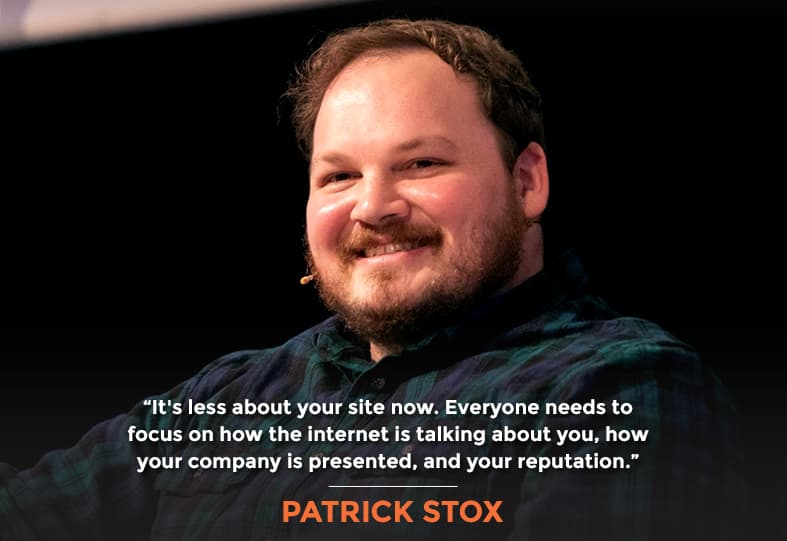
For this new era? It’s less about your site. Now everyone needs to focus on the internet: how it’s talking about you, how your company is presented, and what your reputation is. You can do something to control that. If you’re smaller, you have more control. If you’re a big company, you may not be able to just overpower the internet and all the bad things they’re saying about you.
If that’s the case, we have to be, I think, more in tune with the business. And so if there’s a problem, and people, I’ll give you an actual example, like people hated the Ahrefs credit system. We basically got rid of it, we listened to the feedback, and now we hear pretty much no complaints. So it’s actually making the business decision to change the thing, to improve, to be a better company, a better product, a better service, that is going to be more impactful than spamming the internet trying to say, like, oh no. Well, it’s not this, it’s this. You’re up against an army of a billion people. There’s only so much you can do there.
Yeah, awesome. Well, thank you, Patrick and thank you, listener. Go out there and make the world a better place through some SEO and AEO, and we’ll catch you next episode. I’m your host. Stephan Spencer, signing off, you.
Important Links
Connect with Patrick Stox
Apps/Tools
Article
Books
Business/Organization
Previous Marketing Speak Episode
People
YouTube Videos
Your Checklist of Actions to Take
- Implement edge SEO for push-button technical fixes. Use edge SEO technology (JavaScript or serverless functions) to automatically fix technical issues like canonical tags, redirects, and internal links before content is served to users or bots—no need to manually update my CMS every time.
- Leverage the Content Helper tool for AI-optimized chunking. Use Ahrefs’ Content Helper to identify which content sections (chunks) search engines and AI systems consider most relevant for specific topics, then optimize those exact sections to improve my scoring and visibility in AI search results.
- Simplify content for answer engines with focused sections. Write content with clear, concise sections that directly answer specific questions—think Featured Snippet style but applied throughout my entire article, cutting out flowery language and focusing on what AI search can pull out and cite.
- Prioritize data studies and comparison content for AI visibility. Create original data studies (which performed exceptionally well for Ahrefs—5 of their top 6 posts were data studies) and comparison pages, as these content types are currently working best in AI search systems.
- Use the Best by Links report to prioritize 404 redirects strategically. Filter Ahrefs’ Best by Links report to show only 404 pages, giving me an ordered list of my most important broken pages (by link equity) to redirect first, rather than wasting time on low-value redirects.
- Automate redirect mapping with archive.org integration. Run Patrick’s redirect script (shared on the Ahrefs blog) that pulls content from archive.org for broken pages, crawls my current site, and automatically matches old URLs to appropriate new destinations—saving hours of manual work.
- Add related posts sections even if I already interlink well. Even with strong existing internal linking, installing a related posts plugin (like YARP) can still provide measurable traffic uplift by creating additional contextual connections between my content.
- Monitor AI search for hallucinated pages and redirect the traffic. Use analytics to identify 404 pages receiving traffic from AI search (hallucinated URLs), then redirect that traffic to the correct pages—Ahrefs found thousands of visits going to non-existent pages this way.
- Empower employees as micro-influencers rather than hiding behind the brand. Allow and encourage my team members who are experts to publicly represent my company on social media, Reddit, and other platforms—people connect with people, not faceless brands, especially in the AI era.
- Connect with Patrick Stox and explore Ahrefs’ tools for my SEO strategy. Patrick is active on Reddit (r/TechSEO as a moderator) and represents Ahrefs across various platforms. Check out Ahrefs’ standalone prompt tracker (starts at $50/month, one of the cheapest on the market), their free Web Analytics (up to 1 million events/month), and their comprehensive SEO suite including Site Audit with edge SEO, Content Helper, and Brand Radar for tracking my presence across AI search, social media, and the web.

About the Host
STEPHAN SPENCER
Since coming into his own power and having a life-changing spiritual awakening, Stephan is on a mission. He is devoted to curiosity, reason, wonder, and most importantly, a connection with God and the unseen world. He has one agenda: revealing light in everything he does. A self-proclaimed geek who went on to pioneer the world of SEO and make a name for himself in the top echelons of marketing circles, Stephan’s journey has taken him from one of career ambition to soul searching and spiritual awakening.
Stephan has created and sold businesses, gone on spiritual quests, and explored the world with Tony Robbins as a part of Tony’s “Platinum Partnership.” He went through a radical personal transformation – from an introverted outlier to a leader in business and personal development.

About the Guest
Patrick Stox
Patrick Stox is a Product Advisor, Technical SEO, & Brand Ambassador at Ahrefs. He was one of the authors of the Ahrefs SEO Book for Beginners and the Technical Review Editor for The Art of SEO 4th Edition. He was the lead author of the SEO chapter in the 2021 Web Almanac and a reviewer of the 2022 SEO chapter.
Patrick’s an organizer for the Triangle SEO Meetup, a founder of the Tech SEO Connect Conference, founder of a technical SEO Slack group, and a moderator for /r/TechSEO on Reddit.






Leave a Reply