



Search is evolving fast—but relevance still wins. In this special rebroadcast of a conversation I had with Samantha Riley on her show, Influence by Design, I unpack what SEO really looks like in an era dominated by AI-generated answers.
Google’s AI Overviews are grabbing headlines—but behind the scenes, they’re generating something else: considerable misinformation. From fabricated stats to dangerously inaccurate medical and financial advice, these tools raise real concerns for users and marketers alike.
We explore why SEO remains not only relevant but essential. I explain how experience-driven content and real-world authority still outrank machine-made fluff, and how businesses can stay visible by leaning into what AI can’t replicate: lived experience, proven results, and human credibility.
We also dive into how to build a website that isn’t just a passive brochure, but a conversion engine. From irresistible lead magnets like my SEO BS Detector to pages focused on tangible results rather than praise, we outline what actually moves the needle with both visitors and Google. You’ll also hear how to avoid being misled by slick-talking SEO “experts” and focus on the metrics that truly matter.
If you’re ready to build lasting digital authority—and stop building your house on rented land—this episode is your blueprint. So without any further ado, on with the show!
In This Episode
- [03:24] – Stephan confirms that SEO is still relevant as long as people search on Google and click on search results.
- [05:08] – Stephan discusses how certain types of websites, like lyric sites and dictionary sites, have been negatively affected by AI overviews.
- [17:16] – Stephan recommends having a results page that showcases tangible successes and case studies rather than just testimonials.
- [26:46] – Stephan introduces the concept of irresistible offers, such as his SEO Hiring Blueprint and SEO BS detector, to engage visitors.
- [31:00] – Stephan differentiates between authority from a visitor’s standpoint and authority from Google’s algorithmic standpoint.
- [42:56] – Stephan emphasizes the importance of being strategic and specific about what you want to achieve through SEO.
- [45:18] – Stephan wraps up the conversation by encouraging listeners to take actionable steps towards their SEO goals.
Stephan, welcome to the show.
Thank you so much, Samantha. It’s great to be here. I do want to preface this conversation by saying you don’t have to be a techno geek in order to get massive value out of this conversation. I’m going to make this as accessible as possible for our listeners.
I love that. I said to Stephan before we started recording, “This needs to be like SEO for Dummies, with me being the dummy.” Hopefully, this works out just perfectly. I know it will from your end. I’m just hoping that I get this right. I want to start off by asking, because I’ve actually heard this, is SEO even a thing anymore?
As far as I can tell, and based on my anecdotal evidence, people are not relying 100% on the AI overviews.
As long as people are searching on Google, which they are, it’s the most popular website on the planet. As long as people are still clicking on the search results in Google, then SEO is a thing. As far as I hear and see, and based on my anecdotal evidence, people are not relying 100% on the AI overviews. In fact, that’s kind of a dumpster fire. A lot of misinformation and completely made-up facts are showing up in those AI overviews. That’s not giving Google users a lot of comfort that they can rely on that.
One of the most popular searches that has come out in the recent few weeks has been how to turn off AI overviews. ‘How do I turn off the AI overviews? Because it’s garbage.’ If it’s telling you medical advice that is absolutely wrong, then financial advice that’s absolutely wrong, and you can’t tell the difference as a consumer, as a Google searcher. That’s very dangerous. We cannot rely on Google for AI overviews for factual accuracy. The regular Google search results are going to be the place where people are still gonna go, even if AI overviews interfere with that, because we have to scroll past them.
Have you noticed or do you know if there was a sort of dip in Google clicks or people searching on Google when AI first came out? Maybe it’s gone back? Is there any sort of evidence for that?
What we’re finding and correlating with are things that aren’t really ‘best practices’ from an SEO standpoint, such as creating a lot of duplicate or non-unique, non-valuable content.
There have been studies done to see if rankings have taken a hit overall, and traffic, organic traffic and so forth. I’ll say anecdotally, for my clients, I’m not seeing that. In fact, we’re getting growth happening, even while Google is releasing all these AI advances and different tools and so forth. There are winners and losers. There are these winner and loser reports that come out that the different SEO tools will publish. They’ll say these are the top sites that have won new Google traffic, organic traffic. These are the ones who have lost.
What we’re finding, or they’re finding and correlating with, are things that are not really great, accepted, best practices from an SEO standpoint, such as creating a lot of duplicate content or not unique, valuable content.
The sites that get pummelled in these updates are sites like lyric sites. I can get the lyrics of a song from any site and it’s always the same because the lyrics are the lyrics for a particular song then all the lyric sites on the internet now that AI overviews is available above, to answer that query directly about what the lyrics are for particular song, there’s absolutely no need for 15 other lyric sites directly underneath providing the exact same answer. Those sites have gotten decimated. That’s just an example.
Another would be dictionary sites; here’s the dictionary definition of the word “Pummelled.” I don’t need to see that 15 times; I don’t need 15 search results. Those sites have also been decimated. If you’re providing coupons that every other site is also replicating. There are all these different coupon discount code websites that are just replicating each other. Here’s a code that was shared on this site, and then on this other site, and then on five other sites.
That’s not unique, valuable content that’s over and above what all the other sites are doing. If that’s your business model, you’re in big trouble. But for most people, that’s not their business model. If you’re providing real expertise and experience, this is the thing that an AI cannot provide, which is real-world experience. If you want to teach basket weaving, scuba diving, or how to represent a plaintiff in a jury trial. What experience does an AI have? Zero, it’s never shown up in a courtroom. It’s never put on scuba gear. It’s never woven anything with crochet needles or whatever; it doesn’t have experience.

It will steal from other sites and try to kind of assimilate and accumulate all that information and spit it out. But that’s not real. That’s an approximation. That’s a cheap facsimile, or what many folks would even say is theft. Copyright theft, stealing other people’s IP, and then amalgamating it so you can’t trace it back to the original source. Then saying, “Hey, here’s the definitive answer, without any caveats,” and it just says, “Here’s a statistic that proves the point, and it made it up.” That’s called an AI hallucination. That’s very dangerous. It’s inherent in the AI. Generative AI is like an autocomplete.
When you go onto Google, and you type in a search query, and you type in, let’s say, past life, and then it’ll autocomplete or give you a suggestion, regression, or near-death experience. It’ll give you the next word. If that’s the right next word, then you just click it; you don’t have to type it all in. That’s nice and handy. That’s a very simple autocomplete.
Real expertise and experience are the things that an AI cannot provide, which is real-world experience.
What is an LLM or Large Language Model? In other words, generative AI. ChatGPT, Claude, and Gemini from Google. What they do is just a more advanced and longer version of that autocomplete. It’ll make you say, “Make up a bedtime story.” It’ll probably start with the word once. Because many bedtime stories start with the word once. What’s the next word after once? Perhaps you know that’s a very likely next word, and so it autocompletes that one. That’s why you see, when you’re querying or prompting ChatGPT, it’s slowly going along as if it’s typing a word at a time, because it’s inventing the next word.
Not inventing, it’s more stealing from the most likely word database. It’s pulling the word upon after the word once, and what’s after upon, and then time, and then there and then was or were, and it just keeps making up a story one word at a time. That’s why it doesn’t just spit out the entire encyclopedia entry of whatever you tell it to make up all at once. It’s like filling it out a word at a time, but pretty darn fast. When you have an autocomplete like that, it requires, by the very nature of the algorithm, for it to make up the next word, because otherwise it’s gonna be, it’s like being on stage and you had stage fright and you suddenly freeze.
Eventually, even if you’re feeling like you’re gonna throw up or pass out, you’re gonna say something eventually, maybe a minute goes by, and the whole audience is staring at you. You’re like, a wolf, there was a wolf. It’s got to make something up. If it’s a stat according to Forrester Research, and that’s making Forrester Research. You remember this Saturday Night Live where there was the liar guy. He makes stuff up. I forgot his name. But he was a liar, like this is from decades ago, from Saturday Night Live. He’s just making stuff up on the fly. It’s so outrageous, and it makes your eyes roll back when you hear these outrageous lies.
That’s Claude or ChatGPT, or Gemini or any other generative AI; it’s just making the stuff up. If that is the basis of Google’s secret weapon, generative AI, AI overviews, we’re in big trouble as consumers.
We cannot rely on that; it will just make up the statistic, it will make up the source, it will make up a medical diagnosis, it will make up a financial recommendation for some investment opportunity. We lose everything, we lose our savings, we lose our health, because we took a supplement that had contraindications, and it made up the recommendations.
We cannot rely on AI; it will just make stuff up.
Will SEO still be a thing? Later this year, next year? Even the year after that? Heck, yes, absolutely. We can have hallucinations, those made-up nonsensical things. I need a word here, let’s make up a source like Forrester Research, PubMed or the National Institutes of Health or whatever, it’ll make it up. I can’t rely on that. That’s baked into the whole system. You can’t take that out. It’ll be years before they figure out another model to replace it. In the meantime, we need SEO, because people are going to click on those search results, and we’d better be there.
Before we get into how to really create that authority on Google, I want to step backward and set a foundation. What needs to be in place on our website before we even start thinking about the content that we’re creating, and these keywords and all of that kind of stuff? Because there are certain things that we need to make sure are in place on our website.
The way I think about it is that you are creating a destination with your website; this is a destination. If you are going to invest time in content creation, and all you’re doing is you’re publishing it on LinkedIn, or on Facebook, or Instagram, or wherever else, what you’re doing is you’re building a house on rented land. That’s a dangerous idea. That’s a terrible idea. Not to say don’t do social media marketing, of course. But you’re going to create a piece of content that has to have a home that you control, that you own, that you’re not just renting the land. Because Instagram, Facebook, LinkedIn or YouTube can change their policies, they can turn off your channel, and then what? You’re at zero.
In the meantime, we need SEO because people are going to click on those search results, and we’d better be there.
Your website is your home on the internet. You have to have a proper home. That means it needs to be reflective of your brand, the quality that you offer, and it needs to have the kinds of elements of social proof that would convince or sway a potential buyer to sign up with you, or at least to inquire. If you have a press or media page with whatever, appearances, podcasts, or TV appearances that need to be put on your site in a way that looks really legit. Also, any kind of media mentions and print publications, or on blogs and so forth. If you’ve been cited or quoted in mainstream media, in newspapers and magazines, or popular blogs, you have to put all that in a place that is very clear, concise, and well-positioned, well-laid out. It looks legit, like, “Wow, this guy or this gal has been on TV, and on all these amazing podcasts and mentioned as a source or even had feature stories about them in magazines. I don’t have to do all the due diligence to see if they’re legit. That’s already been done for me.”
That’s really good, because that means that it eases and facilitates the buying process. You’re making it easier for them to say yes and move down the funnel. That’s just a press page. What about real-world client results? What have you done for the clients who have hired you? It’s not just a fluffy testimonial, saying, “Hey, I love this guy, or this gal, they’ve really made a difference in my life and my business.” That’s pretty fluffy or vague. What do you guys say in Australia? Well, it’s a waffle.
That’s exactly what we say. It’s a waffle.
We eat waffles over here. But you guys say waffle. That’s an important aspect of that home on the internet to that website that you’re gonna have or already have. I actually recommend having a page called results. Not testimonials, not praise. But results, because people want to see results. They don’t want to see flowery testimonials that talk about vague ideas about hiring this person or company. If you look at my site, stephanspencer.com, or my agency site, netconcepts.com, you will see a results page on both. It’s not just testimonial quotes; there are some testimonial quotes.
If you are going to invest time in content creation, and all you're doing is publishing it on LinkedIn, Facebook or Instagram, you're building a house on rented land. That's a dangerous idea. Share on XBut there are also case study podcast episodes. We go in depth for an hour, and I have a marketing show called Marketing Speak. Some of those episodes are case study episodes where I interviewed the clients, and they share lots of details of this kind of secret sauce, what made their SEO successful. I feature those on the results page.
I also have case studies. The format of a case study is the background or problem, the solution, and then the results. That includes real tangible stuff like screenshots of Google Analytics up into the right graphs, charts and tables, and all that sort of stuff that really makes this look substantial and tangible, not just vague. Of course, in the results section, we’ll incorporate things like testimonial quotes as well. But we try to get to the meat of it, like, client, can you please share some specifics?

Because if it’s, let’s say, a law firm, a law firm is really going to be most interested in the number of signed cases per month, or per time period; they don’t care so much about the organic traffic. If they 10x their organic traffic from Google, and their number of signed cases stays the same, and they’ve spent 10 to $20,000 a month for 12 to 16 months, they’re like, “What the heck did we just do? We 10x traffic, and we got no real value out of it.” We care about signed cases. What is that one number that you care about? When I say you, I’m not just saying you, Samantha.
The audience, the people who are listening?
Create a piece of content that has a home that you control, that you own, that you’re not just renting the land.
Because it varies depending on the kind of consultant, coach, speaker or whatever. If you make most of your money from professional speaking. Then it’s probably going to be inquiries for speaking gigs from legit conference organisers, association executive directors and stuff, managing directors, not just regular inquiries. What’s that major needle-moving metric for your business, and then measure a baseline time period. You hire the SEO agency, consultant or whatever to help you. Hopefully, you see and understand the right graph.
That sort of success needs to be published on the website, your website. Ideally, if it’s not just a testimonial quote, but it’s a full-blown case study, where a whole page is dedicated to that case example, that’s going to be really good. A results page is really going to help move that prospect down the funnel or the buyer journey. Another aspect, the kind of quality and social proof that you need to convey on your website, is in the form of some sort of authoritative or authority-building positioning.
For me, I do speaking gigs. I have a lot of keynotes and workshops, and so forth, that were recorded. That’s all available in my learning centre. If you want to call it a learning centre, you want to call it resources, you want to call it a media library, or you want to put it on your speaking page.
The problem with putting it on your speaking page, if you’re also offering speaking, is that if I’m not a conference organiser, the likelihood of me clicking on the word speaking in your nav top is pretty low. They won’t discover all that thought leadership unless they happen to click in there. I put it in my learning centre, it’s in two places.
As long as people are searching on Google and still clicking on search results, then SEO is a thing. Share on XWhat I‘m really hearing from all of these pieces, and sorry, I just wanted to jump in and say this is, you really need to know or understand your ideal client or your ideal customer, so that you can start to map out where you think or predict that they’re going to go. Because if you don’t know what it is that they’re looking for, then it’s going to be very easy to create the wrong path, as you just said.
If your prospect is so early in the buyer journey, typically when they come to your website, that they’re not going to be interested in a request, a free consult, or setting up a free strategy call. Because that’s like, “Whoa, I don’t want to be sold for an hour, I don’t even know if this guy or gal is legit.” That’s not going to be a compelling next action to feature above the fold before scrolling. What is the most compelling thing that you can offer before they start scrolling?
Because if you haven’t thought through that, you’ve already lost them. I make sure above the fold before scrolling on my homepage, the most important page on my site, I want lots of social proof. I want to have seen the logos of TV networks and Harvard Business Review, founder magazine and all this, and all these major outlets that have featured me. That’s just a bunch of logos, as seen on, and then those logos, which are above the fold. What else is above the fold? Arson impact metrics. Millions of dollars were made, like nine figures in additional revenue generated from SEO for my clients. That number nine is featured, and how many years I’ve been doing SEO as a company founder, 26 years, 27 years. 27 is one of those impact metrics.
Those impact metrics, which will be different for each company, each consultant, coach or speaker, whatever. Again, they need to think, like you said, about the audience they’re trying to reach and what they’re going to care about, but that needs to be above the fold. What else is above the fold is what is the obvious next action for the visitor to take.
If I’m a first-time visitor and I don’t know you from Adam or Eve, I don’t know that you’re legit, other than those logos and the impact metrics, and maybe a little tiny testimonial quote, if you can fit that in there, so that needs to kind of grease the wheel. They feel like, “Okay, this person seems legit. But what’s the low barrier to entry, irresistible offer that you can dangle in front of them like a carrot?” They’re just like, “Wow, that’s amazing. Give me that thing.” I have some different things that I’ve tried over the years.
If you haven't thought through what's the most compelling thing you can offer before visitors start scrolling, you've already lost them. Share on XI have an SEO Hiring Blueprint, which has a seven-step process for hiring an SEO agency or consultant, or employee. It’s got some really ninja ideas in there about how to make sure that you only get a really good SEO because if you don’t know SEO, you can end up making a really bad hire, and then they’re stringing you along for months, telling you like it takes time, “SEO takes time. Give me another year, you’ll see, you’ll see.” You keep spending money, and then it never turns out. You got snookered. What sort of process do I need to go through as somebody who’s not skilled in SEO? I’m saying the listener. ‘How do I make sure I don’t get snookered?’ That’s the seven-step SEO Hiring Blueprint that I have. That’s one example of an irresistible offer. Like, “Who would want, who would say not to that?”
Who wants to be cheated by someone? No one I know.
Even more, I think irresistible of an offer, that’s an adjunct to, that is my SEO BS Detector. BS, I’m not gonna say the word. But they get sold down the river, they get snookered, they get misled by somebody who talks a good game, but they’re making stuff up. How do I know without knowing SEO that this person is for real?
I actually recommend having a page called ‘results,’ because people want to see results. They don’t want to see flowery testimonials that talk about vague ideas about hiring this person or company.
Besides all the other steps in the seven-step process, where you do things like make them jump through hoops just to apply or to be considered. There’s also the step of the interview process, and how do I pull out of them the real answers? When I don’t know what to ask, well, let me give you a cheat sheet of the questions to ask that are trick questions. They won’t realise they’re trick questions.
They think that you don’t know anything about SEO, but you have this little cheat sheet that I gave you. You downloaded by going to my homepage. It’s the SEO BS Detector. An example of a question that might be on a document like this is, let’s say, that you might have heard of meta keywords. That’s not a thing that, but they don’t know that you don’t know anything, or they think you don’t know anything about SEO. You could ask that question, “Hey, how do you come up with meta keywords?” Like, “What’s your process for that? I love that answer is anything but are you serious?”
Those never counted in Google, literally never counted. If that’s not their answer, you just got them. Some nonsense about well, they don’t matter as much as they used to. But here’s how we do it. There’s the door. Thanks for coming. Not having a document like that really puts you at a disadvantage, because you could just be sold down the river. They’re telling you about all these tools they use, their process and how Google is changing the algorithms all the time. They’re on top of everything.
They’re watching Google IO talks, and the CEO at Google, and so forth. And like, “Hey, we’re keeping up with all the algorithm updates, and this and that. The other thing is, you don’t know, how do you verify?” This is an essential document, I think, for anybody who looks to outsource SEO. That would be a great feature for me as an SEO consultant and agency owner to provide above the fold on the homepage as an irresistible offer.
What is your irresistible offer or offers? Then you can test them and slot each one in separately. Run an A/B split test to see which ones perform best. It’s like, “Oh, BS Detector does way better than the Hiring Blueprint or vice versa.” That’s an essential, essential component. Because if you don’t have a next action for the person to take, that isn’t like a big leap of trust, like, “Ah, I’ve got to commit an hour to this person, I don’t even know I don’t, I’m out.” You don’t have any information about them. You don’t know their email address, you don’t know their first name, nothing. They’re not coming back.
Now, you mentioned the media page before, and this is a great way to build authority. You also mentioned that that’s really like building authority is what Google is looking for. It wants to put the best results in front of people, because that’s what has people coming back to Google. How do you use your media citations or the podcasts that you’ve been on without creating duplicate content? How do you get them onto the immediate page and be able to use them in a way where you’re not using duplicate content from those sites?
First of all, I want to differentiate for our listeners, authority from a visitor standpoint is different than authority from Google’s algorithmic standpoint. If I, as a prospect, come to your site for the first time, and I see all those social proof points, like the impact metrics, and as seen on logos, the client logos and testimonial quotes, I’m sold, I’m like, “Really impressed.” I signed up for the strategy call. Google doesn’t think that way. Google’s algorithm is looking for other elements of social proof in the form of links. When I get a link from cnn.com, or from, like, Good Morning America, or you have like, Good Day Australia.
It’s something I’m not a TV watcher. But there’s some sort of good morning show. The Today Show, I think.
Yeah, Today Show. I don’t watch TV, either. Good for you for not watching TV. Whatever major media outlets you can get coverage from will definitely show authority. Especially if you get a link. I mean, you might get some credit from Google for just having a mention without a link, but it really makes a difference. It really adds value if you get a link from that site.
When you say, “Get a link,” I just remember: this is like .01 dummy for Sam, SEO. Do you mean just using the link that links back to their site? Or is there a different sort of link?
Let’s say that I go to the Today Show’s website, because you have an appearance. If I can’t click somewhere that takes me to your, Samantha’s website, then there’s no link.
It’s a link from their end to my site.
That is showing legitimacy. They’re not going to link to anybody. You’re only going to link to legit websites. You were a guest on their show; you passed all the sniff tests. They had you on TV, and they also linked to your website and maybe to your social media from their website. That’s what we’re looking for. I don’t care so much as an SEO expert, whether I get links or whether my client gets links to their social platforms, like their LinkedIn and their Instagram and so forth. It’s a cherry on top. But I really want, I want the link to the website, to the client’s website.
When we get a link, it conveys to Google’s algorithm that this is an authoritative and trustworthy website. If I, as a business owner, consultant, or coach, don’t have any links pointing to my website, I don’t look very legit.
If I can work into whether it’s a TV appearance, or a podcast appearance, or an interview with a journalist, if I can work in mentions of things that are irresistible offers that the reader, the listener, the viewer, their audience is going to be like, “Hey, where do I get that thing?” If I’m talking about this amazing Hiring Blueprint, your listeners’ gonna say, “Where do I get that thing from, Stephan?” That’s there were five things that he mentioned that I want all five of them, like, “Oh, that’s all in my show notes for this episode.” Now, I have five links from you, not just one.
I’m seeding into the interview all this amazing stuff where the listeners, or the viewer, if we’re talking about TV appearances, give me that thing that was on that appearance on, that segment I want, I want that thing he promised. That means “Oh, okay, we got to put another link to stuff on our website, I got five instead of one, works really well.” You’re seeding into the interview, or the whatever interaction you’re having with the blogger, the journalist, the host, all that amazing stuff that they’re gonna want to include. When we get a link, that conveys to Google, to its algorithm, that this is an authoritative and trustworthy website. If I, as a business owner, as a consultant, or a coach, do not have any links pointing to my website, I don’t look very legit.
I might have a beautiful website, I might have spent a fortune on the design, the content creation and functionality. It’s amazing, it looks incredible. But nobody’s coming to my site from Google. That’s a big problem. I can solve it by just throwing a bunch of money at Google and saying, “Hey, I’m gonna buy ads, give me some ad placement.” All right, that’s Google Ads, or to Facebook Meta, which owns Facebook and Instagram, I could just throw a bunch of money at the problem and get some advertising on there. But that is a problem in that, if you do get business from it, you have to keep spending the money.
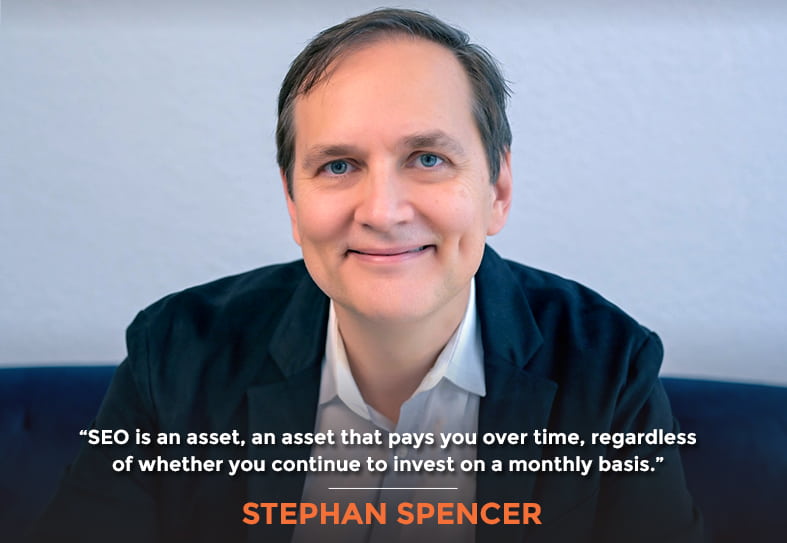
Because if you’re having a slow month and you need to stop spending the money, your leads go to zero. That was all just trading dollars for leads. That’s not like SEO. SEO is an asset, an asset that pays you over time, regardless of whether you continue to invest on a monthly basis. I invest in creating a Hiring Blueprint and BS Detector, and making a great website and optimising it. Doing keyword research and all the SEO things, getting links to the website from not just mainstream media, but industry publications, and being a columnist and a contributor on various industry websites, I got all these links.
All that authority, trust, keyword research, and content creation will continue to pay dividends in terms of Google traffic over the years.
I invest all that time and effort over a period of time. For me, it’s been many years. I could take a big vacation, and a sabbatical from SEO for 2, 3, 4 or five years, maybe. All that authority, all that trust, all the keyword research and the content creation, all that will continue to pay dividends in terms of traffic from Google over the years. Doesn’t mean that I should do that. That’s a kind of risky thing. Because there is a lot of change happening with Google and AI, and just technological advances.
I wouldn’t want to take two years off from doing SEO for my website. But I could certainly take six or eight months off. I could, I’m not going to, but I could. You can’t take even a week off from Google Ads if that’s where all your leads come in. You won’t have the phone ringing for an entire week, and you’ll be panicking. I equate advertising, pay-per-click and all that and paid social as trading dollars for leads, that’s gonna get you income. But what I’m talking about with SEO and why I love focusing on SEO is because it builds an asset, an asset that goes on the balance sheet, not just as goodwill, but like this is an actual measurable asset in terms of I can tell you the authority score, according to different SEO tools like Majestic and Semrush and Ahrefs, and so forth. You don’t need to know about these tools. You don’t have to be an SEO expert, but know that this stuff is measurable.
I have a certain amount of authority on my website because of all these links, and I can measure it, and I can give you the number. Anybody else can get the same number for my website by using the same tool. It’s verifiable. That means I can sell my website if I choose. One of the things that the potential buyer is going to do is they’re going to check the SEO tools to see how authoritative the website is, no, like, “Oh, wow, this is really authoritative.” This is a good buy, this is a good value for what he wants to be paid for it. It’s an asset.
If people are listening, and they’re totally sold, and they’re like, I actually need to pay attention to this, I need to do something about this. What are the sort of two or three things that you would focus on first?
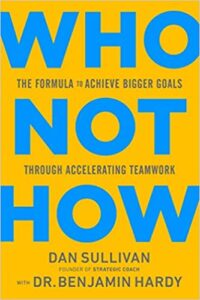
I would first decide if you’re going to try to do it yourself, or if you’re going to outsource it, and outsource isn’t really the right word. Because that word gets a bad rap. It’s like, “Oh, outsource it to, I don’t know, some third-world country, get it for $3 an hour, and you get what you pay for.” That’s pretty risky. Let’s not say outsource, let’s say you engage or hire a firm or an expert to do this for you. Dan Sullivan, founder of Strategic Coach, is the co-author of a book called Who Not How.
I love that book. It’s such a good book.
I want to know the who, I don’t want to know the how, if it’s an area that’s not part of my core expertise, like you could focus on the how, if you are passionate about it, and you could read my 707-page book.
Oh, my goodness, look at how big it is. I have no idea you had that much in it. Let’s go with what the experts say.
It used to be a lot bigger. This was a few months ago. Look at this. This is a thousand pages.
That is like an encyclopedia. Holy moly.
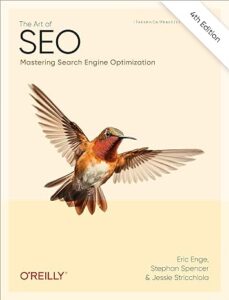
My publisher, O’Reilly, warned us with the third edition. This was a, this is literally a thousand, 994 pages. They said, “Don’t you dare, my co-authors warned us not to go over 1000 pages. In fact, please, please, please reduce the number of pages. This is not helping your book sales. Yes, it’s the definitive book on SEO. But who wants to buy a 1000-page book and read it?”
I get the second part. Anyone could buy it, but who wants to read it? Holy moly. We’re too busy for that.

If that’s your thing, and you want to learn SEO, by all means, here’s the book; this is the definitive Bible on SEO. But for most of our listeners, I’m guessing that it’s the WHO that they need, and not the HOW. To get the who, you need to know the how. They don’t have to know how themselves, but they do need to be a savvy buyer to get the right one. That’s where the Hiring Blueprint and SEO BS Detector come in to help them make the right hiring decision.
They don’t even need steps two or three. It’s either get the blueprint and hire someone, or read the 994-page guide and spend the rest of your life trying to make it happen.
One of the things that I think would be a next action for everybody, whether or not you are going to hire somebody, or a company, or you’re going to try and do it yourself, is to understand what you actually want out of this. What’s my, what’s the number, the metric that I care about the most? Decide on that, start measuring it now and come up with a baseline and see if you’re actually heading north or south with it and come up with some desired outcomes. What would the number need to be in order for this to be successful as an engagement, as a project? What would be a nice-to-have? What would be an outstanding result? Maybe come up with three numbers.

They’re all the same metric, let’s say its number of sign cases per month. Well, if I’m going to spend this amount of money and resource and time and effort on SEO, I must get this amount back in the number of signed cases. It would be ideal, or let’s just be really great if I got this number of sign cases, so I got my must. I got my nice to have. This would be like pie in the sky, like amazing, like, “Wow, I can’t even imagine what I’m going to do with all the money if I hit this number, snag three numbers.” Another thing that I would do is I would come up with some big milestones, I don’t know, tangible results, or outcomes that you would like to see happen, in addition to those numbers.
For example, let’s say that it’s somebody who is a professional speaker. They don’t like the fact that Google doesn’t have a knowledge panel on the right-hand side when you Google people’s names. If it’s a famous person, then there’ll be a whole thing on the side with pictures and maybe a little snippet from their Wikipedia entry. The books that they’ve authored and social media chiclets, the little icons of their social media presence. That’s called a Google knowledge panel. They’re like, bummed, they don’t have one. That’s one of the outcomes I want to write down. I want that, I want to have that or let’s say that they want to have a number one position for a certain keyword.
Car accident lawyer, Indianapolis, I really want that keyword. “Okay, I want to be number one for that keyword, or at least in the top three positions, for that could be an example of an outcome.” Maybe come up with 1, 2, 3, or four of these big outcomes, tangible things, goals that you would like to have happen when you envision it, and then you really kind of crystallise what that looks like, it starts to materialise. You haven’t even hired somebody, and you haven’t even bought my book. It starts to materialise because that’s how the universe works. The universe conspires to make your dreams happen. But you’ve got to be willing to really put the effort and the focus, the attention on I need to know what I want, I need to be specific about what I want. That’s why vision boards work.

That’s why 30-day plans and year-long plans and all that work, because you’ve actually started to turn thoughts into things, you’ve taken that first step. That’s my suggestion, that’s not going to get people down into the weeds of revising their title tag on their homepage to get a keyword in there and stuff. They could do that. But that’s very tactical, and I want our listener to be much more strategic. My favourite quote from The Art of War by Sun Tzu is “Tactics without strategy is the noise before defeat.”
What a beautiful way to finish this up. Stephan, it’s been an absolute pleasure to chat with you; you’ve dropped so many value bombs. Now, you spoke about your Hiring Blueprint and your No BS Cheat Sheet. Can you just let people know where they can go to get a copy of that?
It is all available at stephanspencer.com and my agency website, netconcepts.com. But rather than digging around for it, I already have a special page set up for our listeners to go to, with those two lead magnets and free downloads. That’s at marketingspeak.com/samantha.
Love it. Of course, those links will be on the show notes page right below where you’re listening right now. You can get a copy of that. As you can tell, it would be highly advantageous to go and grab those after this conversation. Stephan, thanks so much for sharing so much value and spending so much time with us today. It’s been fabulous.
Thank you. It’s been a pleasure and I am, and I look forward to your listener actually moving the needle with their business because of what they learned today.
Important Links
Connect with Samantha Riley
Apps and Tools
Books
Businesses/Organizations
People
Previous Marketing Speak Episode
YouTube Videos
Your Checklist of Actions to Take
- Build my home online, not on rented land. Create a destination website that I control rather than relying solely on social media platforms. My website needs to reflect my brand quality and include social proof that convinces potential buyers to inquire or sign up.
- Create a “Results” page instead of a “Testimonials” page. Go beyond fluffy testimonials by showcasing tangible outcomes through case-study podcast episodes, full case studies with before-and-after metrics, and screenshots of Google Analytics showing upward trends.
- Optimize the above-the-fold content on my homepage to include three critical elements. Include “as seen on” logos from major media outlets, impact metrics (like “9 figures in revenue generated” or “27 years of experience”), and a low-barrier, irresistible offer.
- Develop irresistible lead magnets that solve immediate pain points. Create resources like Stephan’s SEO Hiring Blueprint. These offers should make prospects think “who would say no to that?” and provide immediate value without requiring a big leap of trust.
- Understand the difference between visitor authority and algorithmic authority. Social proof elements (logos, testimonials, media mentions) build authority with human visitors, but Google’s algorithm looks for links from authoritative sites. Getting a backlink from CNN.com or major media outlets conveys algorithmic trust and legitimacy that no amount of beautiful website design can replace.
- Seed interviews with multiple irresistible offers to earn numerous backlinks. When appearing on podcasts or TV shows or being interviewed by journalists, mention five distinct valuable resources throughout the conversation. Listeners will want access to all of them, resulting in 5 links in the show notes instead of just one, significantly multiplying my SEO value from each appearance.
- Treat SEO as an asset-building strategy, not an expense. Unlike Google Ads, where leads stop the moment I stop paying, SEO builds lasting authority and trust that continue to generate traffic for months or years, even if I take time off.
- Define my one critical metric before starting any SEO initiative. Identify the single number that matters most to my business success – whether it’s signed cases per month, speaking gig inquiries, or product sales. Establish a baseline measurement now, then create three target numbers: must-achieve, nice-to-have, and outstanding results to guide my SEO strategy.
- Apply the “Who Not How” principle to SEO implementation. Rather than trying to master a 994-page book on SEO myself, use the SEO Hiring Blueprint and BS Detector to become a savvy buyer who can hire the right expert.
- For comprehensive SEO consulting and agency services with Stephan Spencer, visit stephanspencer.com or netconcepts.com. Listen to his podcasts Marketing Speak and Get Yourself Optimized.






Leave a Reply